
Last updated October 30, 2026
 Wrought iron
 Wood & steel frame
 Farm & ranch
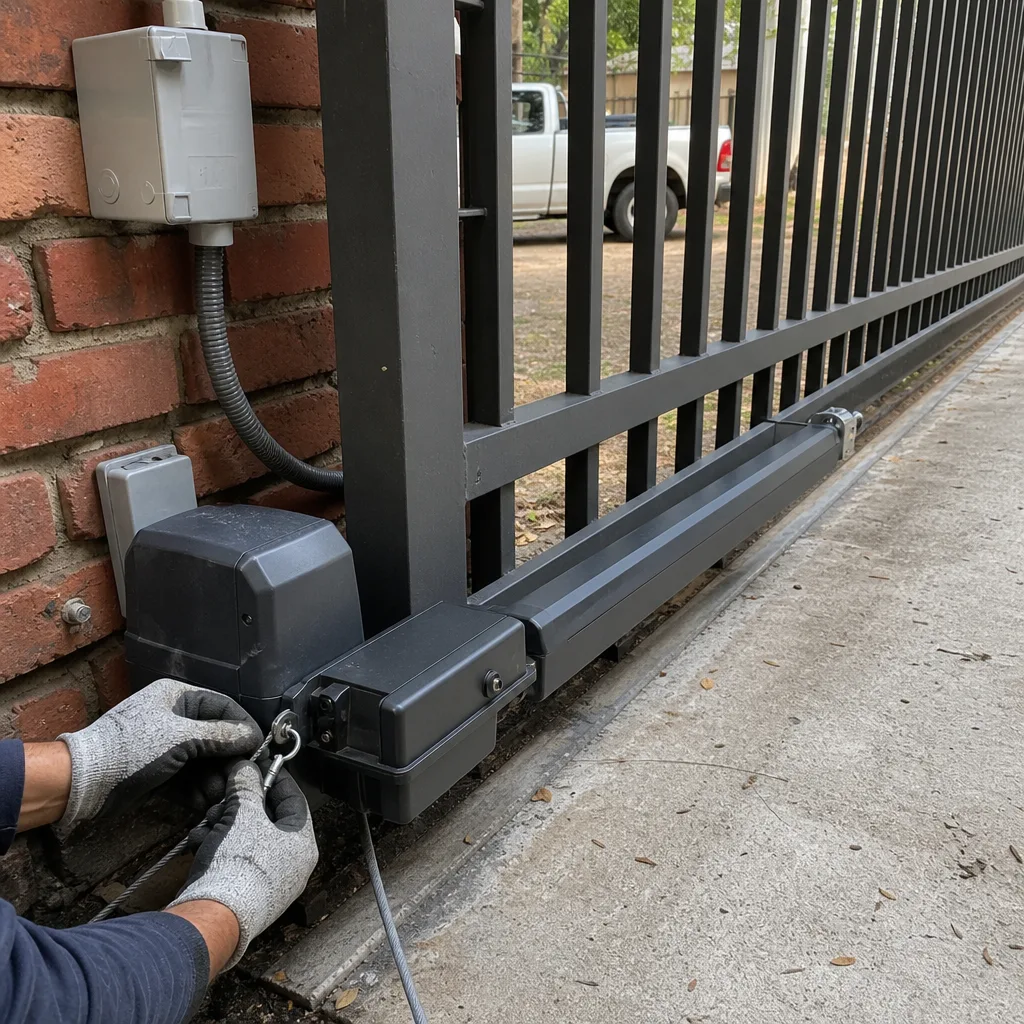
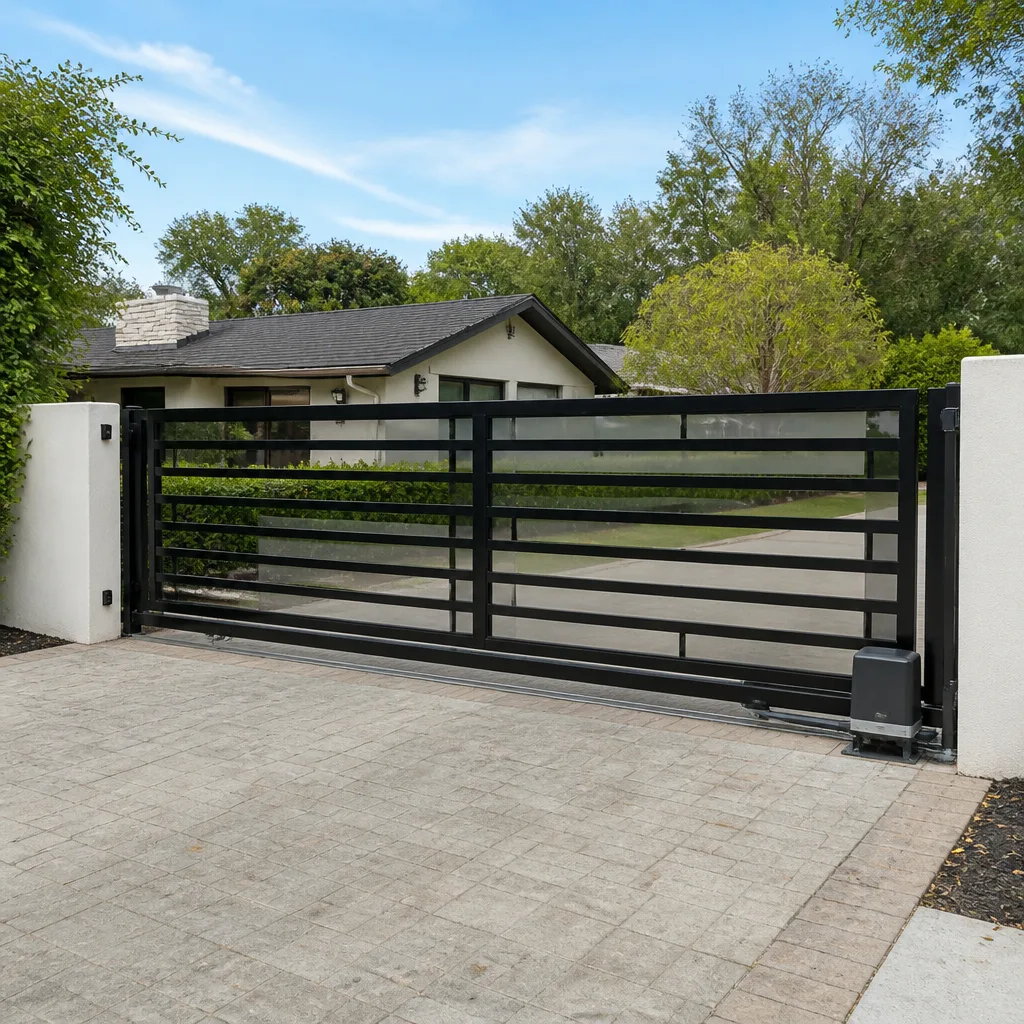 Sliding driveway gates
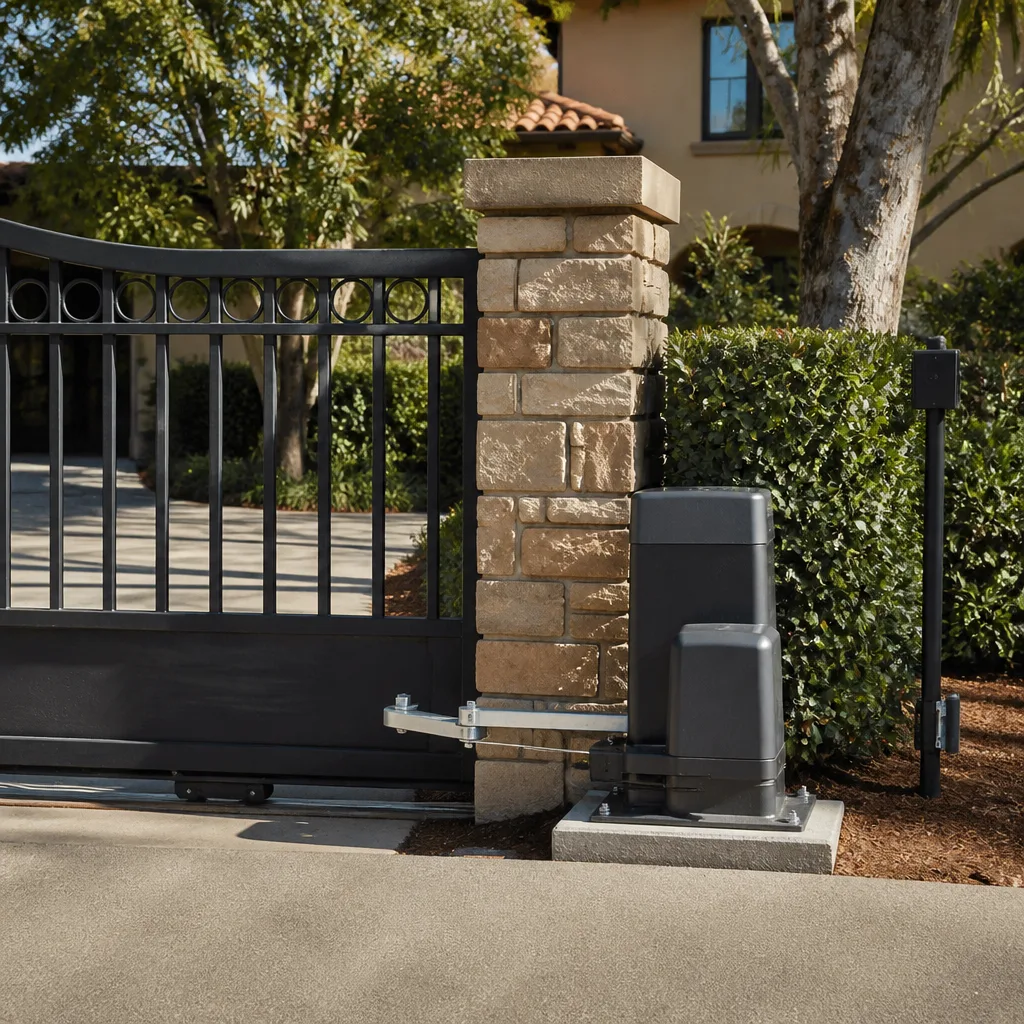 LiftMaster operators
Free on-site gate assessment - hinges, posts, and your LiftMaster or Nice gate operator checked before anything is quoted
The assessment is free and the quote is the invoice.
Get your free estimateHow to Hire a Gate Repair Contractor in Miami: A Step-by-Step Guide
Ask any gate repair contractor in Miami what’s wrong with your slow-moving gate and a fence company will say “the hinge,” a single-brand dealer will say “the motor needs replacing,” and a handyman will say “it needs adjustment.” Only one of those might be right, and the contractor’s business model predicts which answer you’ll get before they even look at the gate. This guide walks you through the three contractor types operating in Miami, the five questions that separate a specialist from a salesperson, and how to read a quote line by line so you pay for the actual fix. You’ll learn what Miami-Dade licensing actually requires, which red flags are specific to this market, and how to avoid the most expensive hiring mistakes we see property owners make.
Styles & brands we work with
Quick Answer
To hire a gate repair contractor in Miami, verify their Florida contractor license and liability insurance, ask five technical questions about your specific gate system (motor type, control board, safety sensors, hinge load rating, and diagnostic procedure), compare at least two written quotes that include part numbers and labor hours, and prioritize brand-agnostic specialists over single-brand dealers or general fence companies. A qualified gate specialist services multiple brands including Viking, Ghost Controls, DoorKing, and Elite, diagnoses at the component level, and gives you a written quote covering both residential and commercial systems before any work begins.
Table of Contents
- The Contractor Problem in Miami’s Gate Market
- What Miami-Dade Licensing Actually Requires
- Five Technical Questions to Ask Before Hiring
- How to Read a Gate Repair Quote Line by Line
- Miami-Specific Red Flags to Watch For
- The Step-by-Step Hiring Process
- Residential vs. Commercial Gate Hiring
- Common Mistakes to Avoid
- When to Call a Professional
- Frequently Asked Questions
- The Bottom Line
The Contractor Problem in Miami’s Gate Market
Miami’s gate repair market operates differently from most cities. Hurricane-force winds, salt air corrosion, and the sheer number of gated communities from Coral Gables to Pinecrest create constant demand. That demand attracts three distinct business models, and each one has a structural incentive to diagnose your gate a certain way.
The Three Contractor Types and Their Built-In Biases
Fence companies install fencing as their core business and offer gate repair as a side service. When a fence company technician looks at a failing electric gate, their training leads them toward the mechanical components they understand: hinges, posts, alignment, and manual hardware. If the problem is actually a failing control board or a degraded safety sensor loop, a fence company often misses it. They’ll rebuild a hinge or re-weld a post, charge you for the labor, and the gate will still refuse to close properly a week later. The technician wasn’t dishonest – they simply diagnosed the problem through the lens of their specialty. The result is the same for you: a temporary fix and a follow-up bill from someone else.
Single-brand dealers carry one or two gate and operator brands and are contractually or financially incentivized to keep you inside that ecosystem. If you have a DoorKing operator and the dealer only stocks LiftMaster, their diagnosis often ends with “this unit is at end of life, we recommend a full replacement.” The old operator might need a $40 limit switch, but the dealer’s business model rewards installation revenue, not component repair. In Miami, where many communities standardized on specific brands decades ago, we regularly see working Vi-king and Ghost Controls operators replaced prematurely because the calling contractor didn’t service that brand and wouldn’t say so.
General handymen quote lower hourly rates and often show up faster, but their gate training usually comes from YouTube and trial-and-error. A handyman can lubricate a chain, tighten a belt, or replace a remote battery. When the issue involves a 24-volt safety circuit, a loop detector failing intermittently after a Miami afternoon thunderstorm, or a three-phase motor drawing high amps, the handyman is beyond their depth. Worse, they may attempt repairs that create liability issues for you, especially on commercial properties where fire department access and safety sensor compliance carry legal weight.
A true gate specialist runs a different model. They’re trained across multiple brands – at minimum the major ones you’ll find in Miami: LiftMaster, FAAC, BFT, Linear, Viking, Ghost Controls, DoorKing, Elite, and Mighty Mule. Brand-agnostic means we fix what you have – we’re not here to sell you a system you don’t need. Diagnosis starts at the component level and follows a systematic path from the power source through the control board, safety sensors, motor, and mechanical assembly. This approach produces faster fixes and fewer unnecessary replacements.
What Miami-Dade Licensing Actually Requires
Miami-Dade County has specific contractor licensing categories, and knowing the difference matters more than most property owners realize. Gate repair and gate installation don’t always fall under the same license category, and hiring someone with the wrong license (or no license at all) can void your repair warranty and expose you to liability if the gate later fails and damages a vehicle or injures someone.
Repair vs. Installation: The Licensing Distinction
In Miami-Dade, general gate repair work – replacing a control board, swapping a motor, adjusting a safety sensor, rewiring a loop detector – typically falls under a general contractor’s license or a specialty contractor classification. The key distinction: repair work doesn’t require a building permit in most cases, but it does require liability insurance and a valid Miami-Dade or Florida contractor’s license to operate legally.
Gate installation is different. A new automatic gate on a residential or commercial property in Miami requires electrical work for the operator power supply, safety device installation (photo eyes, contact edges, loops), and possibly a building permit depending on the gate’s size, location, and whether it serves as a vehicle access point. Miami-Dade code requires safety devices on every automatic gate opener – a direct response to entrapment incidents nationwide. If the installer skips the safety edge or photo eye to save money, you’re liable when someone gets pinned.
What to Verify Before Signing
- Florida contractor’s license – verify it’s active on the Florida Department of Business and Professional Regulation (DBPR) website. Look for a classification that covers electrical or specialty work appropriate to gate automation.
- Liability insurance – ask for a certificate of insurance naming you as additionally insured. If a technician gets hurt on your property or the gate damages a car, their insurance should cover it, not your homeowner’s policy.
- Workers’ compensation – in Florida, contractors with employees must carry workers’ comp. An uninsured technician injured on your property becomes your liability.
- Local permitting knowledge – ask if your specific gate installation will require a Miami-Dade permit and who handles the application. A specialist answers this question immediately. A non-specialist usually doesn’t know.
The licensing distinction matters for your repair warranty too. If an unlicensed individual performs “repair” work that later causes damage, most manufacturers void the equipment warranty. Your homeowner’s insurance may also deny a claim tied to unlicensed work. In Miami’s market, where unlicensed handymen advertise heavily on local Facebook groups and Nextdoor, verifying a license before the technician arrives saves you from a six-month headache later.
Five Technical Questions to Ask Before Hiring
These five questions work because the correct answers require real training. A non-specialist can’t fake them – the answers contain specific technical details that only come from hands-on work with gate systems. Ask every contractor these questions before you let them touch your gate.
1. “What type of motor does my gate operator use, and how does its failure mode differ?”
A specialist identifies AC induction, DC, three-phase, or linear actuator motors from the operator model and can explain the failure patterns of each. AC motors lose capacitors and overheat in Miami’s humidity. DC motors wear brushes and fail gradually over months. Linear actuators on slide gates bind when the gate rollers wear unevenly. The answer tells you whether they know your system or are guessing.
2. “Walk me through your diagnostic sequence for my specific problem.”
A real gate technician follows a sequence: verify incoming power and voltage, check the control board for error codes, test safety device loop continuity, measure motor amp draw, then inspect mechanical components. A non-specialist goes straight to “looks like you need a new board” or starts lubricating things. The sequence is the tell. Gates are all we do – and that focus shows in the diagnosis.
3. “What safety devices does Miami-Dade require on this type of gate, and are mine compliant?”
The correct answer includes photo eyes (non-contact sensors) and contact edges or sensing loops on automatic gates in Miami. A technician who can’t name the required safety devices on your specific gate type hasn’t been trained on current code. This question also protects you: if your gate lacks proper safety devices and you hire someone who doesn’t flag it, the liability stays with you as the property owner.
4. “Can you repair the control board at the component level, or do you only replace whole boards?”
Many gate control boards fail due to one component: a relay, a capacitor, a transformer. A specialist who can diagnose a board at the component level often saves you $300-800 compared to a full board replacement. Our technicians diagnose the motor, board, sensors, and wiring – not just the obvious parts. Single-brand dealers typically replace the whole board without testing components, because it’s easier and more profitable.
5. “What brands do you service, and which ones will you not touch?”
A brand-agnostic specialist names six to nine brands they service regularly – Viking, Ghost Controls, DoorKing, and Elite among them – and tells you they work on all major makes. A single-brand dealer admits to one or two and may pressure you to replace what you have. A fence company usually can’t name operator brands at all. If the contractor won’t work on a competitor’s installed brand, that’s an immediate red flag.
How to Read a Gate Repair Quote Line by Line
Most Miami homeowners never read a gate repair quote carefully. They see the total at the bottom and either accept it or call a second company. Reading a quote line by line reveals whether you’re dealing with a specialist or a contractor padding a vague estimate.
Line Items a Specialist Includes
- Specific part numbers and manufacturer names – “LiftMaster K1D8387 limit switch” not “gate part.” A specialist orders exact parts.
- Labor hours broken down by task – “Diagnostic: 0.5 hr. Board swap: 1 hr. Safety sensor alignment: 0.5 hr.” Vague “labor: $450” without hours is a red flag.
- Separate diagnostic fee line – specialists charge a diagnostic fee that gets credited toward the repair if you proceed. It protects their time and signals expertise.
- Safety device verification – any repair quote on an automatic gate should include a line for testing or verifying safety photo eyes, loops, and contact edges. A quote without safety verification means the contractor hasn’t thought about liability.
- Warranty terms in writing – parts warranty (typically 1-2 years from the manufacturer) and labor warranty (typically 90 days to 1 year from the contractor). If the warranty isn’t written, it doesn’t exist.
Line Items That Signal Padding or Misdiagnosis
- “Full system replacement recommended” without a component-level diagnosis attached. A specialist explains why the specific parts failed before recommending replacement.
- “Adjustment and lubrication” as the primary line item for an electrical problem. If the gate won’t open and the quote says “lubricate and adjust,” the contractor hasn’t diagnosed anything.
- Miscellaneous or “shop supplies” fees above 5% of the total. Specialists either absorb minor consumables or list them precisely.
- Replacement of parts that aren’t faulty – if two quotes disagree on which part failed, get the diagnostic evidence. A specialist takes photos and shows you the test results.
- No diagnostic fee but high labor estimate – “free diagnostic” quotes often hide the diagnostic cost inside inflated labor hours.
We’ve seen Miami gate repair quotes range from $175 for a simple sensor realignment to $2,400 for a full operator replacement on a commercial slide gate. The difference comes down to whether the quote lists specific parts and labor hours or just a final number. Request itemized quotes from at least two contractors and compare them line by line before approving work.
Miami-Specific Red Flags to Watch For
Some red flags exist everywhere, but Miami’s gate market has its own signature problems. We see these patterns repeatedly across neighborhoods from Kendall to Miami Lakes.
- Pressure to replace instead of repair. A gate operator with a failed capacitor, worn gear, or sticking relay gets quoted as “needs full replacement” because the contractor either can’t diagnose the component or makes more money on installations. Genuine specialists attempt component-level repair first on all major brands including Ghost Controls and Elite when the system still has service life.
- Refusal to work on a competitor’s installed brand. If a contractor says “we only work on Viking” or “we don’t service DoorKing,” they’re telling you their brand restriction. A specialist trains across multiple platforms and works on virtually any gate system – whatever brand you have, we know it.
- Quotes delivered without physical inspection. Satellite image quotes, phone quotes, and email quotes without an on-site visit are common in Miami’s fast-moving market. A gate specialist must physically inspect the operator, hinges, concrete posts, and electrical supply to give an accurate price. Desk quotes are guesses.
- Absence of safety device knowledge. If the contractor can’t name Miami-Dade’s safety requirements for automatic gates, they’re not qualified. This is a specific local code issue that a specialist knows cold.
- Weather damage misdiagnosis. Miami’s salt air corrosion and hurricane-season moisture cause specific failures in control boards, wiring connections, and hinge bearings. A contractor who attributes every problem to “weather” without identifying the specific failure mode is guessing. A specialist says “the relay contacts corroded from salt exposure” and shows you the part.
- No mention of hurricane preparedness. Miami gates need to withstand high winds during storm season. A specialist asks about your hurricane preparedness plan for the gate – manual release operation, whether the gate locks in the open or closed position during a storm, and whether the operator has a battery backup. A non-specialist never raises the topic.
The Step-by-Step Hiring Process
Follow this sequence when hiring a gate repair contractor in Miami. The order matters: verifying credentials before diagnostic work prevents you from wasting time and money on an unqualified technician.
- Document the symptom precisely. Write down exactly what the gate does: won’t open from remote but works from keypad, opens but stops midway, makes grinding noise, reverses for no reason, works intermittently after rain. This symptom list helps the specialist start their diagnosis before arriving and separates your case from vague “it’s broken” calls.
- Verify Florida contractor’s license and insurance. Check the DBPR website for an active license. Request a certificate of insurance. If the contractor hesitates, end the conversation right there.
- Ask the five technical questions. The answers tell you whether the person coming to your property is a gate specialist or a salesperson with a truck. A fence company fails the control board question. A handyman fails the diagnostic sequence question. A single-brand dealer fails the brand question.
- Get an on-site diagnostic and written quote. A specialist physically inspects the gate, tests components, and delivers an itemized written quote with part numbers, labor hours, and warranty terms. The price is quoted and agreed before any work starts.
- Compare quotes line by line, not total to total. A $200 difference could mean a component repair versus a full board replacement. Ask each contractor what they recommend and why. The one who explains their reasoning in technical terms is usually the right choice.
- Confirm warranty terms in writing before approving work. Parts warranty length, labor warranty length, and what’s excluded (storm damage, power surges, normal wear) should all be on the quote. Never accept a verbal promise.
- Approve the work and document everything. Keep the written quote, the invoice, and any photos of the repaired components. This documentation matters for insurance claims, future repairs, and if you sell the property.
For those in surrounding areas, the same hiring standards apply. Our gate repair service in Boca Pointe follows the same diagnostic and quoting process, as does our electric gate repair coverage in Boca Pointe. Whether you’re hiring in Miami proper or a nearby community, the vetting questions above remain the same.
Residential vs. Commercial Gate Hiring
Residential homeowners and commercial property managers face different gate hiring challenges in Miami, and the same contractor may not suit both.
Residential Gate Hiring
Homeowners typically have swing gates or small slide gates with a single operator. The failure is usually a sensor misalignment, a capacitor, a limit switch, or a worn gear. A specialist handles these repairs in hours, not days. The hiring question for homeowners is expertise: can this contractor diagnose at the component level or are they going to upsell you a new operator? For a new residential gate installation, the contractor needs to handle the concrete work, hinge sizing for the gate’s weight, operator selection for the duty cycle, and safety device placement per Miami-Dade code. One specialist for repair, installation, and everything in between.
Commercial Gate Hiring
Property managers in Miami oversee a different challenge. Commercial gates on apartment complexes, parking garages, and business parks in Doral or Hialeah see daily cycling that would destroy a residential operator. These systems require commercial-duty operators, safety loops detected properly at the control board, emergency vehicle access provisions, and sometimes integration with access control keypads or telephone entry systems. Commercial gate repair quotes include line items for loop testing, safety edge verification, and operator duty cycle assessment – all items a residential specialist might skip. The hiring question for commercial properties is qualification and insurance: does this contractor carry sufficient liability coverage for a vehicle-access gate on a multi-tenant property, and are they licensed for commercial work?
Our gate installation services cover Boca Pointe and nearby areas for both residential and commercial customers, with the same component-level diagnostic approach applied to every system. If you’re in northern Miami-Dade or southern Broward, the same hiring criteria listed here apply.
Common Mistakes to Avoid
- Hiring the first contractor who answers the phone. Gate repair demand in Miami spikes after thunderstorms and during summer when operators overheat. The contractors who answer immediately are often the ones with no backlog – because nobody recommends them. Take an extra day to vet.
- Accepting a phone quote without an inspection. A phone quote is a guess, not a diagnosis. In Miami’s varied housing stock – concrete walls in Coral Gables, older operators in Kendall, custom gates in Pinecrest – no two systems age the same way. Physical inspection is the minimum.
- Choosing based on hourly rate alone. A handyman charging $40/hour who takes eight hours to misdiagnose the problem costs more than a specialist charging $95/hour who fixes it in two. Calculate total cost, not hourly cost.
- Skipping the safety device verification. Automatic gates injure people every year. If your repaired gate lacks working photo eyes or a contact edge and someone gets hurt, you’re liable. The repair should include safety device verification as a standard line item.
- Not asking about the specific brands they service. Many Miami gate owners inherited a Viking, Ghost Controls, or DoorKing system from a previous owner and hired the first contractor who showed up. That contractor then diagnosed “old system, needs replacement” because they didn’t service the brand. Ask the brand question before booking the visit.
- Signing a contract without a written warranty. Verbal warranty promises mean nothing when the repair fails in 30 days. Get parts and labor warranty terms in writing, including exclusions.
- Ignoring hurricane preparedness for your gate. Miami gates face unique storm risks. A contractor who doesn’t discuss hurricane prep for your gate – manual release operation, battery backup for the operator, lock-down procedure – is missing a critical part of gate ownership in this climate.
When to Call a Professional
Some gate problems are safe to inspect yourself: a remote with a dead battery, a visible obstruction blocking a photo eye, a gate that grinds because a weed is wrapped around a wheel. Others require a professional immediately. If your gate is an automatic vehicle gate, any issue involving the motor, control board, springs, or safety circuits involves electrical voltage, heavy moving parts, and potential entrapment hazards. High-tension springs on some gate designs can cause serious injury if mishandled. If your gate starts reversing for no reason, fails to stop on an obstruction, or makes a loud pop followed by no movement, call a specialist. The same applies if the gate operates intermittently after rain – this often signals a failing loop detector or corroded wiring connection, and leaving it unresolved creates a safety hazard on your property.
Miami Gate Company offers free estimates in Miami – call (833) 570-5807 for a diagnostic appointment. Whether you need a repair, a full gate installation, or an assessment of your existing system’s safety compliance, we’ll give you a written quote before any work begins. For readers in the Boca Pointe area, the same quality of service applies through our local gate repair coverage and electric gate repair services there.
Frequently Asked Questions
Gate repair in Miami typically ranges from $150 for a simple sensor realignment or limit switch replacement to $2,500 or more for a full commercial operator replacement. Component-level repairs like control board capacitor swaps, gear replacements, and loop wire repairs range from $200 to $800 including labor. The only way to get an accurate price is an on-site diagnostic with an itemized quote. Call (833) 570-5807 for a free diagnostic estimate – we quote the price before any work starts.
Ask for their Florida contractor’s license number and verify it on the Florida DBPR website using the licensee search tool. Confirm the license is active, check for any disciplinary actions, and ask whether the classification covers gate automation work. A legitimate contractor provides this information without hesitation.
A brand-agnostic gate specialist services all major brands including LiftMaster, FAAC, BFT, Linear, Viking, Ghost Controls, DoorKing, Elite, and Mighty Mule. We work on virtually any gate system – whatever brand you have, we know it. If a contractor tells you they only service one or two brands, look elsewhere.
Gate repair typically falls under a general or specialty contractor’s license and does not require a building permit. Gate installation involves electrical work, safety device installation, and possibly a building permit depending on the gate’s size and location. Miami-Dade code requires photo eyes and contact edges or sensing loops on all automatic gates. Ask your contractor which classification applies to your project and who handles the permit.
Most residential gate repairs take between one and three hours on-site once the technician arrives, assuming the parts are in stock. Control board replacement, sensor realignment, and limit switch swaps are typically completed in a single visit. More complex repairs – motor swaps on large slide gates, wiring harness replacement, or loop detector replacement – can take four to eight hours. The diagnostic visit is separate and takes about one hour.
Most gate repairs do not require a Miami-Dade building permit because they involve replacing existing components rather than altering structure or electrical infrastructure. Gate installation, however, often requires both electrical and building permits depending on the scope. A specialist tells you upfront whether your project needs permitting and handles the paperwork as part of the quote. Call (833) 570-5807 for guidance on your specific project.
The Bottom Line
Hiring a gate repair contractor in Miami comes down to one principle: the contractor’s business model predicts their diagnosis more reliably than their marketing does. Fence companies blame hinges, single-brand dealers recommend replacement, handymen guess. A brand-agnostic specialist diagnoses at the component level, services the system you already own, and gives you a written itemized quote before work begins. Verify licensing and insurance, ask the five technical questions, read the quote line by line, and avoid the Miami-specific red flags we outlined. That process weeds out the salespeople and surfaces the actual technicians. When your gate fails, call someone who treats the diagnosis as the deliverable – not the upsell. Our main office is reachable through the Miami Gate Company home page for full service details.
Written by the team at Miami Gate Company, serving Miami since 2012.
See the difference
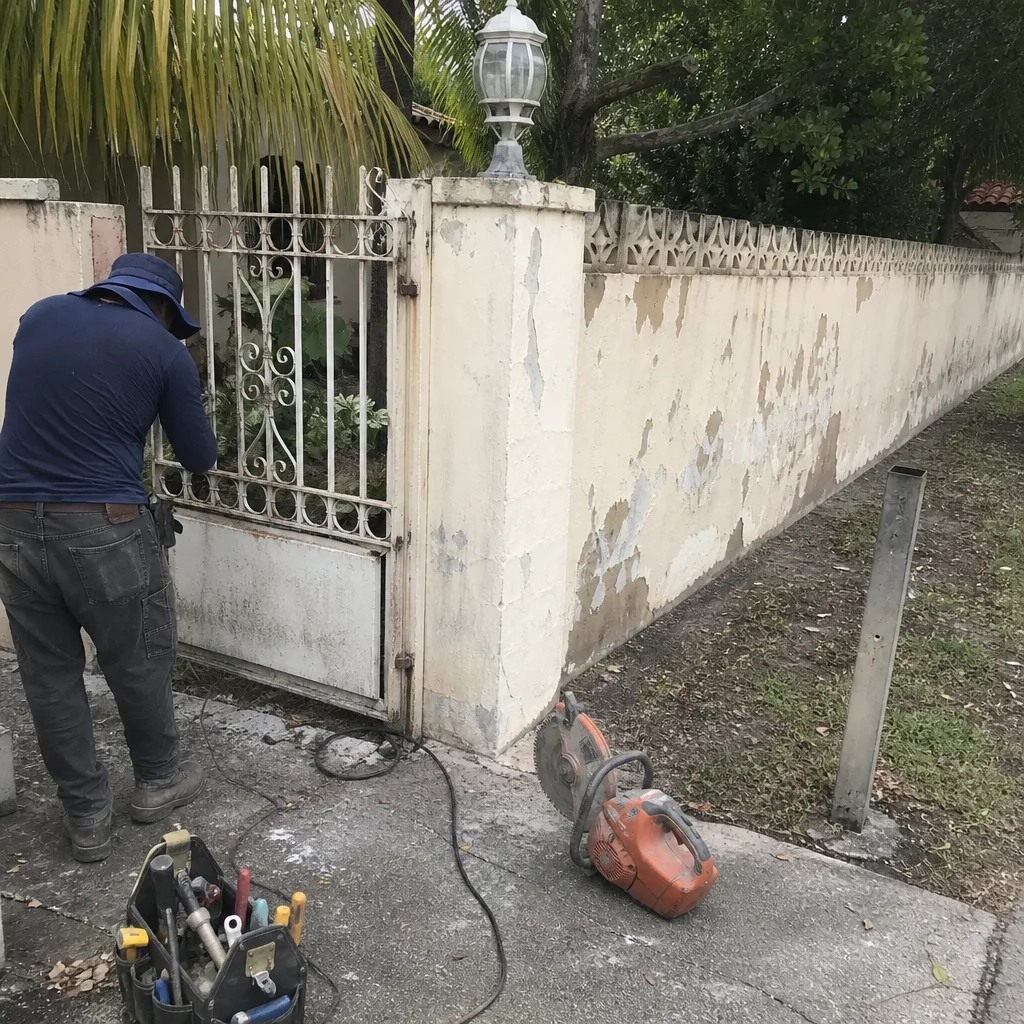 Before
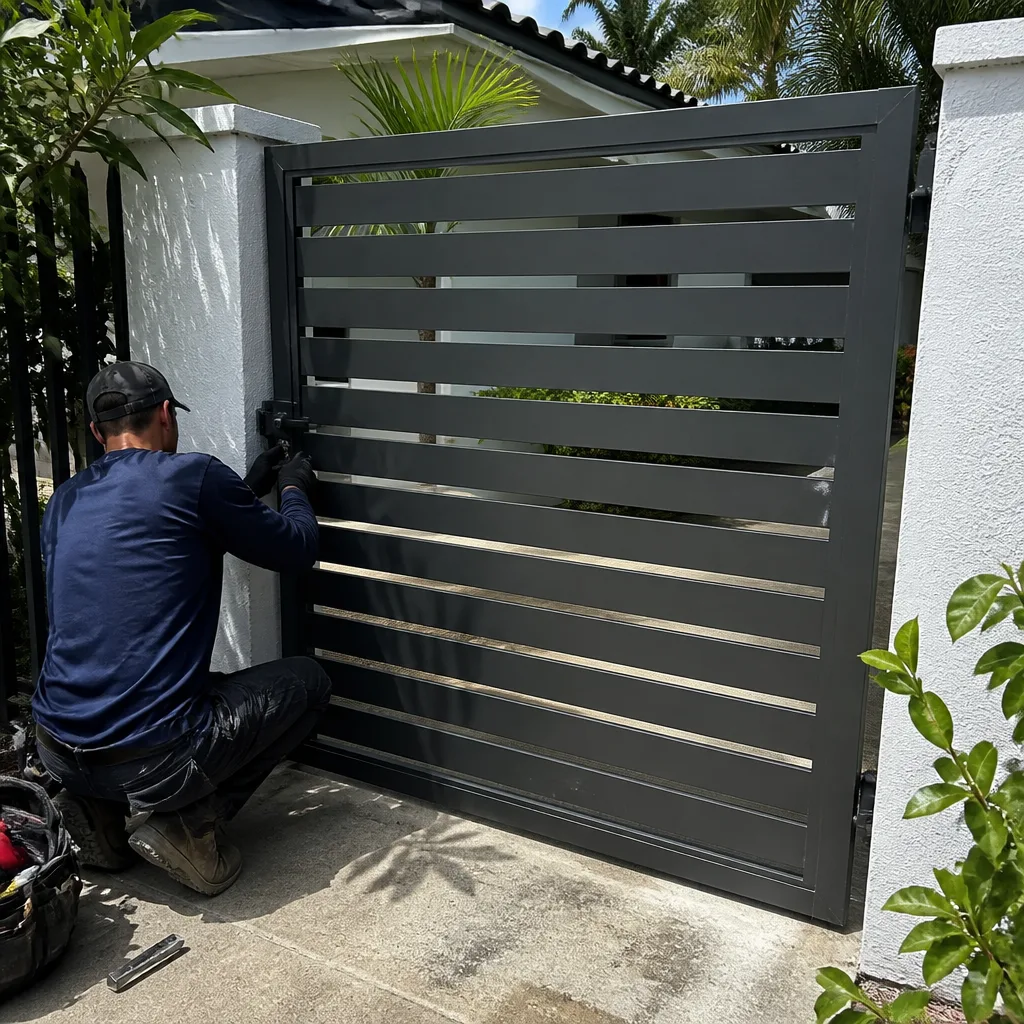 After
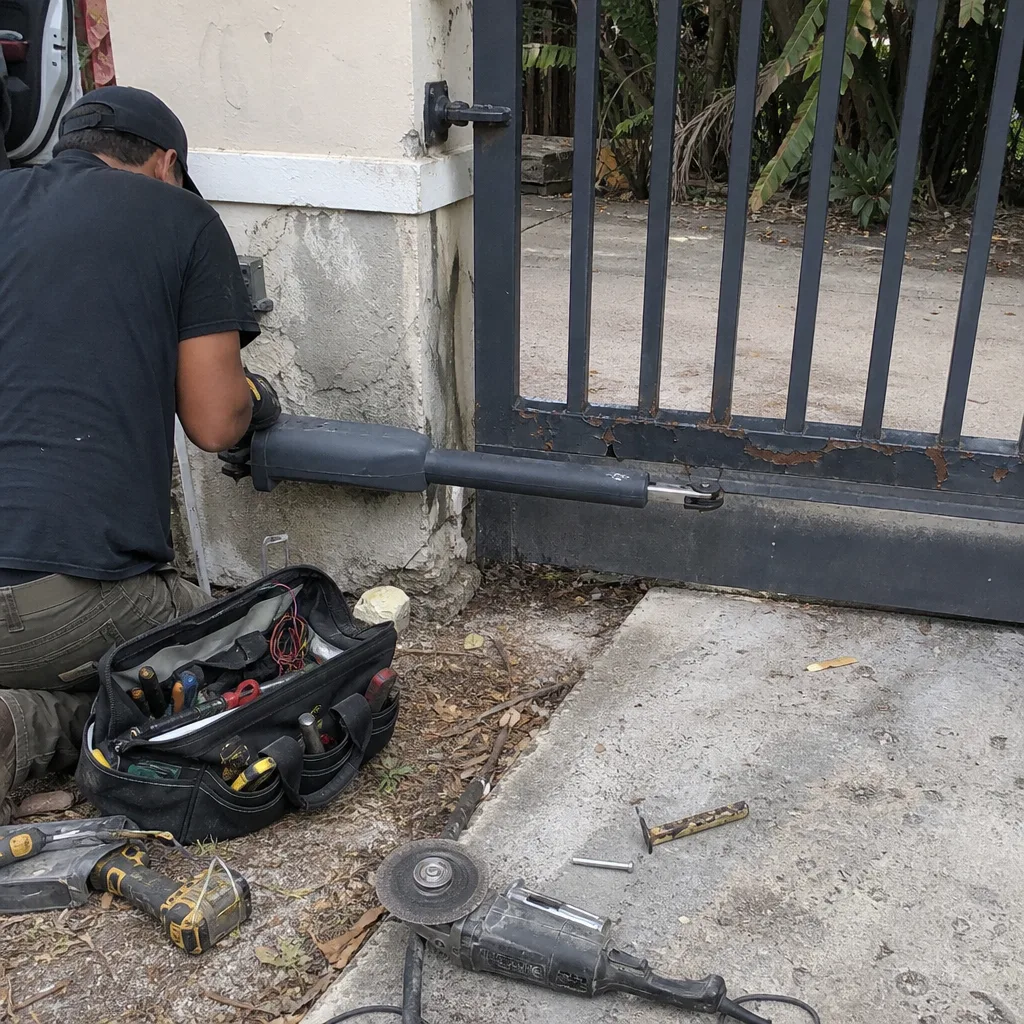 Before
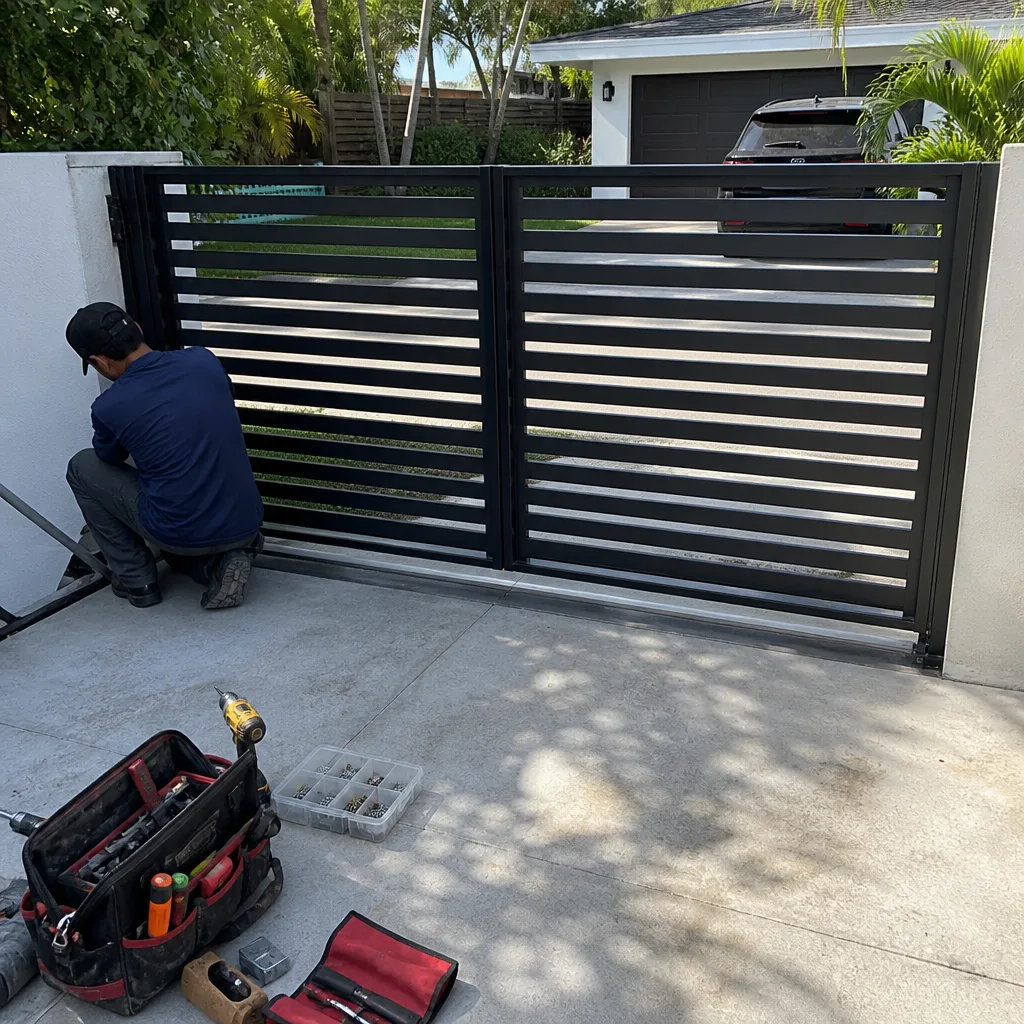 After
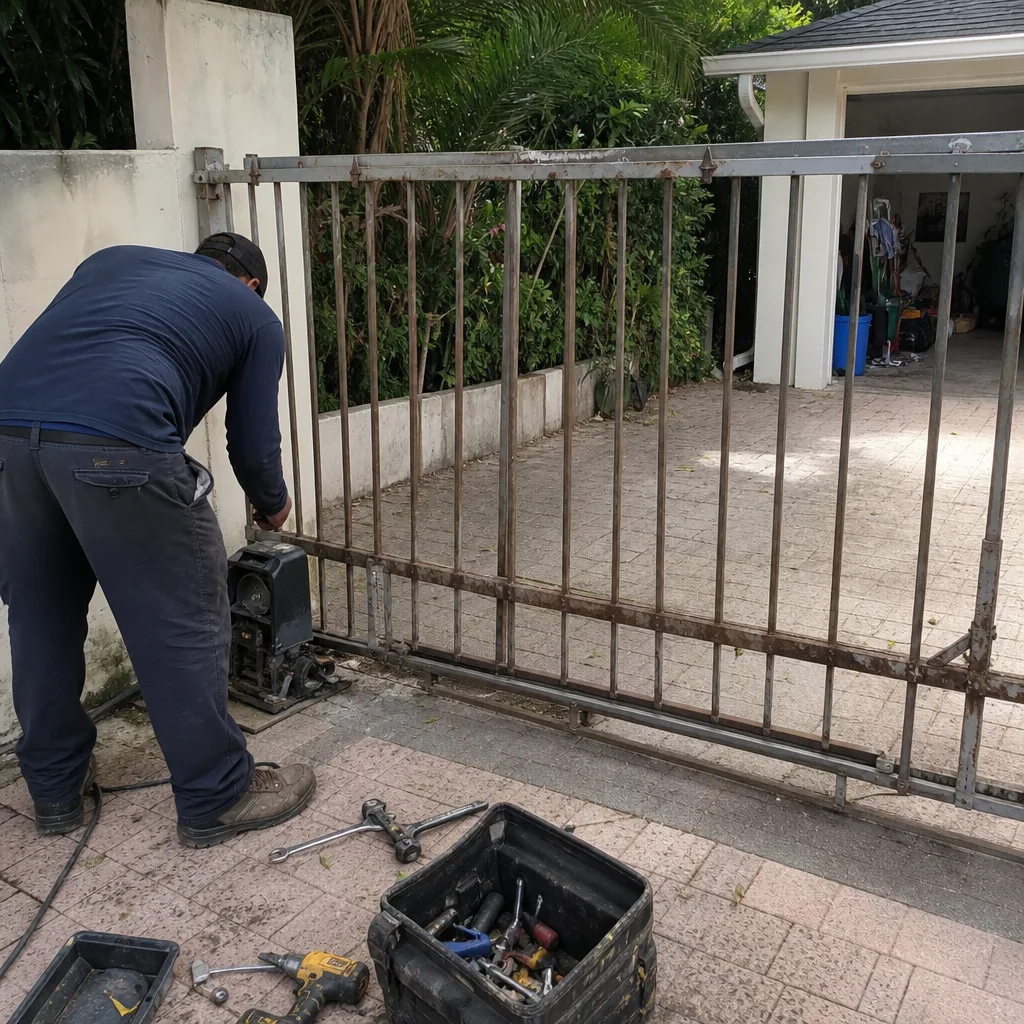 Before
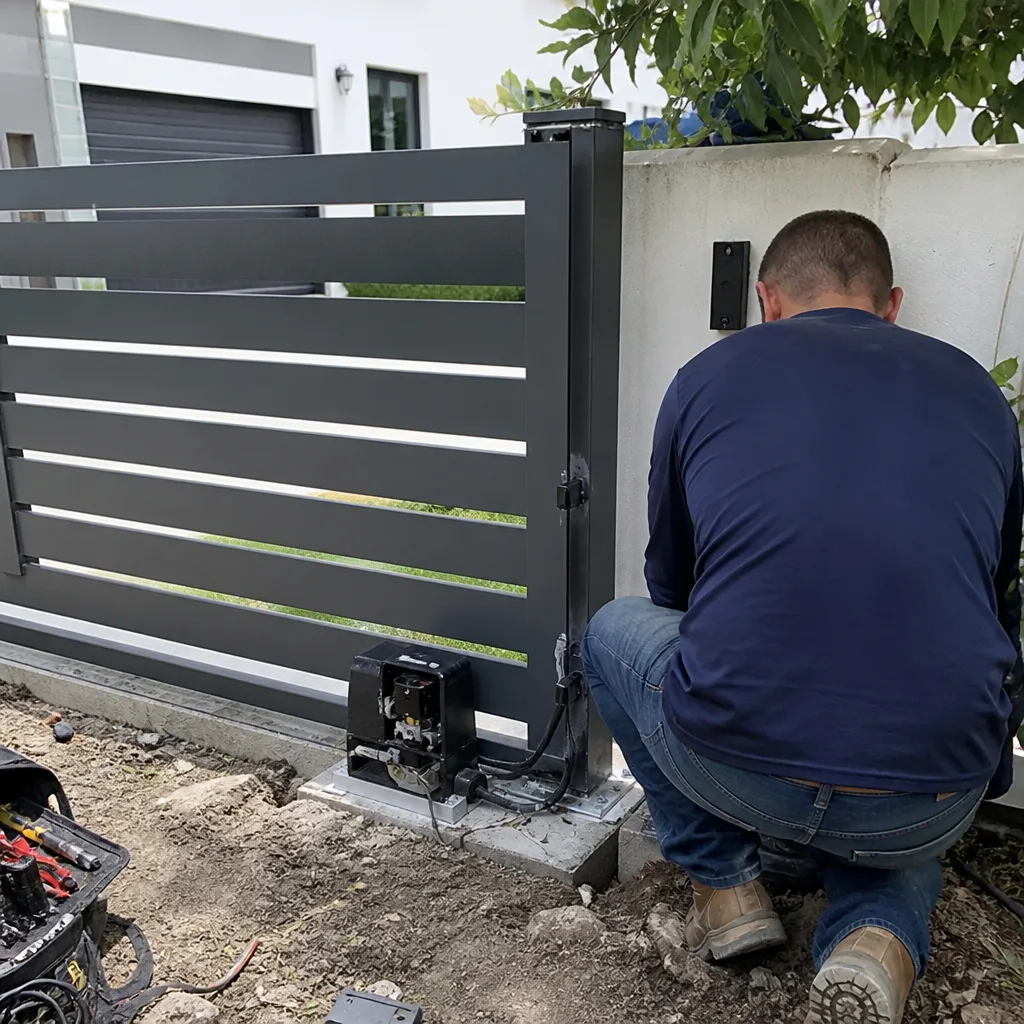 After