
Last updated October 30, 2026
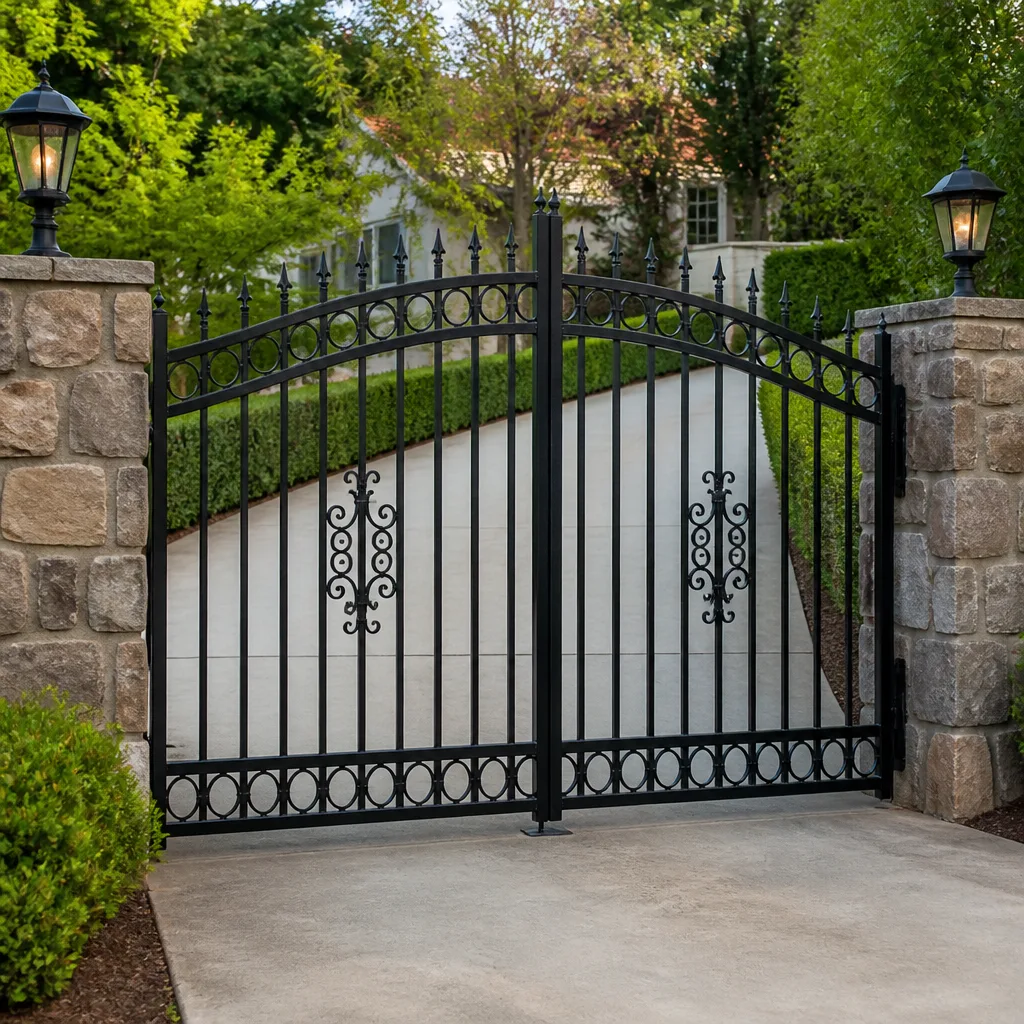 Wrought iron
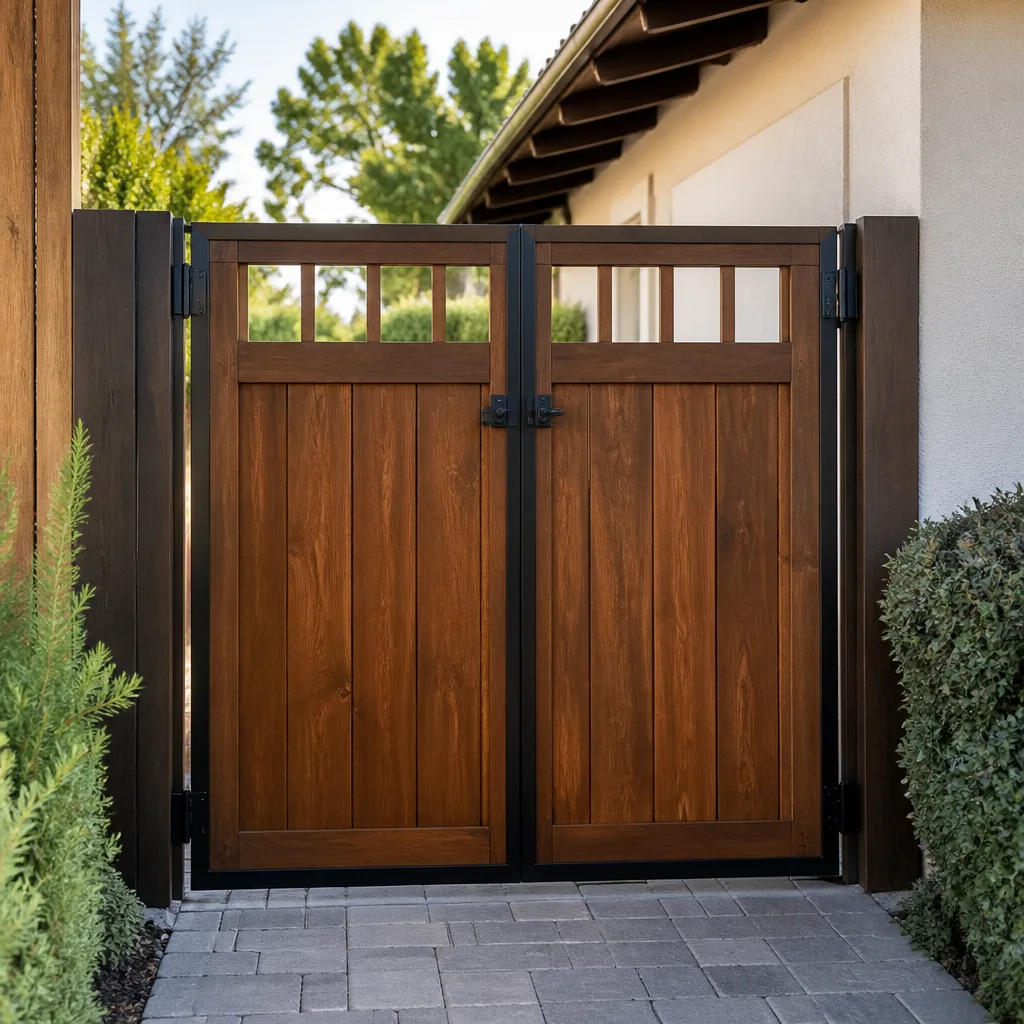 Wood & steel frame
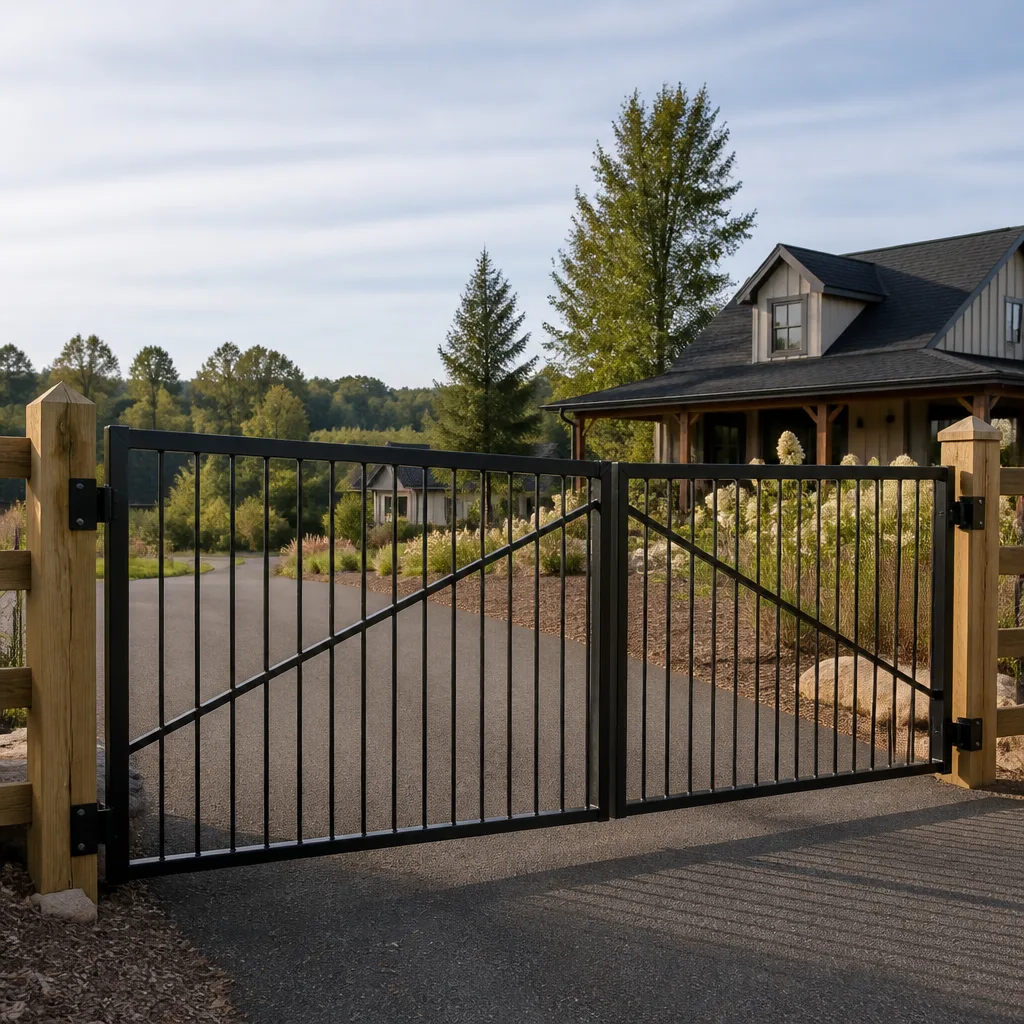 Farm & ranch
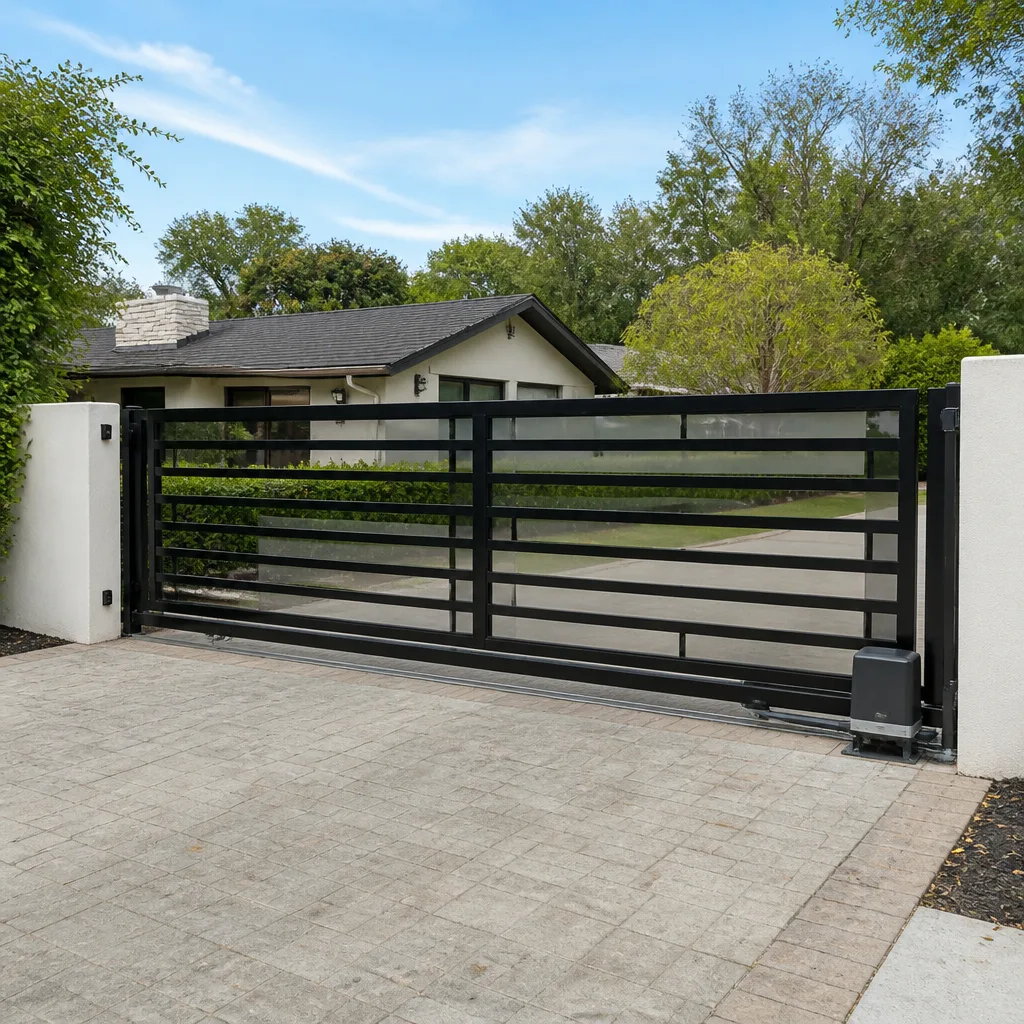 Sliding driveway gates
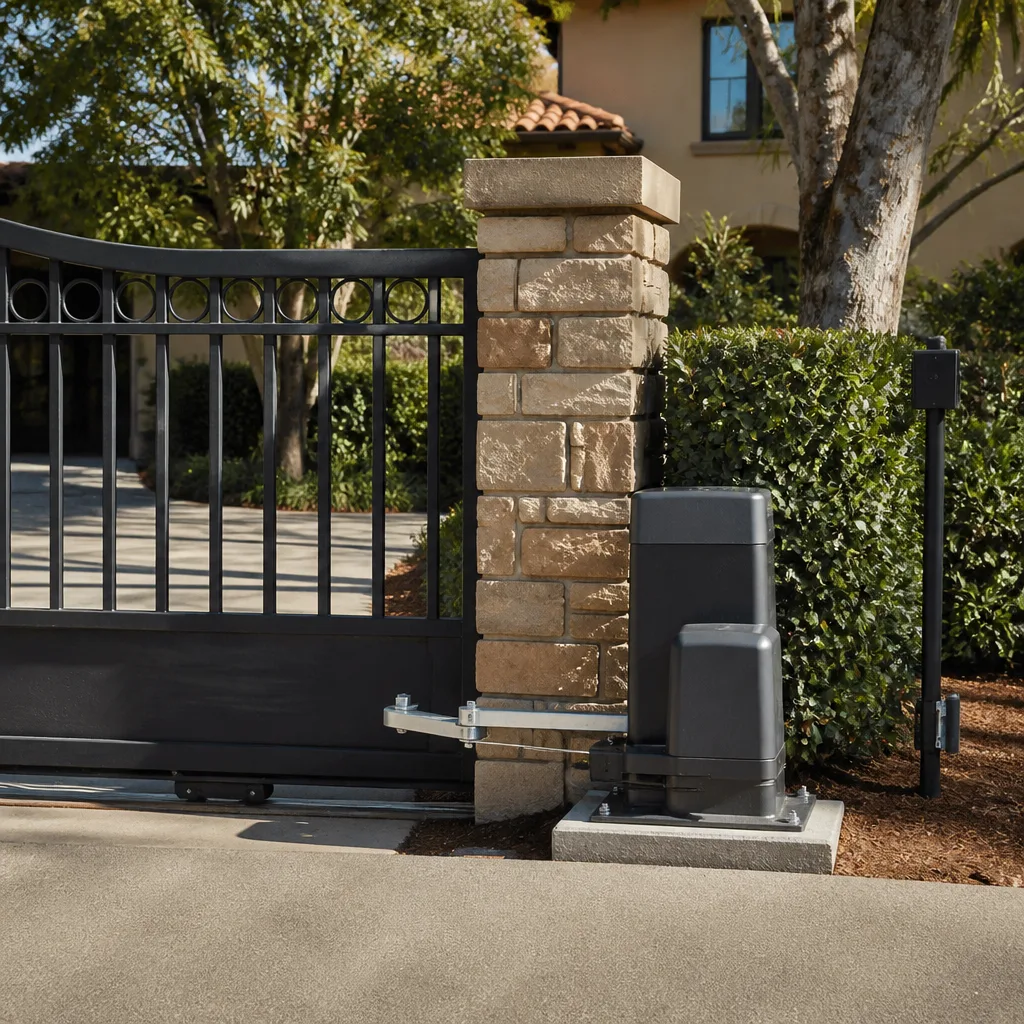 LiftMaster operators
Free on-site gate assessment - hinges, posts, and your LiftMaster or Nice gate operator checked before anything is quoted
The assessment is free and the quote is the invoice.
Get your free estimateChoosing the Right Gate Repair Brand: A Buyer’s Guide for Miami
The most-installed residential gate operator brand in South Florida is not the most repairable one. Parts for the market-leading brand in Miami’s coastal zip codes routinely carry two to three week lead times from the nearest distributor. That’s a real problem when your gate is stuck open after a storm and your security depends on getting it closed tonight. This guide is built on a different framework than what you’ll find in dealer brochures. It evaluates gate brands the way a repair technician does: by how fast parts arrive, how well the components survive salt air, and whether you’re locked into one ecosystem when something fails.
Quick Answer
The right gate repair brand in Miami is the one with the shortest local parts lead time, the highest corrosion resistance for your specific location (coastal vs. inland), and the widest third-party repairability. That often means choosing a brand like FAAC or BFT for commercial systems, or Linear and Viking for residential operators, because independent technicians and regional distributors stock their components locally. Brand prestige matters far less than whether you can get a replacement control board in 48 hours instead of three weeks.
Styles & brands we work with
Table of Contents
- The Miami-Specific Brand Evaluation Framework
- Why Local Parts Availability Beats Brand Loyalty Every Time
- Reading Corrosion-Resistance Ratings for Miami’s Climate
- Dealer-Locked vs. Third-Party Repairable Brands
- Hurricane-Load Certification and What It Actually Means
- Warranty Fine Print: Environmental Exclusions That Void Coverage
- Why Brand-Agnostic Repair Capability Matters More in Miami
- IP Ratings Explained for Miami Humidity
The Miami-Specific Brand Evaluation Framework
Most gate brand guides are written for a national audience. They rank brands by popularity, feature sets, or price point. None of that translates cleanly to Miami, where the operating environment punishes equipment year-round. We evaluate gate brands in Miami on four criteria that actually predict how long a system will stay operational here:
- Local parts availability: Can a technician in Miami-Dade County source a replacement control board, limit switch, or receiver from a regional distributor within 48 to 72 hours? Or does the part have to ship from a warehouse in Texas or California?
- Corrosion-resistance ratings: Does the operator enclosure, hinges, and hardware carry a rating that holds up to salt-laden humidity? Miami’s coastal neighborhoods like Brickell, Coconut Grove, and Key Biscayne accelerate corrosion at rates inland buyers never experience.
- Third-party repairability: Is the brand’s technical documentation, programming interface, and parts ecosystem open to independent technicians? Or does the manufacturer lock diagnostics behind dealer-only software?
- Hurricane-load certification: For slide and swing gates in Miami-Dade County, does the gate assembly and operator meet the wind-load requirements under the Florida Building Code? A gate that folds in a Category 2 storm creates a debris hazard and a liability claim.
These four criteria matter more here than anywhere else in the continental U.S. Miami combines corrosive salt air, hurricane wind events, and a real estate market where security gates are standard on properties from Coral Way to Pinecrest. When we diagnose a failing gate in Miami, the root cause almost always traces back to one of these four factors being ignored at the original installation.
Why Local Parts Availability Beats Brand Loyalty Every Time
The best gate operator in the world becomes a liability if a replacement part takes three weeks to arrive after a storm. Miami has a distributed network of gate and access control distributors, and the brands they stock heavily are the brands that get repaired fastest here. That’s the practical reality of gate repair in Miami-Dade and Broward counties.
FAAC and BFT maintain strong regional distribution footprints in South Florida. Their hydraulic and electromechanical operators are common on commercial and high-end residential properties across the area, and independent supply houses in Miami stock their boards, capacitors, and limit switch kits. Linear and Viking serve the residential market similarly, with parts available through multiple distributors rather than a single dealer network.
When a control board fails on a LiftMaster or Mighty Mule unit in a coastal Miami neighborhood, the part often has to be ordered from a central warehouse. That delay means a gate that stays open or stays closed for days or weeks. For an HOA in Kendall or a property manager in Doral, a non-functioning gate is a security exposure and a resident complaint generator. The brand you can fix tomorrow is worth more than the brand with a prettier brochure.
Reading Corrosion-Resistance Ratings for Miami’s Climate
Miami’s humidity averages above 70 percent year-round, and coastal areas add salt aerosol to the mix. Electronics enclosures, steel chassis components, and even zinc-plated hardware corrode faster here than manufacturers expect in their default testing environments. That’s why we look at corrosion-resistance specifications before anything else on a Miami gate bid.
Two metrics matter most:
- NEMA enclosure rating: A NEMA 4 or NEMA 4X enclosure on the operator housing means protection against water ingress and, in the 4X variant, corrosion resistance for coastal environments. A NEMA 3R enclosure may be adequate for an inland garage but not for a gate operator mounted outside a Coral Gables estate.
- Materials spec: Stainless steel hardware, powder-coated aluminum chassis, and sealed bearing assemblies hold up measurably better in Miami than bare steel or standard zinc plating. Brands like FAAC and BFT specify these more consistently on their mid-tier and commercial lines than budget brands do.
We’ve replaced operators in Miami that were installed only three or four years earlier because the enclosure rusted through at the mounting points. The motor still ran. The box was gone. Corrosion resistance is not a cosmetic feature in South Florida. It’s the difference between a five-year gate and a fifteen-year gate.
Dealer-Locked vs. Third-Party Repairable Brands
Some gate operator manufacturers structure their business so that only authorized dealers can access programming software, technical bulletins, and certain replacement parts. On paper, that sounds like quality control. In practice, it creates a single point of failure for the Miami property owner.
When a dealer-locked brand fails and the original installer has gone out of business or is booked two weeks out, the homeowner is stuck. Independent technicians can’t get the parts or the firmware to complete a repair, and the only path forward is often a full system replacement. That’s an expensive outcome for what could have been a $300 board swap.
Third-party repairable brands take a different approach. FAAC, BFT, Linear, and Viking all maintain open technical ecosystems, meaning independent technicians can access documentation, program settings, and source parts through regional distributors. This matters more in Miami than most markets because the mix of properties here, from historic Coral Gables gates to modern Brickell high-rise entry systems, means a single dealer can’t realistically serve every customer. A brand-agnostic repair specialist can walk up to any of these systems and diagnose it on the spot.
Hurricane-Load Certification and What It Actually Means
Miami-Dade County enforces the strictest wind-load building codes in the United States. That applies to gates, not just structures. The Florida Building Code requires automatic vehicular gates to meet specific wind-load ratings, and Miami-Dade’s product approval process adds an extra layer of testing that products sold elsewhere don’t undergo.
Not every gate operator brand submits its products for Miami-Dade NOA (Notice of Acceptance) approval. That doesn’t automatically disqualify a brand from use in Miami, but it does mean the specifying contractor needs to understand wind-load calculations and how the gate panel itself, not just the operator, responds to hurricane-force wind.
Here’s what to check before committing to a brand for a new installation or major repair in Miami:
- Is the operator rated for the gate’s weight and duty cycle under wind load? A chain-driven slide operator that works fine in calm conditions may not hold a 700-pound gate in a tropical storm if the chain tension system is undersized.
- Does the gate panel itself carry a Miami-Dade product approval? The operator and the gate are separate approvals. An approved operator on an unapproved panel doesn’t satisfy code if the installation is being permitted.
- Does the brand provide wind-load engineering data? FAAC and BFT, which serve the commercial market heavily, publish detailed engineering documentation. Some budget residential brands do not, which shifts the engineering burden onto the installer.
For most Miami homeowners, hurricane-load certification only comes into focus during a permit-triggering installation or a post-storm repair. The brand you choose before the storm will determine whether you’re repairing or replacing after it.
Warranty Fine Print: Environmental Exclusions That Void Coverage in Miami
Manufacturer warranties for gate operators are written in careful language that limits exposure to environmental claims. In Miami, those exclusions are not hypothetical. They apply to almost every outdoor installation.
The exclusion to look for is language around “environmental damage,” “corrosion,” or “exposure to saline atmosphere.” Many brands, especially budget-focused ones, explicitly exclude coverage for damage caused by salt air, high humidity, or water intrusion unless the enclosure meets a specific NEMA rating that was confirmed at installation. In practical terms, a homeowner in North Beach or Surfside who buys an operator warrantied for five years may find that warranty is effectively meaningless after two years of salt exposure.
We recommend reading warranties in Miami with three questions in mind:
- Does the warranty language specifically exclude corrosion or environmental exposure? If it does, the warranty may not apply to Miami coastal installs at all.
- Is the enclosure rating listed as a condition of warranty coverage, and was the installation documented to that spec? If the installer didn’t verify the NEMA rating, the manufacturer may deny a claim later.
- Does the warranty cover parts and labor or just parts? In Miami, labor for gate repair is often comparable to or greater than the part cost, especially for underground operator replacements.
Brands that confidently warrant their products for coastal use, rather than quietly excluding it, tell you something real about their build quality.
Why Brand-Agnostic Repair Capability Matters More in Miami Than Anywhere Else
Miami properties don’t exist in a clean brand ecosystem. A Doral commercial property might have a BFT slide operator at the front entrance and a Linear swing operator at the loading dock. A Coconut Grove estate might pair a FAAC hydraulic operator with a Ghost Controls retrofit on a secondary pedestrian gate. This mixed-brand reality is the norm here, not the exception.
That’s why the ability to service multiple brands matters more than brand loyalty. A company that only services one manufacturer’s lineup can’t address the full scope of a Miami property’s gate infrastructure. The customer ends up managing multiple vendors, each with different warranties, different response times, and different levels of expertise.
We work on virtually any gate system. Whatever brand you have, we know it. Our technicians are trained across nine major gate and operator brands including LiftMaster, FAAC, BFT, Linear, Viking, Ghost Controls, DoorKing, Elite, and Mighty Mule. That multi-brand capability matters when a property needs a repair decision made quickly and the answer isn’t “rip it all out and start over.” Brand-agnostic means we fix what you have. We’re not here to sell you a system you don’t need.
IP Ratings Explained for Miami Humidity
IP ratings, or Ingress Protection ratings, measure how well an electrical enclosure resists dust and water intrusion. In Miami’s humidity, they’re one of the most useful specifications on a gate operator’s data sheet, and one of the least understood by buyers.
An IP rating has two digits. The first digit measures solids protection on a scale of 0 to 6. The second digit measures liquids protection on a scale of 0 to 9. For a Miami gate operator, the second digit matters most. A minimum of IP44 is appropriate for inland installations under an overhang or canopy. For operators mounted fully exposed in coastal environments, look for IP54 or higher, with IP65 being the realistic target for anything within a mile of the ocean.
The practical difference: an IP44 enclosure keeps out splashing water from most directions. An IP54 enclosure adds dust protection and stronger splash resistance. An IP65 enclosure survives driving rain and salt spray. In communities like Cutler Bay or Palmetto Bay, where afternoon thunderstorms arrive with force, the step from IP44 to IP54 is often the difference between a control board that lasts five years and one that fails after eighteen months.
When we evaluate a gate operator for a Miami installation, we check the IP rating on the enclosure, the terminal strip, and the limit switch housing. The terminals corrode first. Even a well-sealed enclosure with exposed terminals will fail in Miami’s salt air faster than a properly sealed one.
How to Choose the Right Brand for Your Miami Property: Step-by-Step
- 1
Determine your exposure risk. Find your property on a map and note the distance from the coast. Properties within one mile of salt water need higher corrosion resistance and IP ratings. Properties west of the Turnpike have more flexibility but still face high humidity year-round.
- 2
Inventory your current equipment. Walk your property and note every gate and operator brand. Many Miami properties have multiple brands across different gates. Knowing what you have now determines whether you need to match an existing ecosystem or can choose freely.
- 3
Check parts availability for any brand you’re considering. Call a local independent gate repair company and ask what the typical lead time is for a replacement control board or limit switch for that brand. You’ll learn more from that conversation than from any manufacturer website.
- 4
Review the warranty language for environmental exclusions. If “corrosion” or “saline atmosphere” appears in the exclusions, weigh that heavily for a coastal Miami installation.
- 5
Confirm third-party repairability. Ask whether independent technicians can access programming and parts for the brand, or whether the system is locked to an authorized dealer. This decision follows you for the life of the system.
- 6
Verify hurricane-load compliance if you’re permitting the work. Any new automatic gate installation in Miami-Dade County will need to meet wind-load requirements. The brand and model you choose needs to be part of that calculation, not an afterthought.
For a complete overview of what’s involved in a gate installation in Miami, see our guide on Gate Installation in Boca Pointe. And if your current system is already showing signs of trouble, start with our Gate Repair in Boca Pointe page or specifically our Electric Gate Repair in Boca Pointe page to understand what’s involved in diagnosing the failure.
See the difference
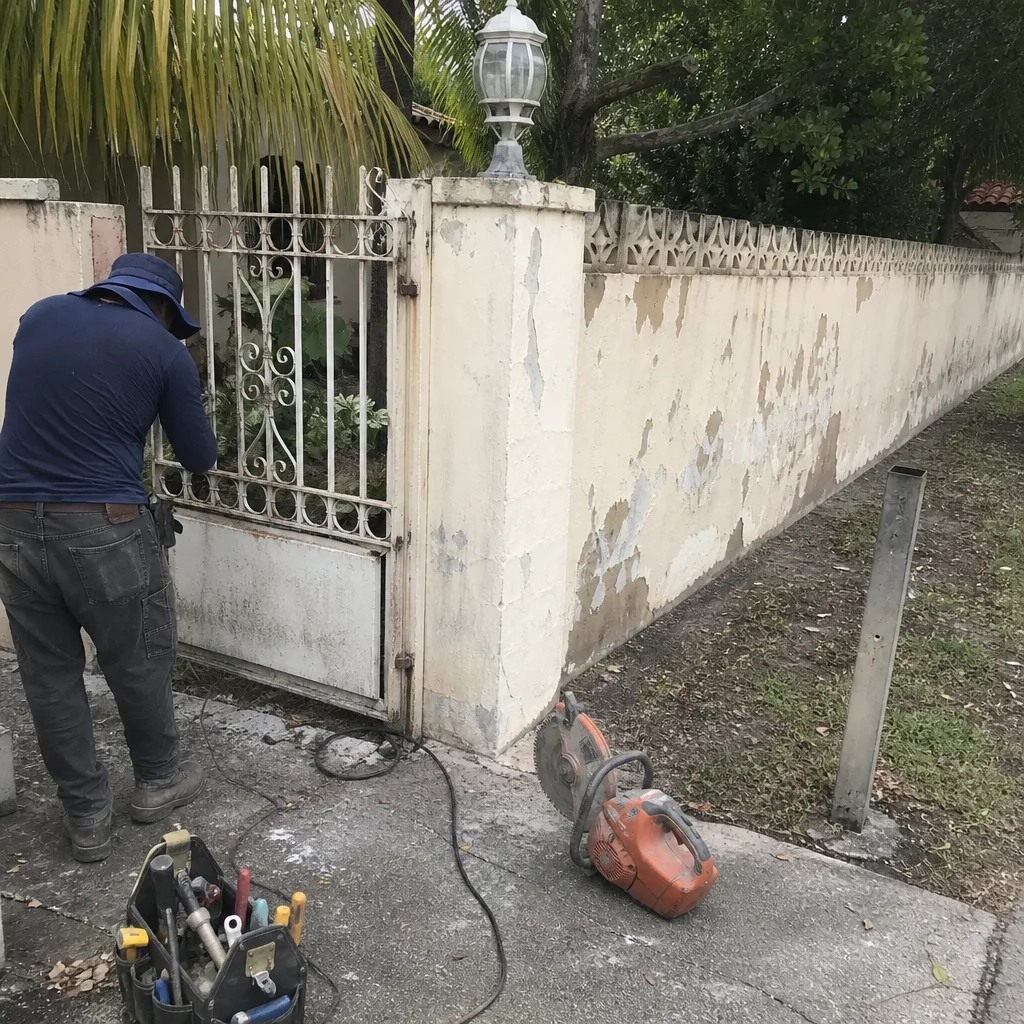 Before
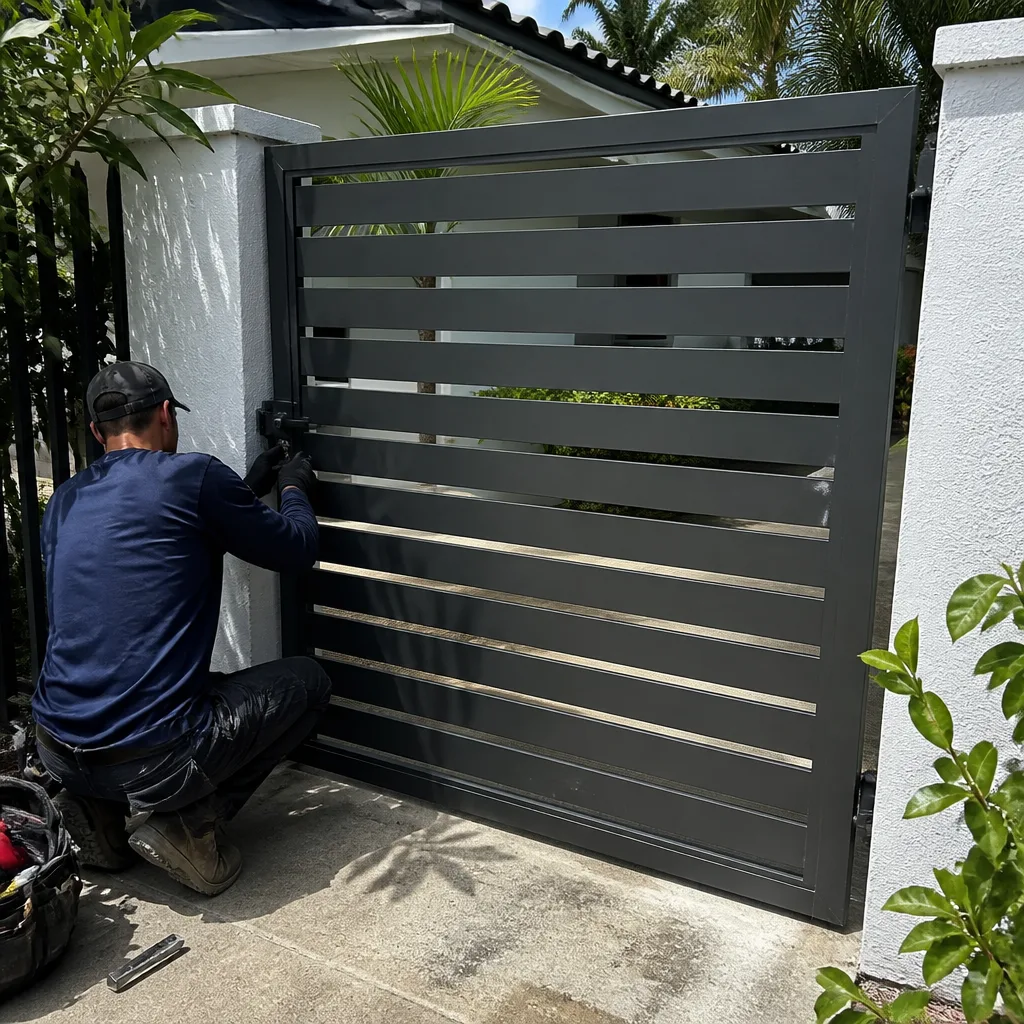 After
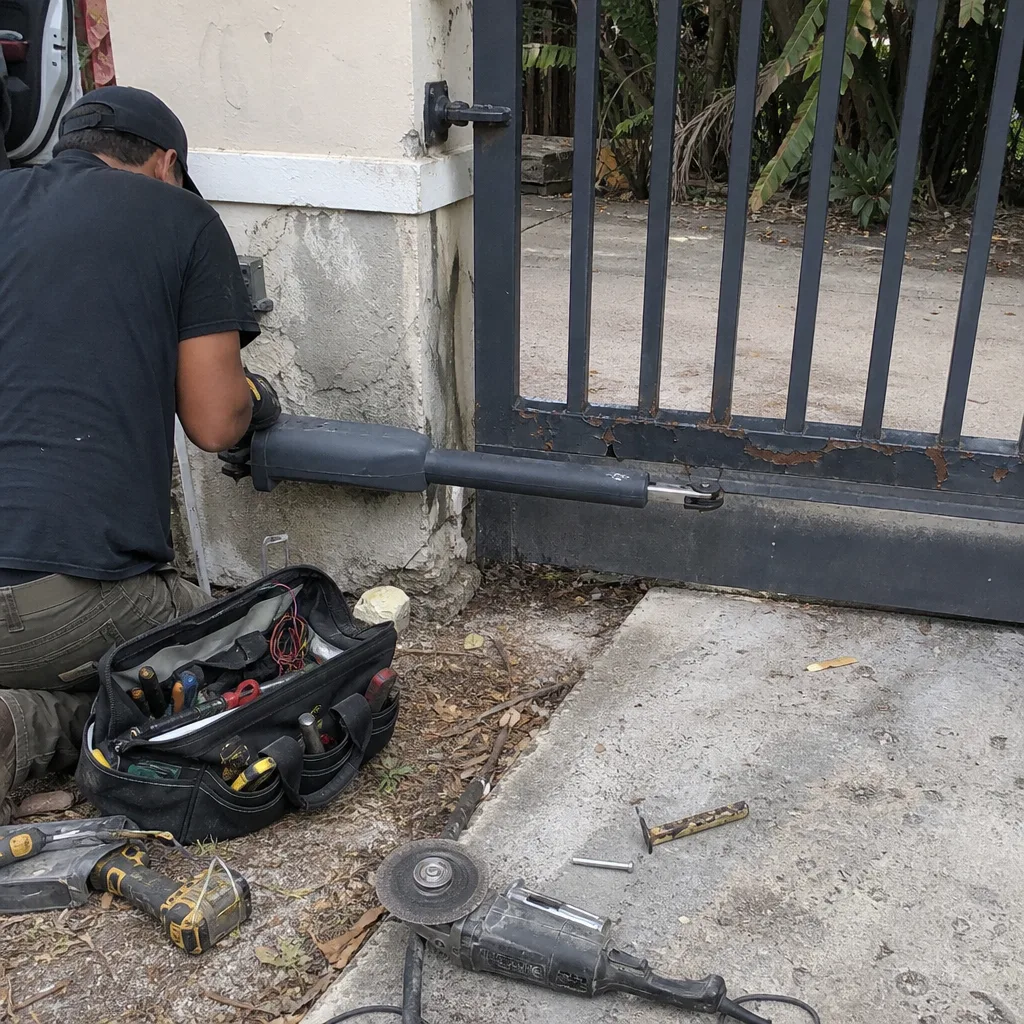 Before
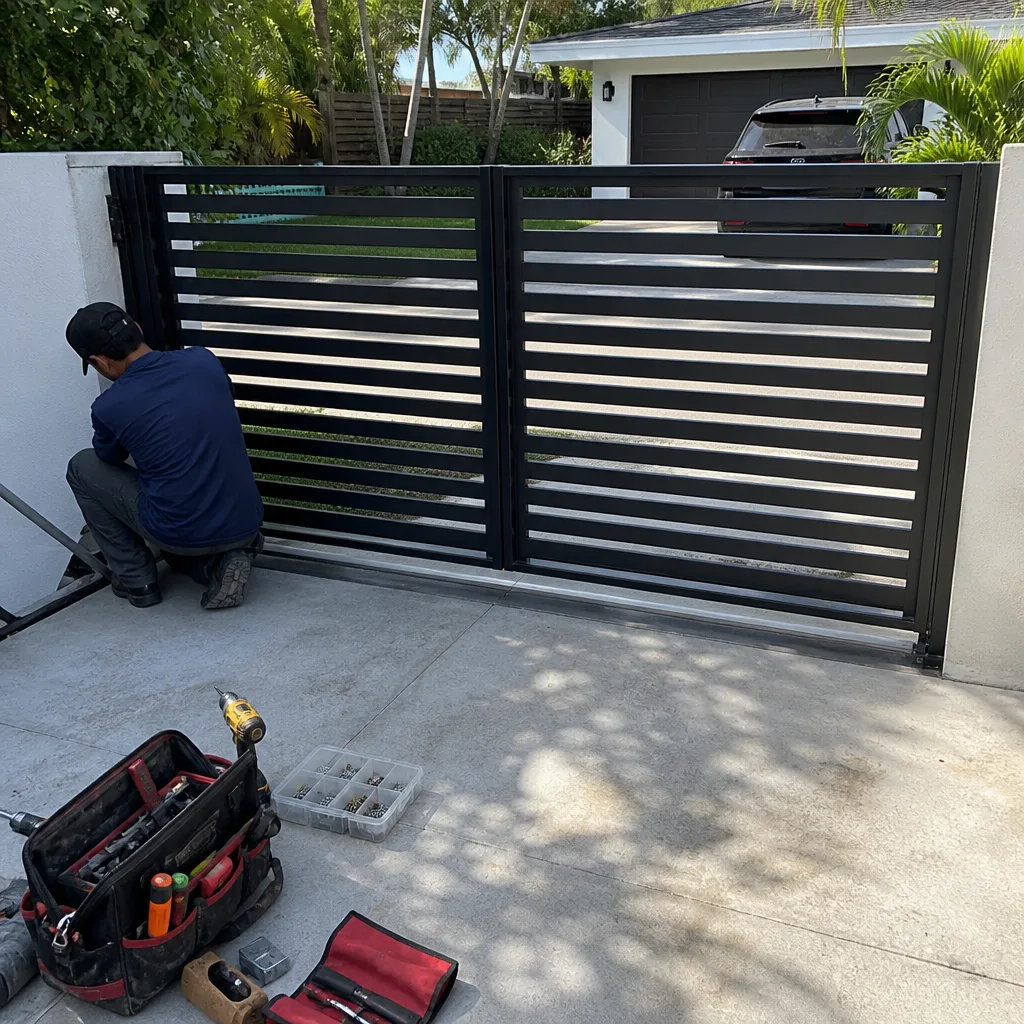 After
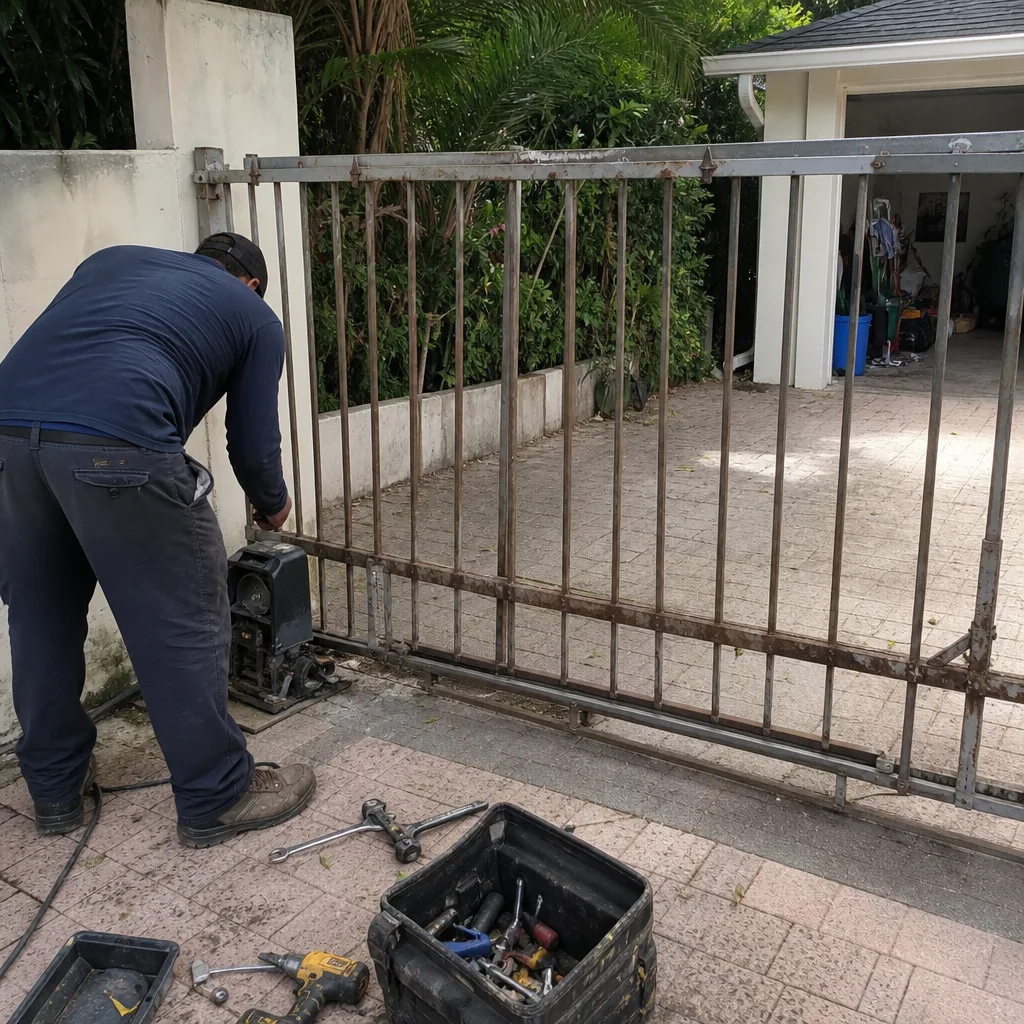 Before
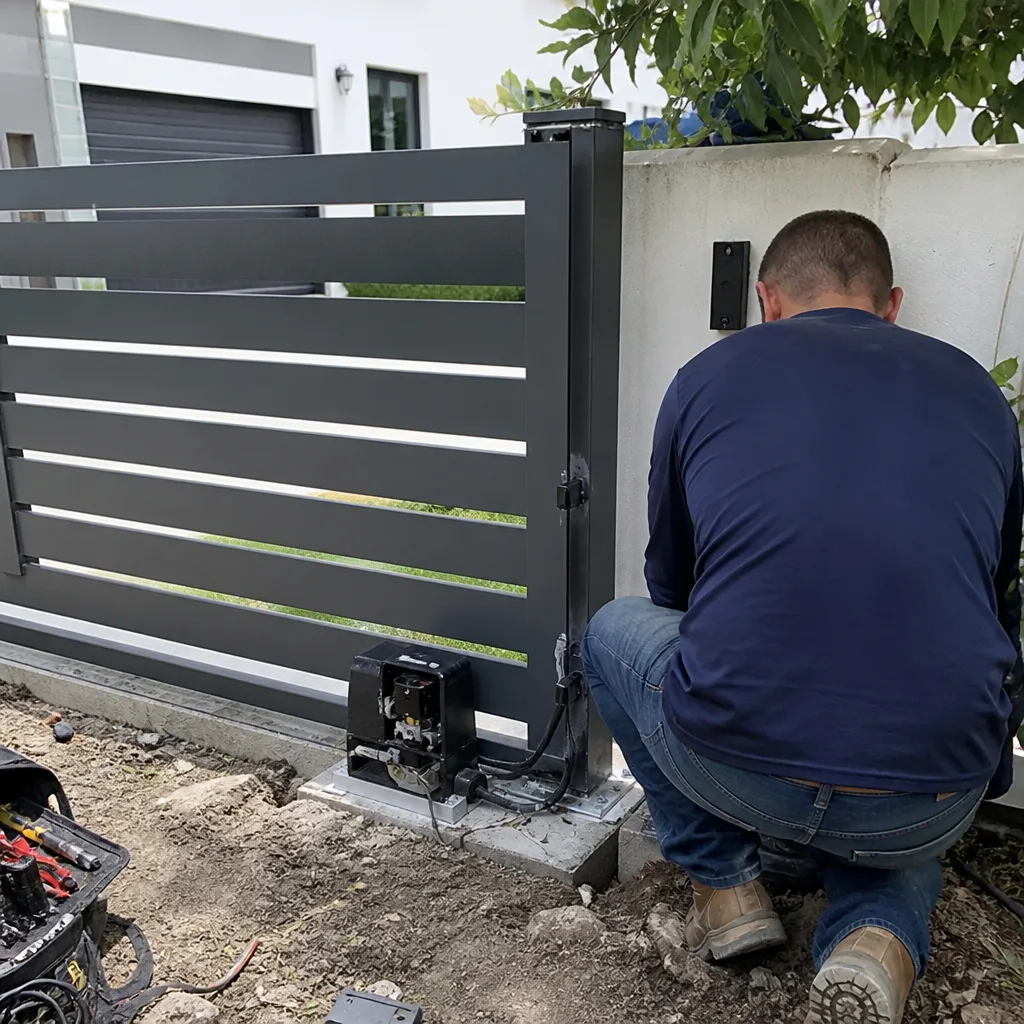 After
Common Mistakes to Avoid
- Choosing a brand because a single dealer recommended it. Dealer incentives don’t align with your repair timeline. A brand with heavy dealer promotion but thin local parts stock is a future headache in Miami.
- Ignoring corrosion resistance because the operator is “under a canopy.” Miami’s humidity finds its way into enclosures regardless of overhead cover. Salt air moves laterally, not just downward.
- Buying a budget operator for a coastal property. The savings disappear after the first control board replacement, which often costs as much as the upgrade difference would have.
- Skipping the warranty fine print. Environmental exclusions in Miami are the rule, not the exception. Read the exclusions before you buy, not after the failure.
- Assuming all brands replace like-for-like. Operator dimensions, mounting patterns, and wiring layouts differ across brands. Mixing brands without planning often creates re-engineering costs mid-project.
- Waiting until the gate fully fails before calling a specialist. Grinding noises, slow operation, and intermittent sensor trips are early warnings. In Miami’s climate, those warnings progress to full failure faster than inland.
- Treating gate selection as a one-time decision. Miami properties evolve. A brand-agnostic repair partner can adapt the system over time without forcing a rip-and-replace when needs change.
When to Call a Professional
Gate systems involve high-tension springs, heavy moving panels, and line-voltage electrical components. If your gate is making unusual noises, moving unevenly, tripping sensors intermittently, or failing to respond to remotes, don’t attempt component-level repairs yourself. The danger from a mis-adjusted spring or an energized control board is real, and the diagnostic tools needed to pinpoint the fault are specialized.
If your gate has been affected by a storm, is stuck in the open or closed position, or has visible corrosion on the operator housing, call a gate specialist who works across multiple brands and can source parts locally. Miami Gate Company offers free estimates in Miami and more guides & resources on our blog. Call (833) 570-5807 and we’ll assess your system, identify the failing component, and quote the repair before any work begins.
Frequently Asked Questions
For most Miami properties, FAAC and BFT offer the best combination of corrosion resistance, local parts availability, and third-party repairability for commercial and high-end residential installations. Linear and Viking are strong residential choices with solid regional parts distribution. The “most reliable” brand for your specific property depends on distance from the coast, whether the gate is slide or swing operation, and your duty cycle, so a brand-agnostic evaluation matters more than a blanket recommendation.
Gate repair costs in Miami vary widely depending on whether the failure is mechanical, electrical, or structural. A limit switch or sensor replacement is often in the low hundreds, while a control board replacement or hydraulic pump rebuild runs higher. The brand, the operator’s age, and your property’s exposure to salt air all affect the final number. Call (833) 570-5807 for an exact quote on your specific system. Estimates are free, and the price is quoted before any work starts.
Sometimes, but not always. Dealer-locked brands restrict access to programming software and certain proprietary parts, which means an independent technician may be able to handle mechanical repairs but not control system diagnostics. If you’re planning to rely on independent repair providers in Miami, which most property owners eventually need to do, choose a brand with open technical documentation and local parts distribution like FAAC, BFT, Linear, or Viking.
For properties within one mile of Biscayne Bay or the Atlantic, look for an IP54 or higher enclosure rating. IP65 is the realistic standard for fully exposed coastal installations. Inland Miami properties can operate with IP44 enclosures, but the added margin of IP54 is worth the small cost difference given Miami’s year-round humidity. The terminal strip and limit switch housings should carry the same rating as the main enclosure.
Insurance coverage for gate damage varies by policy and by the specific cause of the failure. Many Florida policies exclude wind-driven rain damage unless the gate is specifically covered under a windstorm rider. If your gate is damaged by a named storm, document the damage with photos before any repair work begins, and work with a repair provider who can provide detailed documentation of the failure cause. That paperwork matters for insurance claims.
A brand-agnostic company diagnoses based on what your system actually needs, not what a single manufacturer incentivizes them to sell. In Miami’s mixed-brand property landscape, that means the recommendation you get is driven by parts availability, corrosion resistance, and repair feasibility, not dealer quotas. A brand-agnostic company can also service the full spectrum of gates on a single property, eliminating the multi-vendor coordination problem. Learn more about our approach on the Miami Gate Company home page.
The Bottom Line
Choosing a gate repair brand in Miami is a parts availability and corrosion resistance decision before it’s a brand preference decision. The operator that performs best in Miami is the one whose components you can source locally when it fails, whose enclosure survives the salt air, and whose ecosystem doesn’t lock you into a single dealer. For deeper detail, see The Complete Gate Repair Guide for Miami Homeowners. The steps in this guide, checking IP ratings, reading warranty exclusions, verifying local parts stock, and evaluating third-party repairability, give you a framework that works for any Miami property. Apply them before you buy, and you’ll make a decision that holds up for years, not one you regret after the first storm.
Written by the team at Miami Gate Company, serving Miami since 2012.