

Last updated October 30, 2026
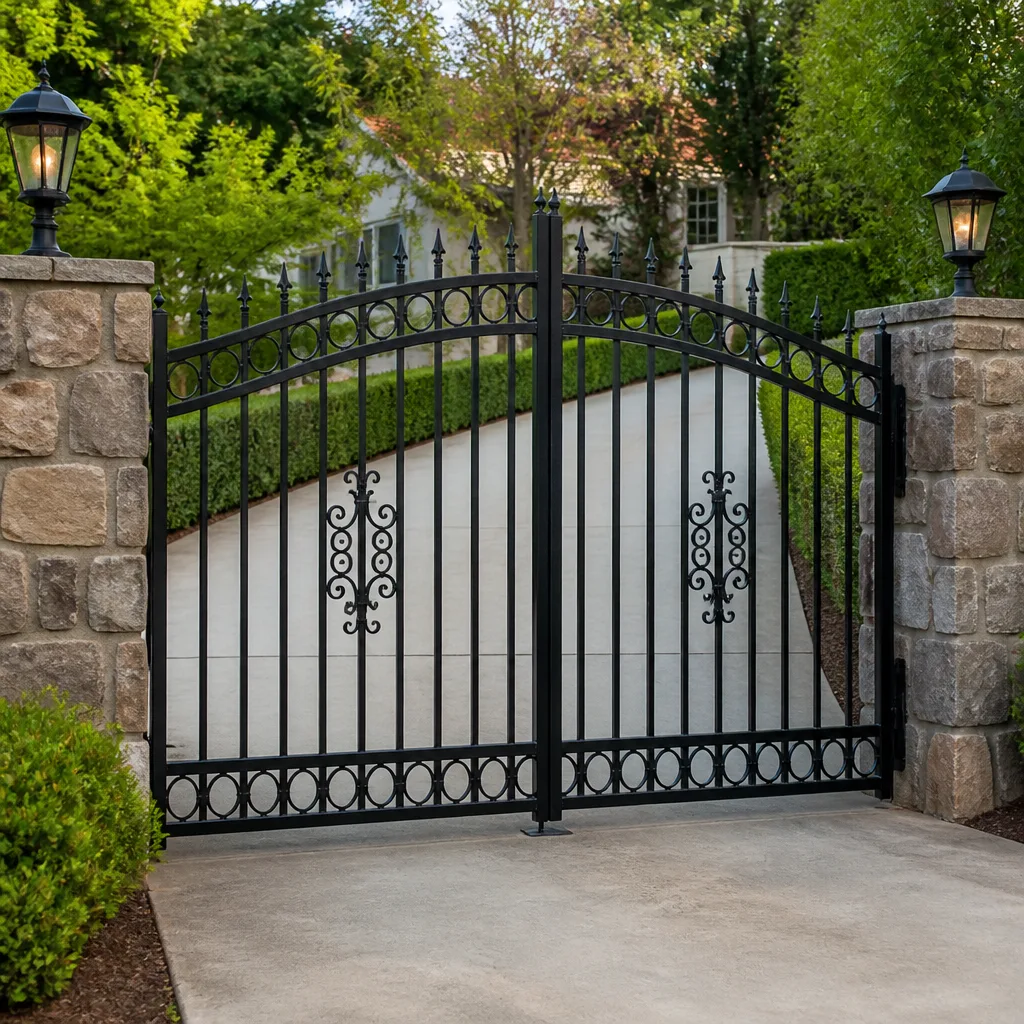 Wrought iron
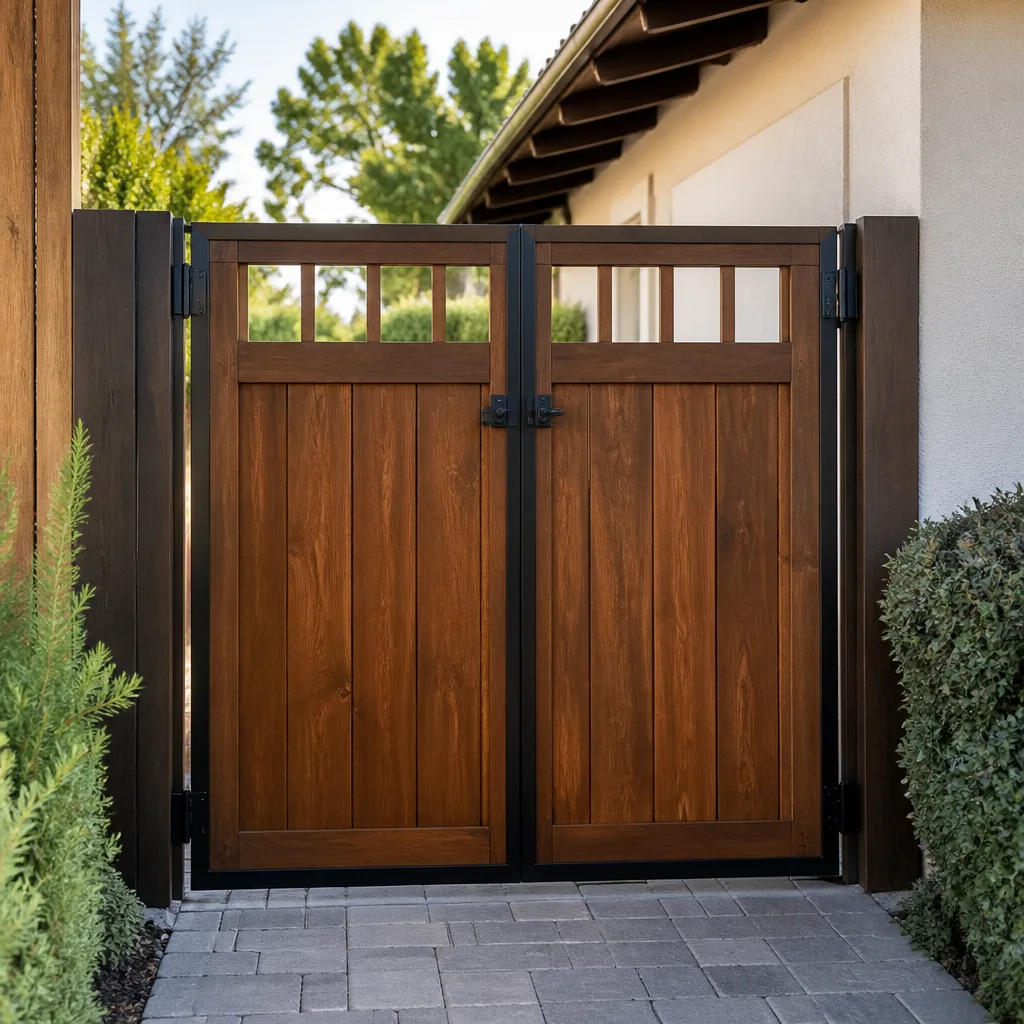 Wood & steel frame
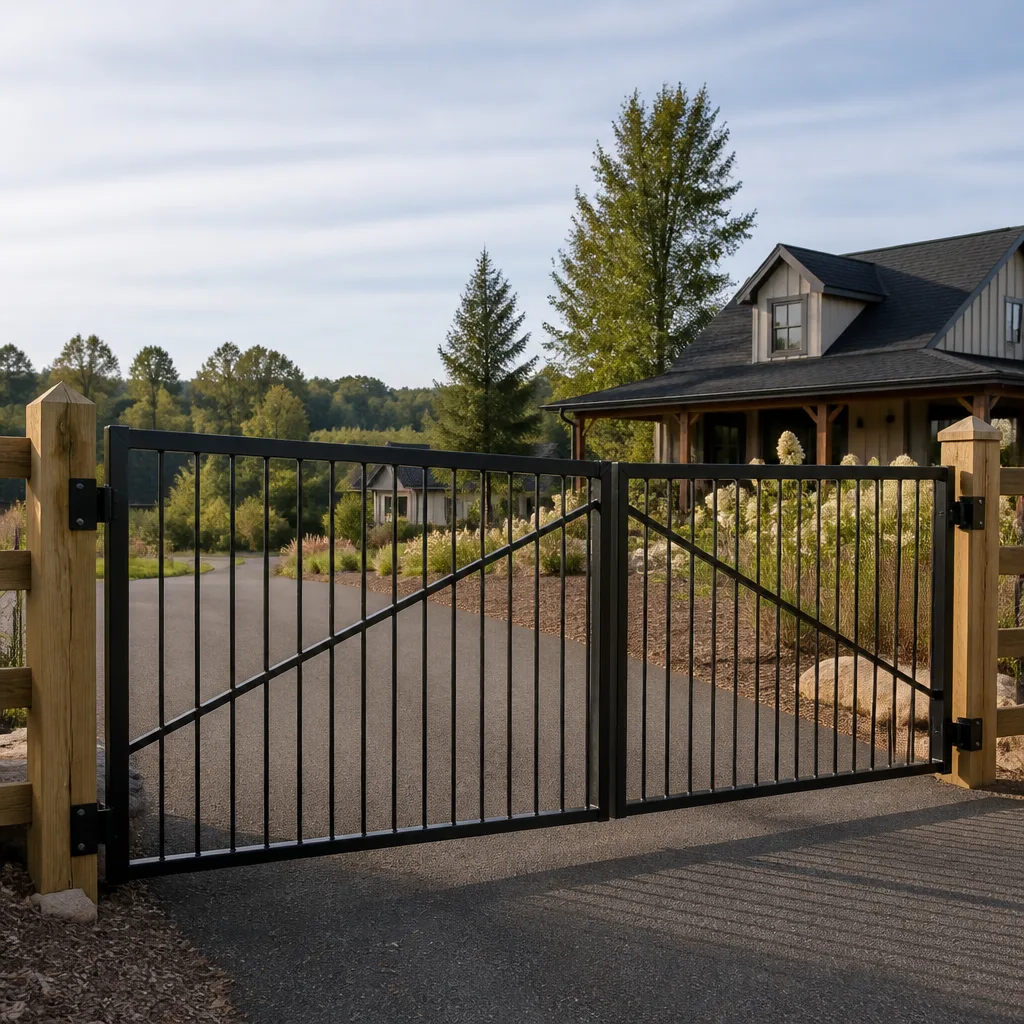 Farm & ranch
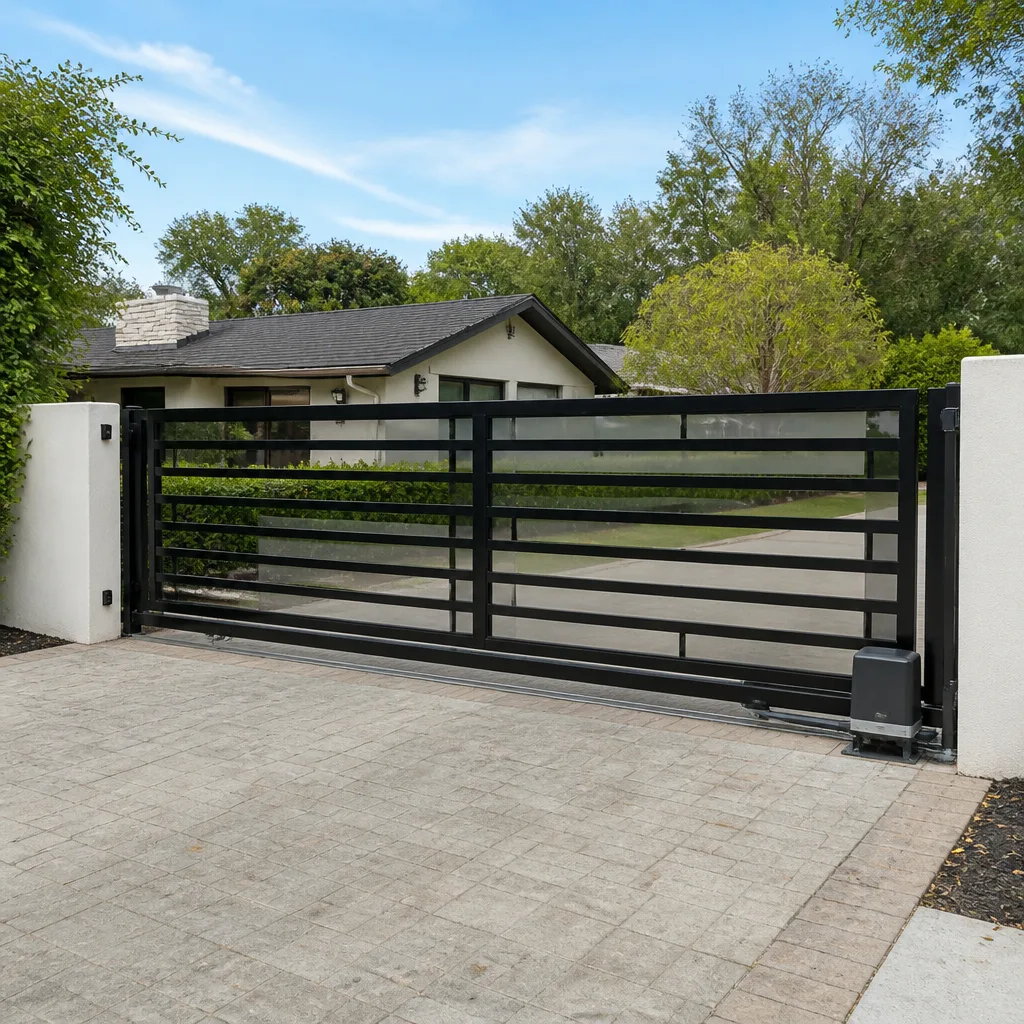 Sliding driveway gates
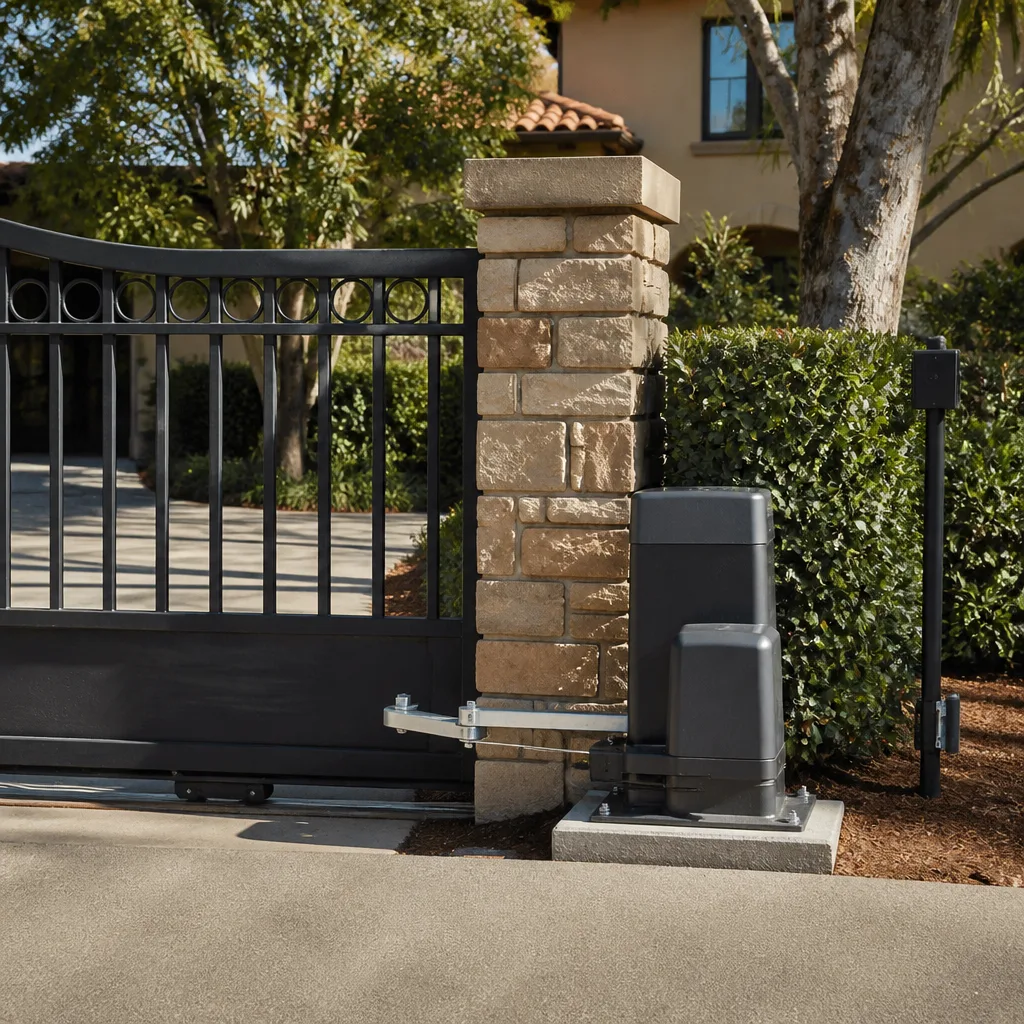 LiftMaster operators
Free on-site gate assessment - hinges, posts, and your LiftMaster or Nice gate operator checked before anything is quoted
The assessment is free and the quote is the invoice.
Get your free estimateThe Complete Gate Repair Guide for Miami Homeowners
Most gate failures in Miami aren’t caused by mechanical wear. They’re caused by corrosion pathways that start at fastener points, not moving parts. A stainless steel screw into an untreated aluminum post, a zinc-plated bracket against coastal air, a control board sweating through a humid August night. By the time the gate sags or the operator stops responding, the structural damage has usually been compounding for months. This guide walks through what actually breaks on Miami gates, why it breaks here more than almost anywhere else in the country, what you can safely check yourself, and when the repair math favors fixing versus replacing. For DIY vs Professional Gate Repair: The Miami Homeowner’s Decision Guide, see our dedicated breakdown. If you own a gate anywhere from Coconut Grove to Aventura, this is the operating manual your installer never left behind.
Styles & brands we work with
Quick Answer
Gate repair in Miami typically means diagnosing one of five things: corroded hinges or post anchors, a failed operator component (motor, capacitor, control board), a damaged loop detector or safety sensor, wiring that’s shorting from moisture intrusion, or a gate that’s simply out of alignment from heat expansion and settling. Most repairs can be completed in a single visit once the failure point is identified, and the cost difference between a cheap patch and a correct repair almost always comes down to whether the technician addresses the underlying cause, not just the visible symptom. If your gate is binding, grinding, stopping halfway, or refusing to close, call a gate specialist who offers our Gate Repair services in Miami’s specific environment, not a general contractor who occasionally touches gates.
Table of Contents
- Why Miami’s Climate Is Harder on Gates Than Anywhere Else in Florida
- How Salt Air and Humidity Attack Different Gate Materials
- The Five Most Common Gate Failures We See in South Florida
- A Component-by-Component Gate Inspection Checklist for Miami Homeowners
- Repair vs. Replacement: The Real Math After a Lightning Strike or Motor Burnout
- Understanding Electric Gate Repair at the Component Level
- How to Tell a Gate Specialist From a Fence Contractor Who Added Gate Repair
- Round-the-Clock Demands of Rental Communities and Gated Neighborhoods
- Common Mistakes to Avoid
- When to Call a Professional
- Frequently Asked Questions
- The Bottom Line
Why Miami’s Climate Is Harder on Gates Than Anywhere Else in Florida
Plenty of places are hot. Plenty of places are humid. Miami is both, year-round, with the added variable of salt-laden air that travels miles inland, not just along the beach. That combination does something specific to gate hardware: it accelerates galvanic corrosion. When two different metals touch, say a steel hinge leaf bolted to an aluminum gate frame, the more reactive metal sacrifices itself. In a dry climate that process takes decades. In Miami’s air, with salt acting as an electrolyte and 90% humidity keeping the contact point perpetually damp, it can visibly degrade fasteners within three to five years.
Coastal ZIP codes like 33139, 33140, and 33141 see the fastest oxidation rates. But even inland neighborhoods such as Fontainebleau, Westchester, and Doral get enough airborne salt from onshore breezes to matter. We’ve replaced hinge bolts on gates in Doral that looked like they’d been pulled from a shipwreck. The owners were four miles from the ocean and never saw it coming because the moving parts had been lubricated regularly. The fastener points hadn’t been touched in years.
What this means for your gate:
- Lubricating the hinge pins helps the gate swing smoothly, but it does nothing for the bolts holding the hinge to the post and frame.
- The breakdown path starts where stainless or zinc-plated hardware meets aluminum or raw steel. That’s the joint, the screw head, the bracket edge.
- Moisture doesn’t just sit on the surface. It wicks into threads and behind mounting plates, where it can’t evaporate.
- Once a fastener corrodes, it either seizes (snapping when you try to remove it) or loses clamping force, which lets the gate shift and bind.
Understanding this is the difference between fixing a gate and chasing symptoms. A gate that’s dragging on the ground might look like a hinge problem. In Miami, it’s often a post-anchor problem caused by rusted wedge anchors or a cracked concrete footer soaked through by a full rainy season.
How Salt Air and Humidity Attack Different Gate Materials
Not all gates corrode equally, and the material of your gate dictates how urgently you need to inspect it. Here’s what decades of South Florida gate work has taught us about the three most common gate materials in Miami. For a deeper dive, read The Complete Guide to Gate Repair in Miami.
Aluminum Gates
Aluminum is the most common gate material in Miami for a reason. It’s lightweight, it doesn’t rust in the traditional sense, and it’s readily available. But aluminum has a specific weakness: it corrodes through a process called pitting, especially where stainless steel hardware touches it without an insulating barrier. The aluminum doesn’t flake red like steel. It forms a white, powdery oxide that looks almost like dried salt. That powder is the aluminum losing material. Over time, the metal thins around screw holes, bolts lose their grip, and the gate frame can crack at stress points. In neighborhoods like Brickell and Edgewater where high-rises put constant wind load on rooftop and garage gates, we see more aluminum stress fractures than anywhere else.
Wrought Iron and Steel Gates
Actual wrought iron is rare in modern Miami. Most gates called “wrought iron” are mild steel tubing or bar stock with a painted or powder-coated finish. Steel is strong and cheap, but the moment that coating is scratched, chipped, or worn thin at a weld point, the underlying steel begins oxidizing. In Miami’s humidity, that oxidation moves fast. The classic failure is rust jacking at the bottom rail: water collects at a factory-drilled weep hole that’s clogged with debris, sits there through the wet season, and rusts the rail from the inside out. You won’t see it until the rail bubbles or splits. Coated steel gates in Miami need an annual inspection of every weld joint, bracket, and mounting point. One missed season is enough for visible rust bloom.
Vinyl and Composite Gates
Vinyl gates don’t rust or corrode, but they have their own Miami-specific problem: heat distortion. When a dark-colored vinyl gate sits in direct summer sun, the surface temperature can exceed 160 degrees. That repeated expansion and contraction, day after day from June through September, weakens the joints and can warp the frame enough to throw off the latch alignment. White and tan vinyl hold up better, but any vinyl gate installed without a steel or aluminum reinforcement insert will sag faster in Miami than it would in almost any other U.S. city.
Inland communities like Boca Pointe, with its gated neighborhoods and HOA-maintained entries, deal with these same material issues but at a slower rate than oceanfront properties. If you’re looking for gate repair in Boca Pointe, the failure patterns are similar to Miami’s but the timeline stretches out by a few years. The material rules still apply.
The Five Most Common Gate Failures We See in South Florida
Gate failures in Miami follow predictable patterns. Here are the five problems that generate the most service calls, ranked by frequency.
1. Post Anchor Failure
This is the number one structural failure in Miami. The gate post is set into a concrete footer, usually with wedge anchors, J-bolts, or a base plate. After enough rainy seasons, water seeps down around the anchor bolts, corrodes them, and expands inside the concrete when it gets hot. The post starts to lean. The gate suddenly scrapes the ground or won’t latch. The fix requires reseating the post, often with new anchors and fresh concrete.
What you’ll notice: The gate visibly leans toward the latch post. There’s a growing gap at one hinge. The gate scrapes in the same spot every time. The post wiggles if you push on it firmly.
2. Control Board Failure from Moisture and Power Surges
Automatic gate operators in Miami live in aluminum or polycarbonate boxes that sit in the sun all day. The boxes are sealed, but condensation still forms inside when a cool night follows a 95-degree afternoon. That moisture, combined with the lightning activity that Miami’s summer storms bring, is hard on control boards. A board that’s been cooked by a nearby strike may fail immediately or may develop intermittent faults that show up weeks later, a gate that opens but won’t close, a keypad that stops responding, or an operator that cycles randomly.
3. Loop Detector Malfunction
Most automatic gates in Miami use induction loops buried in the driveway to detect vehicles. These loops are coils of wire set into saw cuts in the concrete and sealed. When water infiltrates the saw cut, or when a heavy truck or tree root shifts the driveway slab, the loop can break or short. The symptom is a gate that opens for a car approaching but then closes dangerously early, or a gate that won’t open for vehicles at all but functions fine from the remote.
4. Safety Sensor Misalignment
Modern gate operators are required to have safety entrapment sensors, usually photo eyes or edge sensors. In Miami, gate posts shift slightly with heat expansion, and photo eyes that were perfectly aligned at installation fall out of alignment over a summer. One eye drifts a few degrees. The gate refuses to close because it thinks something is in the way. This is one of the easiest repairs but one of the most common calls.
5. Capacitor and Motor Wear from Continuous Cycling
In neighborhoods with high gate traffic, such as Coral Gables with its frequent service vehicles or HOA communities with 200 homes sharing one entrance, operators cycle hundreds of times a day. The start capacitor, which gives the motor its initial surge of power, is a wear item. When it fails, the gate hums but doesn’t move. The motor itself can fail from overheating if the capacitor is not replaced promptly and the operator keeps trying to start.
A Component-by-Component Gate Inspection Checklist for Miami Homeowners
Most gate problems announce themselves early. The key is knowing what to look for before the gate fails completely. This checklist is built for Miami’s specific conditions, which means it prioritizes corrosion, moisture intrusion, and heat stress over general wear.
Run this inspection twice a year: once in May before the rainy season starts, and once in November after hurricane season ends.
Step 1: Inspect the Posts and Anchors
- Look at the base of each post. Any gap between the post and the concrete, any cracking in the footing itself, any visible rust stains running down the post.
- Push firmly on the post. Movement of more than an eighth of an inch means anchor failure is underway.
- Check for white powder or discoloration around bolt heads. That’s active corrosion.
Step 2: Check Every Hinge and Fastener
- Look for rust bloom around each screw, bolt, and bracket. Don’t just glance at the hinge pin. Look at the mounting hardware.
- Open and close the gate slowly. Listen for creaking that comes from the hinge leaf against the frame, which indicates metal-on-metal contact and no remaining lubricant.
- Feel for hesitation or resistance at any point in the swing. A gate should move smoothly from fully open to fully closed.
Step 3: Examine the Gate Frame and Panels
- Look for paint bubbling or flaking on steel gates. It almost always hides active rust underneath.
- Check the bottom rail of steel and aluminum gates for clogged weep holes.
- On vinyl gates, sight down the top rail. Bow toward the latch post means the gate is sagging from heat stress.
Step 4: Test the Operator and Controls
- Run the gate through a full open and close cycle using the keypad or remote. Note any delay, hesitation, or reversing.
- Listen to the motor. A smooth hum is normal. A grinding sound, a rapid clicking, or a low growl means motor or capacitor trouble.
- Check the operator box for visible moisture, insect nests, or scorch marks around the control board.
Step 5: Test the Safety Sensors
- With the gate open, place a trash can or similar object in the path of the closing gate. The gate should detect it and reverse.
- Check photo eye alignment. Both eyes should be pointed at each other and free of dirt, spider webs, or overgrown vegetation.
- If the gate has edge sensors, run your hand along them and check for cracks or exposed wiring.
Step 6: Inspect the Loop Detector Area
- Look at the saw cuts in the driveway. They should be sealed and free of water pooling or grass growing through.
- If you’re comfortable with the system, test the gate’s response by driving over the loop area slowly. A delayed or missed detection means the loop is failing.
If you find problems during this inspection, write them down with photos. A gate specialist can diagnose faster with clear evidence, and you’ll have a baseline for what’s changed since the last inspection.
Repair vs. Replacement: The Real Math After a Lightning Strike or Motor Burnout
Every homeowner reaches the same fork eventually: is it worth repairing this gate, or should I replace the whole thing? The honest answer depends on the failure type, not just the age of the operator.
Mechanical failures are almost always repairable. A worn hinge, a corroded bracket, a broken wheel, a misaligned post, a frayed cable. These are component problems. The gate frame and operator may have years of life left. Replacing an entire gate because one hinge failed is like replacing a car because a tire went flat. We regularly repair gates that are 15 to 20 years old and send them back into service for another decade, especially in electric gate repair in Boca Pointe and similar communities where the HOA prefers to maintain original equipment.
Lightning strikes are different. When a bolt strikes close enough, the surge travels through the power line or the loop detector wires and hits the control board. Sometimes it stops there. Sometimes it continues into the motor windings. A board replacement is straightforward. If the motor is damaged too, the repair cost climbs quickly. Here’s the practical math:
- A failed start capacitor: $30 to $100 in parts. Repair makes sense every time.
- A failed control board: usually a few hundred dollars including labor. Repair makes sense if the operator is less than 10 years old.
- A burned-out motor after a direct strike: the motor is often the single most expensive component. If it’s older than 10 years, replacement of the entire operator may be cheaper than motor replacement plus labor.
- Repeated lightning strikes on the same operator: at some point, the cumulative damage costs more than a new system with better surge protection.
The tipping point usually comes when the accumulated repair costs for a single operator exceed 50% of the replacement cost within a three-year window. Below that line, repair usually wins. Above it, you’re throwing money at a failing platform.
What rarely makes financial sense is patching over the underlying cause. Replacing a hinge on a post that’s losing its anchor buys you months, not years. That’s the difference between a repair that lasts and one that returns on the next service call.
Understanding Electric Gate Repair at the Component Level
Electric gates in Miami fail differently than manual gates because they have an entire automation layer stacked on top of the mechanical frame. When an automatic gate stops working, the problem is usually in one of four component groups: the motor, the control board, the safety inputs, or the wiring. Most general contractors will look at an electric gate, see that it won’t open, and tell you the operator needs replacing. A specialist tests each layer before recommending anything.
The Diagnosis Sequence We Follow
- Power verification. Is the operator receiving power at the correct voltage? Miami’s thunderstorms and occasional grid surges make this a more frequent failure than most homeowners expect. A tripped breaker or a fried transformer can mimic motor failure.
- Input test. Are the keypad, remote, and loop detector all sending signals? If the gate operates from the keypad but not the remote, the problem is the receiver, not the motor.
- Control board inspection. Look for burned traces, swollen capacitors, or corrosion on the board. In Miami, boards fail from humidity and electrical surges more than from old age.
- Motor and capacitor check. If the board is sending power to the motor and the motor isn’t turning, it’s either the capacitor or the motor itself. These are two different repair costs. A capacitor is cheap. A motor is not.
- Safety sensor sweep. Check every photo eye, edge sensor, and the loop detector. A single misaligned photo eye will stop the gate in its tracks and look like a major failure to the untrained eye.
We work on gate operators from FAAC, BFT, Linear, and Viking, along with several other brands. The reason we emphasize brand-agnostic service is simple: no two manufacturers wire their boards exactly alike, and a technician who only knows one brand will either misdiagnose the others or push you toward replacing a perfectly good operator with the brand they happen to sell.
Electric gate acting up? We diagnose the motor, board, sensors, and wiring, not just the obvious parts.
The component that fails most often in Miami is not the motor. It’s the control board, because it’s the most sensitive to moisture and electrical noise. If your gate behaves erratically, opens when it should close, or resets itself randomly, you’re probably looking at a board issue, not a mechanical one.
How to Tell a Gate Specialist From a Fence Contractor Who Added Gate Repair
Miami has dozens of companies that say they repair gates. A quick search for “gate repair Miami” pulls up fencing contractors, general handymen, and even garage door companies that have added gates to their service list. Some of them do decent work. Many of them don’t, because gates are a secondary revenue stream for them, not a core discipline.
Here’s how to evaluate what you’re actually getting before you make the call.
Ask What Brands They Service
A specialist can name the board they’re diagnosing and the operator platform they’re working on. Ask specifically: “Do you work on FAAC operators?” or “Have you diagnosed a BFT control board recently?” A fence contractor will say something vague like “we work on all types of gates.” A specialist will say “yes, we service FAAC, BFT, Linear, Viking, and several other brands, and we troubleshoot at the component level.” The specificity matters.
Ask About Their Diagnosis Process
A real specialist follows a sequence: power, inputs, board, motor, sensors. A generalist looks at a gate that won’t open and immediately says “you need a new operator.” That’s the tell. Operators are expensive, which makes them an attractive upsell for companies that don’t have the skill to diagnose the actual fault. If the first recommendation is a full replacement without any component testing, get a second opinion.
Ask Whether They Handle Installation and Repair
Some companies only install new gates and will always steer you toward a new system because that’s what they sell. Others only repair and won’t install a new gate when replacement genuinely makes more sense. Full lifecycle coverage matters because it aligns the company’s recommendation with what’s actually best for your system, not what’s best for their pipeline. A company that does both has no incentive to push you in either direction.
Check Where Their Focus Is
Look at the company’s service menu. If gates are listed alongside fencing, garage doors, screen enclosures, and welding services, you’re hiring a generalist. If gates are the entire business, every technician on their team is being trained on gate mechanics and automation every day, not splitting their attention across four other trades.
For homeowners in Miami, the difference shows up in the diagnosis. A specialist finds the failed capacitor in 20 minutes. A generalist replaces the whole operator because that’s the only option they know how to sell. For gate installation in Boca Pointe and similar gated communities, that distinction gets even more important because HOA boards need vendors who can justify their recommendations in writing.
Round-the-Clock Demands of Rental Communities and Gated Neighborhoods
Miami’s gate problem is partly a volume problem. In a standalone home, the gate cycles maybe 20 times a day. In a gated community with 300 homes, the main entrance gate cycles 3,000 times a day during peak season. That’s 100 times the wear in the same 24-hour period. Communities in neighborhoods like Kendall, Pinecrest, and Palmetto Bay have entrance gates that see more daily cycles than some commercial facilities.
That volume does two things. It accelerates every normal wear pattern, and it turns minor reliability problems into major community complaints within a single day. A gate that pauses for three seconds before opening is an annoyance in a house. In a gated community with a line of cars at rush hour, it’s a logistics failure.
For HOA boards and property managers, the question is not usually “how much does the repair cost” but “how long will the gate be down.” A specialist who can diagnose the board, the motor, and the sensors in a single visit, with parts knowledge across multiple brands, gets the gate back online faster than a contractor who has to Google the operator model. That’s the argument for specialist-level service on shared gates, and it’s the same argument that applies to Miami Gate Company home service areas across the county.
Commercial and HOA gates also tend to be older. Many were installed during Miami’s construction boom in the 2000s, which means they’re now hitting the age where control boards fail, capacitors wear out, and original motors reach end of life. Maintaining these systems requires a vendor who can support old equipment rather than insisting on a full replacement every time a board fails.
Common Mistakes to Avoid
- Lubricating hinges but ignoring the fasteners. Hinge pins aren’t the problem in Miami. The bolts holding the hinges to the post and frame are. Lubricant does nothing for a corroded bolt that’s about to snap.
- Waiting until the gate stops completely to call for service. Most gate failures give weeks of warning: a scrape, a hesitation, a new noise. Miami’s climate moves fast once corrosion starts. Catch it early and you’re looking at a bracket replacement instead of a post rebuild.
- Replacing an operator before checking the power supply. A surprising number of electrical gate failures in Miami are actually breaker trips, GFCI faults, or transformer damage from a power surge. Always check incoming power before condemning the operator.
- Painting over rust on a steel gate. If you don’t remove the rust to bare metal and prime properly, you’re sealing moisture against the steel, not protecting it. The rust continues underneath the new paint.
- Ignoring hurricane season maintenance. Miami’s most intense stress on gate hardware comes in the months after a major storm, when loosened anchors, salt spray damage, and water-soaked electronics all fail at once. A post-storm inspection can catch small problems before they become structural ones.
- Hiring a gate company based on price alone. The cheapest quote often comes from a company that will replace the most expensive component without diagnosing the actual fault. A slightly higher quote from a specialist who tests the board, motor, and sensors individually usually saves money in the long run.
When to Call a Professional
You should call a gate professional when the gate won’t move at all, when it starts moving unexpectedly or reversing for no reason, when you hear grinding or loud humming from the operator, or when you find structural damage like a leaning post, a cracked weld, or a sagging rail. These are not weekend DIY fixes, especially on automatic systems with heavy gates. A gate that weighs 600 pounds holds enough energy to cause serious injury if a spring, hinge, or cable fails while you’re working on it. Electric operators add the risk of high-voltage components and moving parts under load. If the problem involves the motor, the control board, or the safety sensors, leave it to someone who diagnoses these systems professionally every day. Browse more guides & resources to understand what to expect during a service call. In our experience, the cost of a proper diagnosis is always less than the cost of replacing a component that wasn’t actually the problem.
Miami Gate Company offers free estimates in Miami, call (833) 570-5807.
Frequently Asked Questions
Gate repair in Miami typically ranges from $150 to $600 for most component-level fixes like capacitors, sensors, hinges, and brackets. Control board replacements usually run higher, often $400 to $900 depending on the operator brand and board complexity. A full post reset with new concrete can exceed those figures because it includes demolition and reinstallation labor. The best way to get an accurate number is to have a specialist diagnose the exact failure, which is why estimates should be free and should come after testing, not before.
For many common failures such as a failed capacitor, misaligned photo eye, or stuck hinge, diagnosis and repair can happen in the same visit. More complex board failures or post anchor rebuilds may require parts ordering or concrete curing, which adds a day or two. When you call, describe the symptoms in detail; the more we can prepare before arriving, the better the chance of a single-visit fix. Call (833) 570-5807 to describe what your gate is doing.
Miami’s combination of salt air, 90% humidity, and year-round warmth creates the perfect conditions for galvanic corrosion. The salt acts as an electrolyte, the moisture keeps the corrosion cell active, and the heat speeds up the chemical reaction. Fasteners and joints degrade three to five times faster here than in dry climates, and steel gates need annual inspection to catch rust before it compromises the frame.
A complete gate installation includes the gate frame and panels, posts and footers, hinges and hardware, and if specified, an automatic operator, control board, safety sensors, keypads, remote controls, and a vehicle detection loop. The key variable is whether the power run and conduit are already in place, which affects the scope and price. Any legitimate installer should provide a written quote that itemizes every component before work begins.
Yes. Electric gate installation and repair at the component level includes the power supply to the operator, the low-voltage wiring for keypads and photo eyes, the safety edges required for entrapment protection, and the loop detector wiring in the driveway. These are not add-ons; they’re part of a compliant automatic gate system, and they need to be integrated correctly for the gate to pass inspection and operate safely. Call (833) 570-5807 for a free estimate on any of these components.
Almost certainly yes. We work on gate operators from FAAC, BFT, Linear, Viking, and several other manufacturers, and we’re brand-agnostic by design. That means we diagnose the system that’s installed, not a system we’re trying to sell. If your operator is a brand we don’t service, we’ll tell you honestly and help you find the right path forward.
The Bottom Line
Gates in Miami fail differently than gates anywhere else. The root cause is nearly always the environment: salt-laden air corroding fasteners, humidity infiltrating control boards, heat cycles shifting posts and sensors, and hurricane season stressing every mechanical connection on the system. Understanding these failure patterns means you can catch problems early, fix the cause rather than the symptom, and make informed decisions about repair versus replacement. Most importantly, it means you can tell whether you’re hiring a true gate specialist or a fence contractor with a gate service page. When the gate fails, the specialist is the one who diagnoses the capacitor, tests the loop, and checks the anchors before recommending anything. That’s the difference between a repair that lasts and a problem that comes back. Gate repair in Boca Pointe and across Miami demands this level of attention, and that’s what Miami Gate Company is built to do.
Written by the team at Miami Gate Company, serving Miami since 2012.
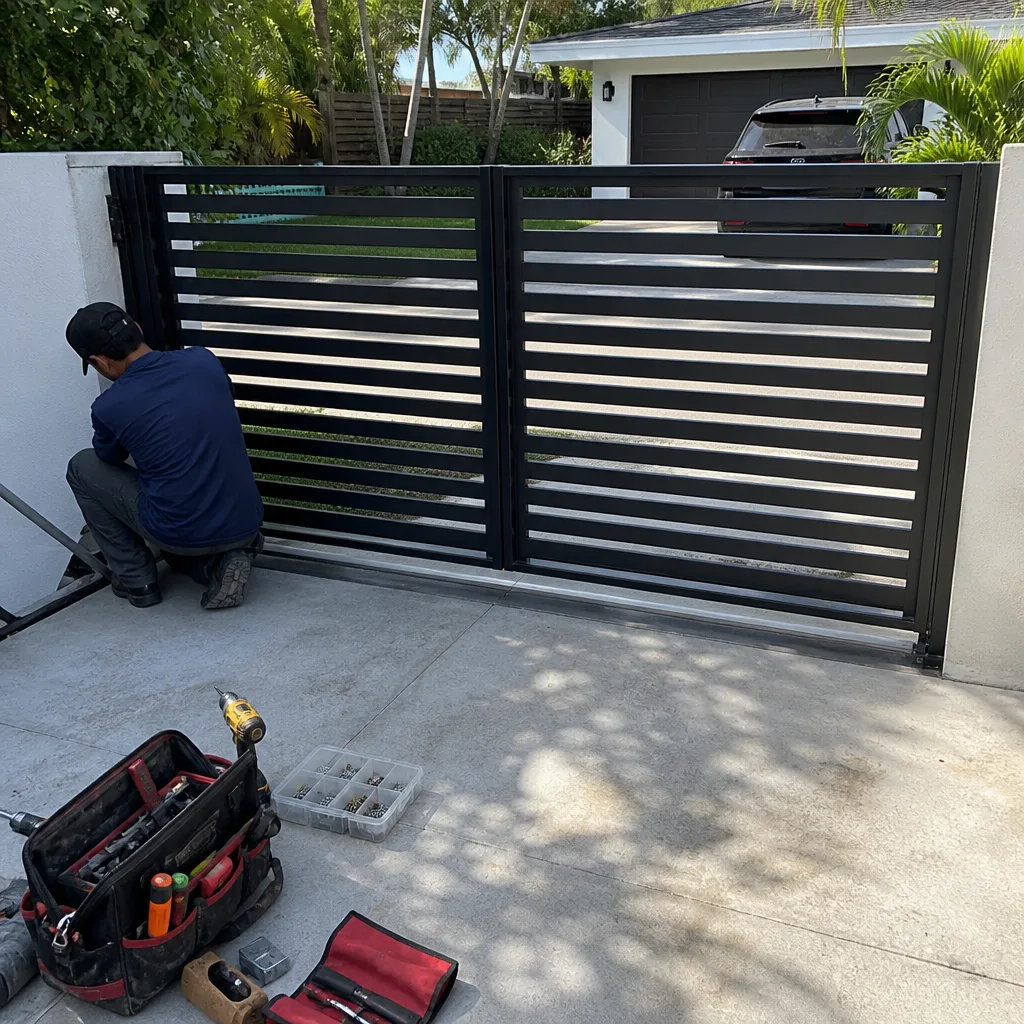
See the difference
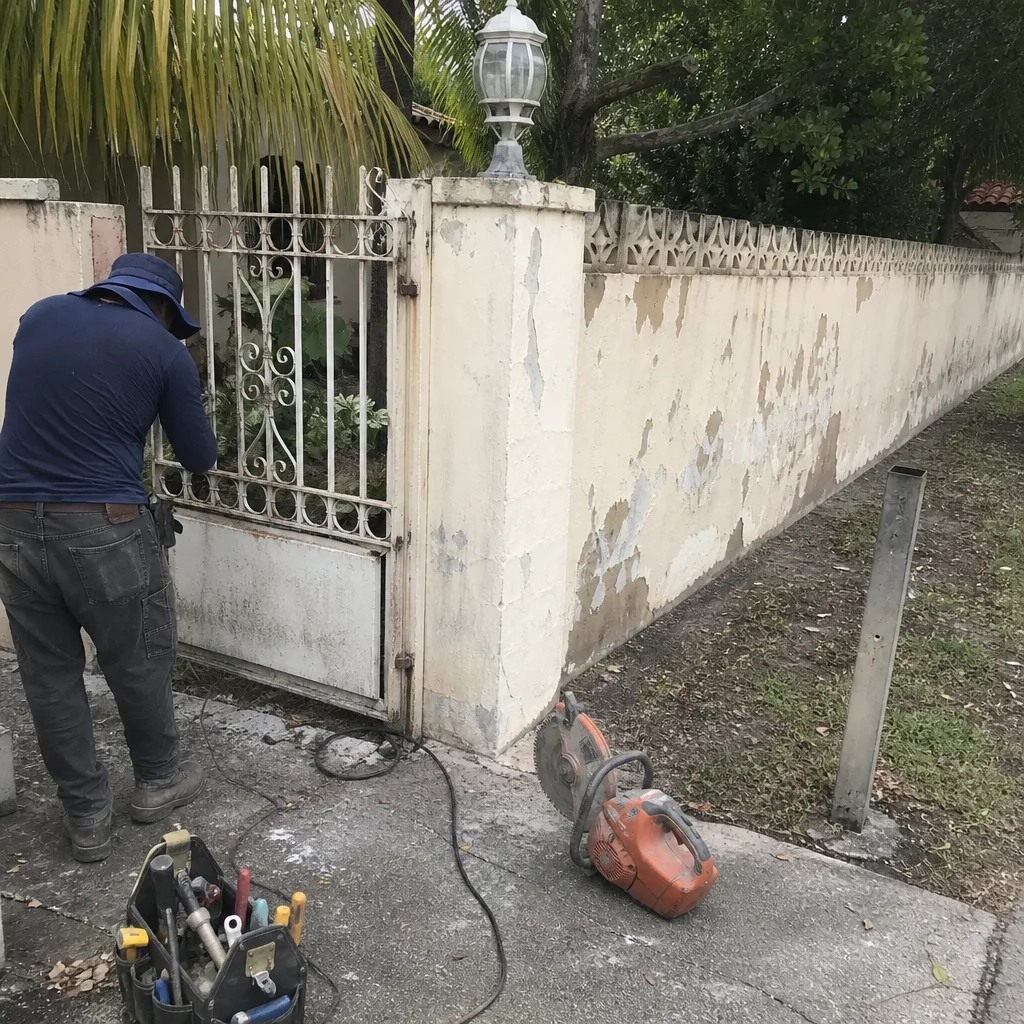 Before
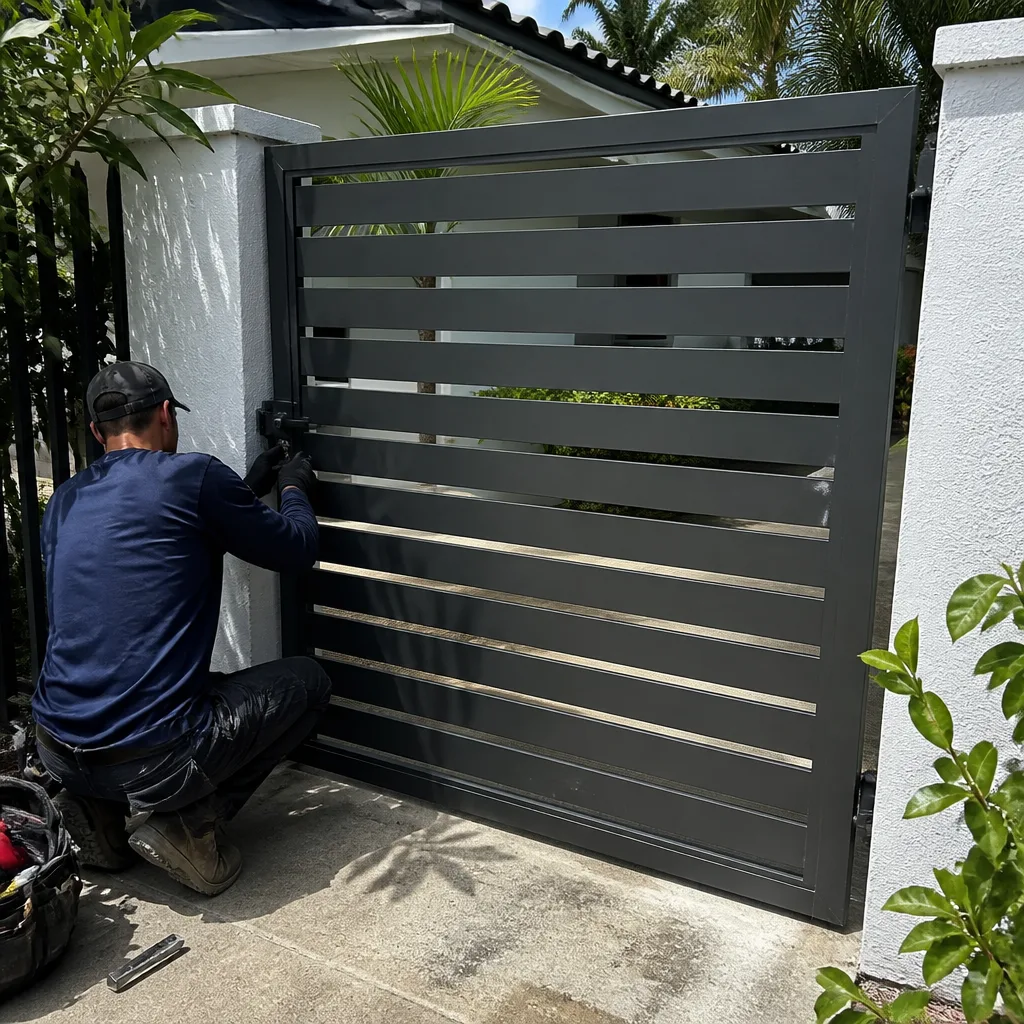 After
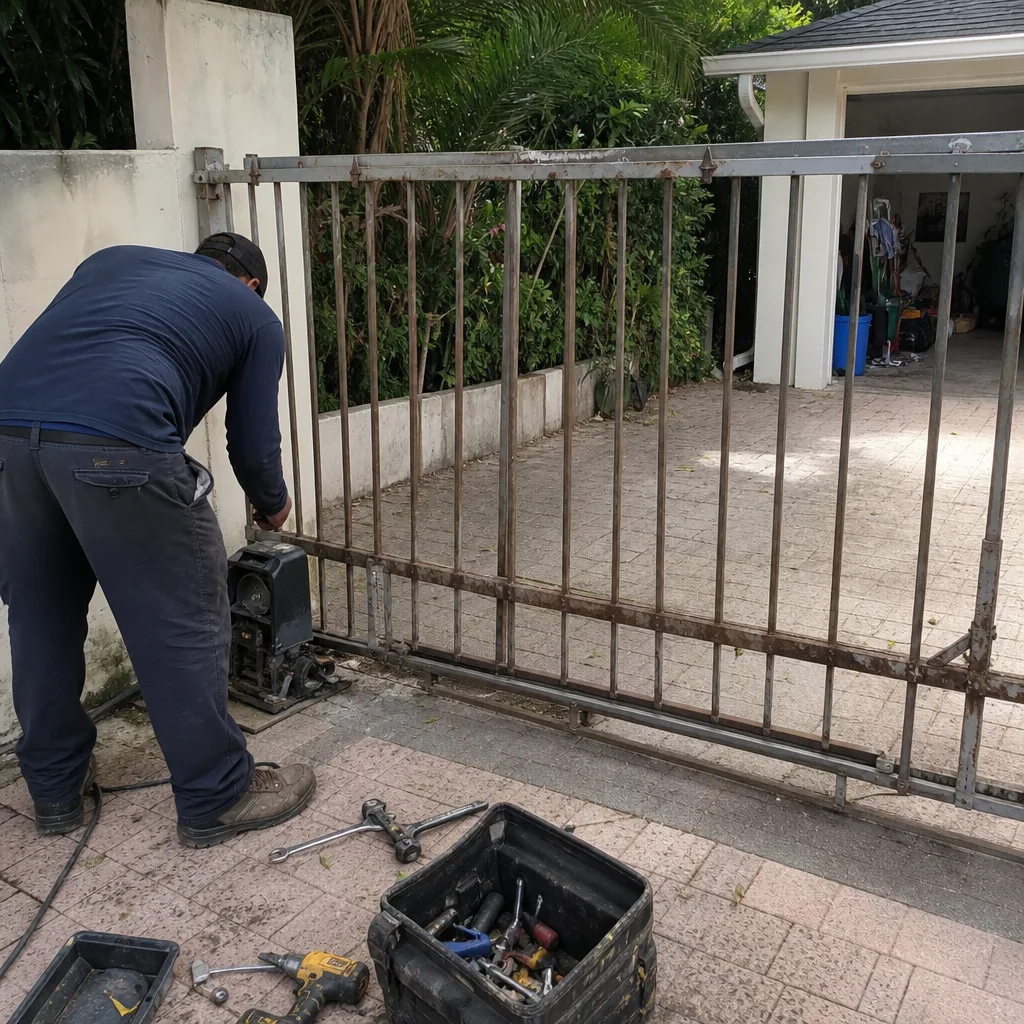
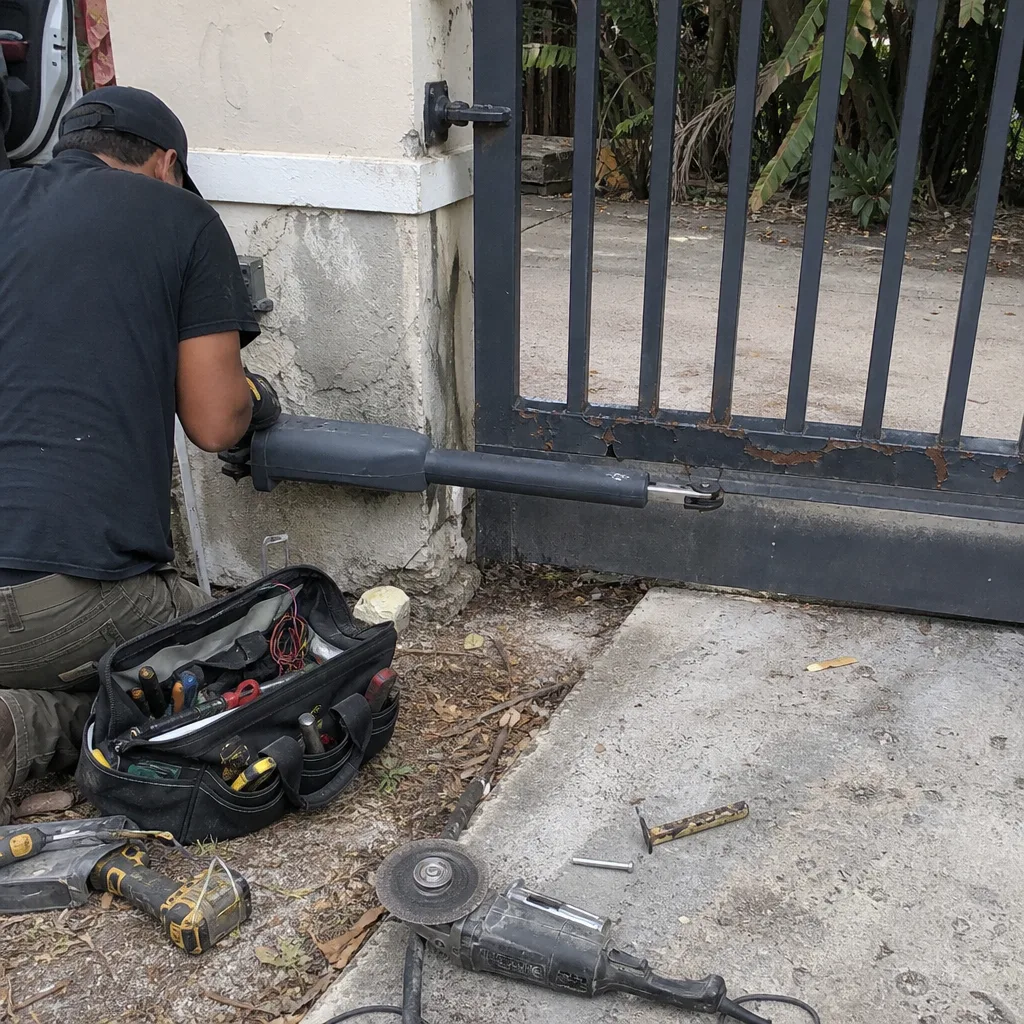 Before
 After
 Before
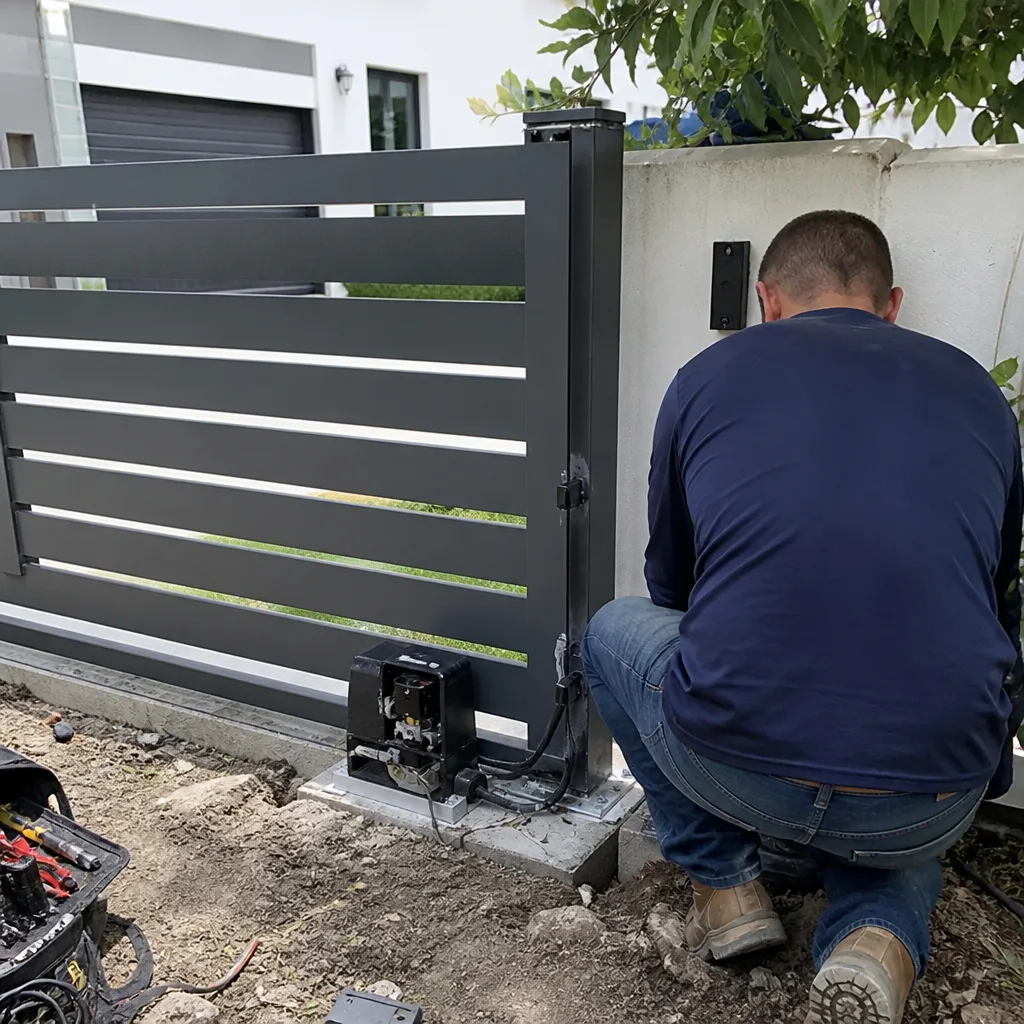 After