

Last updated October 30, 2026
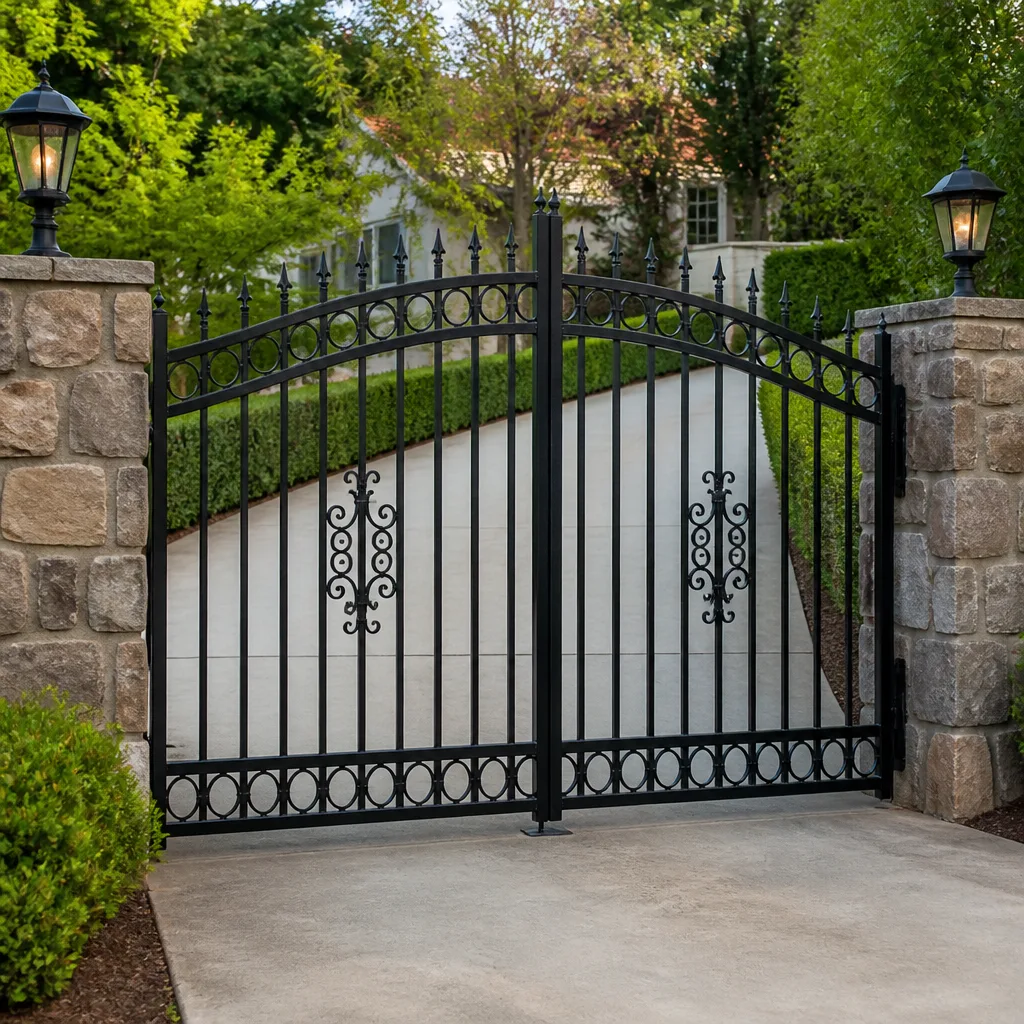 Wrought iron
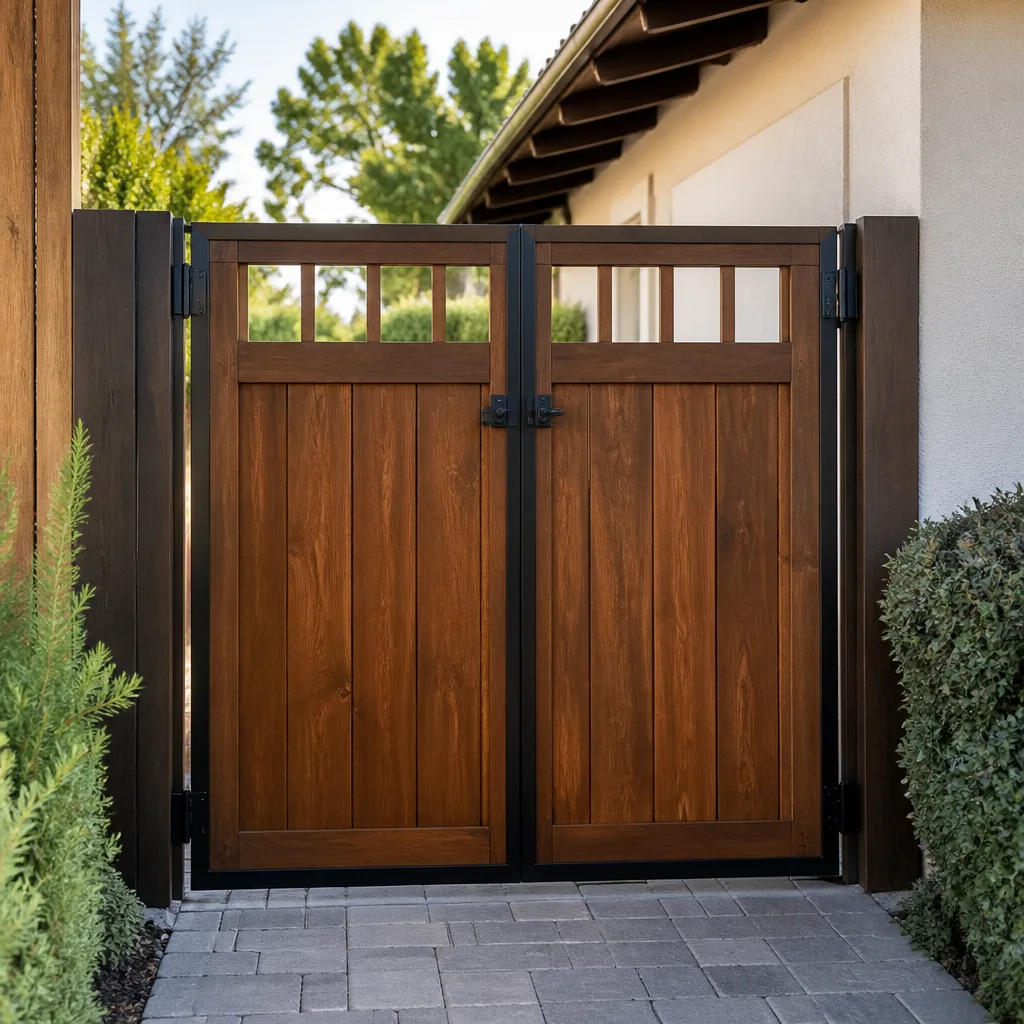 Wood & steel frame
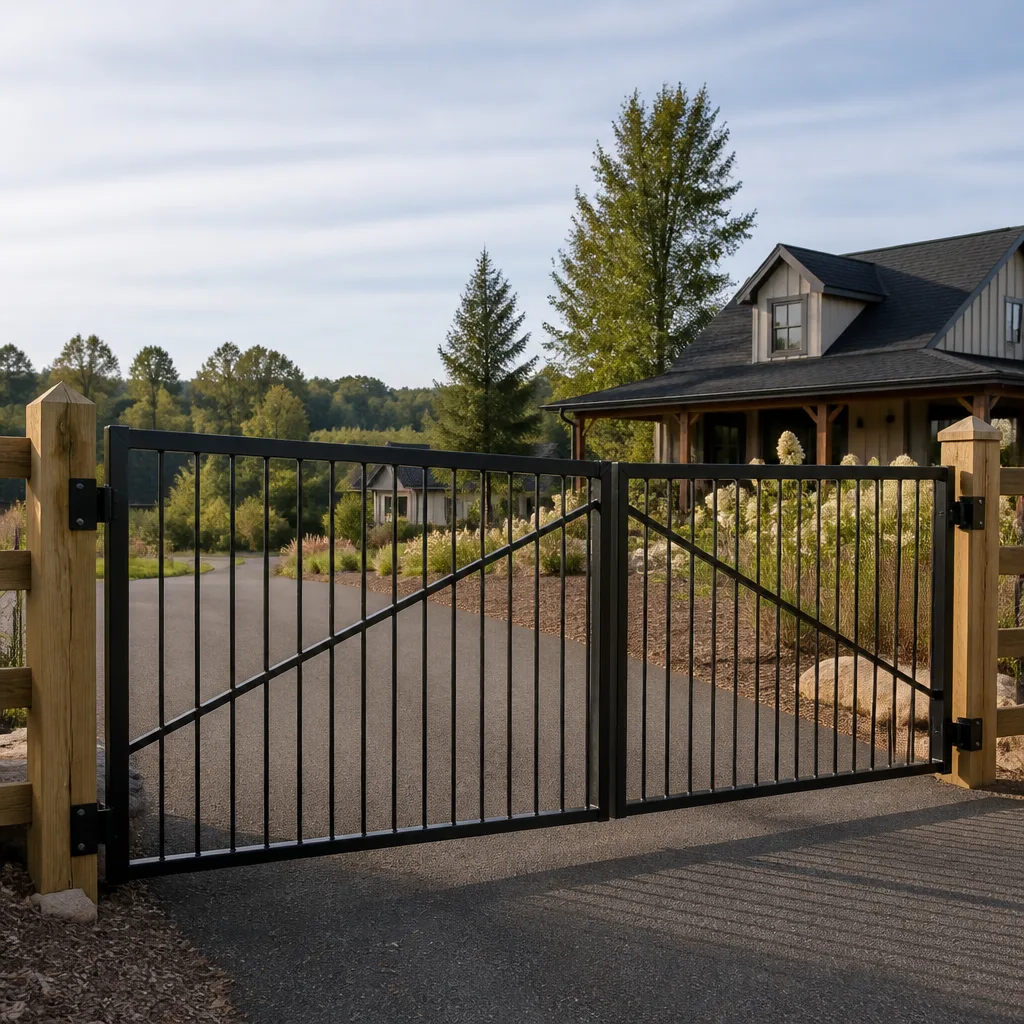 Farm & ranch
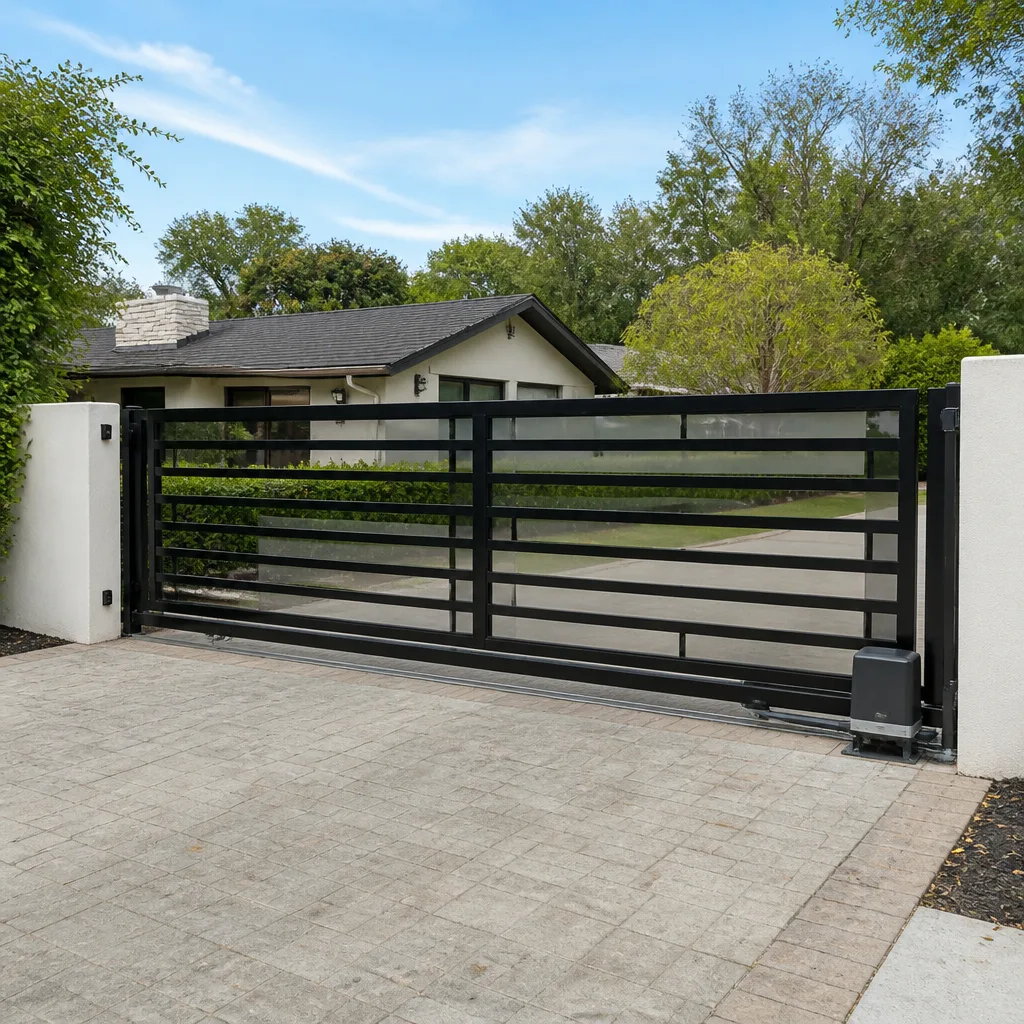 Sliding driveway gates
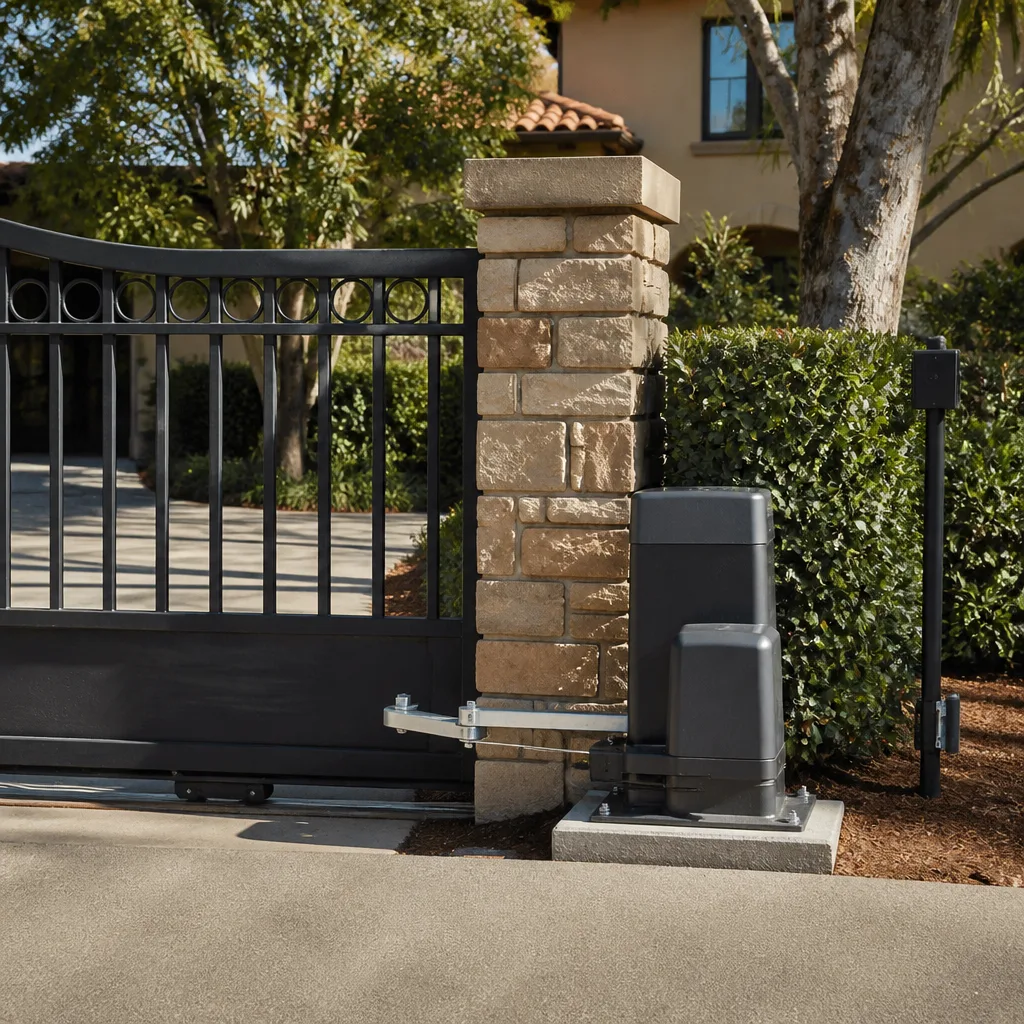 LiftMaster operators
Free on-site gate assessment - hinges, posts, and your LiftMaster or Nice gate operator checked before anything is quoted
The assessment is free and the quote is the invoice.
Get your free estimateSeasonal Gate Repair Care for Miami: Year-Round Homeowner’s Guide
There is no “winter gate damage” in Miami. But there absolutely is late-October gate damage, when the combination of peak hurricane season stress and the first real drop in humidity causes gate hardware that spent six months expanding and contracting to suddenly crack along stress fractures that were invisible all summer. We’ve pulled stuck gates open in mid-November and found hinge welds that had been failing since August, hidden by swollen wood and rust-blurred edges. This guide breaks down Miami’s actual gate seasons, what each one does to your system, and the maintenance schedule that prevents the failures we see most often. If you own an automatic or manual gate in Miami, this is the repair-prevention calendar that actually fits our climate.
Quick Answer
Seasonal gate care in Miami means scheduling maintenance around three real seasons, not four: the peak humid season (June through September), the post-storm transition (October and November), and the dry-wind season (December through April). Plan a pre-hurricane inspection in May, a post-storm hardware check in October, and a dry-season adjustment for wood and composite gates before structural cracking appears.
Styles & brands we work with
Table of Contents
- Miami’s Three Gate-Stress Seasons (Not Four)
- The Pre-Hurricane Season Inspection Protocol
- Post-Storm Damage Assessment: What You Can’t See Until It Fails
- Dry-Season Shrinkage: The Silent Wood and Composite Gate Killer
- Why April and May Are Miami’s Highest-Value Maintenance Months
- Electric Gate Components: What Each Season Does to the Motor, Board, and Sensors
- Brand-Specific Seasonal Notes: Linear, Viking, Ghost Controls, and DoorKing
- Commercial and HOA Gates: Seasonal Protocols That Go Beyond Residential Care
Miami’s Three Gate-Stress Seasons (Not Four)
Most gate maintenance guides are written for places with freezing winters and four distinct seasons. None of that applies here. Miami’s gate failures follow a three-season pattern driven by humidity, storm pressure, and salt wind. Understanding this cycle is the difference between a gate that lasts 15 years and one that needs structural work every 4.
The peak humid season runs roughly June through September. Average relative humidity sits at 75 to 80 percent, often spiking higher after afternoon thunderstorms. Steel gate frames expand. Wood gates absorb moisture and swell, sometimes adding a quarter-inch to the overall width. Rubber seals soften. Electronics inside the operator housing run warmer because the internal cooling is less efficient in saturated air. The specific failures we see in this window: hinge bolts loosening as wood moves around them, slide gate rollers binding against expanded track, and control boards overheating inside dark-colored operator boxes that sit in direct sun for 10 hours a day.
The post-storm transition runs October through November. This is Miami’s most dangerous gate season, and almost nobody plans for it. The first cold front of the year drops ambient humidity by 20 to 30 points in a matter of days. Wood that swelled all summer contracts quickly. Welds that held under expansion stress now face contraction stress. Hairline cracks that formed in August become visible splits in October. Gate alignment that was “close enough” in humid air becomes binding or scraping in dry air. If your gate starts making a new sound in late October, do not ignore it. That sound is the start of a mechanical failure, not a seasonal quirk.
The dry-wind season runs December through April. Average humidity drops to 60 to 65 percent, and the prevailing breeze shifts to northeast winds that carry fine salt spray from the Atlantic across the barrier islands and into the coastal neighborhoods. This is when unprotected steel corrodes fastest. Hinges that lost lubricant during the wet season now grind metal-on-metal with a salt abrasive added. Unsealed wood gates dry past their natural moisture content and begin cupping or splitting. Composite gates expand and contract at a different rate than their steel frames, which stresses every fastening point. This is the season of slow, mechanical wear, and it’s the best time to perform preventive maintenance because the weather is mild and the ground is dry.
The Pre-Hurricane Season Inspection Protocol
Miami-Dade County has the strictest wind-load building codes in the country for a reason. A gate that fails during a named storm is not just damaged property. It becomes a wind-driven projectile. The time to assess whether your gate can handle hurricane-force wind is May, not when a storm is 72 hours out and every contractor in South Florida is booked solid.
- Check the gate’s wind-load rating. If your gate was installed after the 2002 adoption of Miami-Dade’s current code, it should be rated for the appropriate wind zone. If you don’t have documentation, a gate specialist can identify the frame construction and hardware type to determine whether it meets current standards. Solid-panel gates present far more wind resistance than picket-style or open-rail designs, which matters more than most homeowners realize.
- Inspect every hinge, weld, and bolt connection. Look for rust bloom around bolt heads, hairline cracks in welds, and any movement when the gate is pushed against its closed stop. Repeat this on the frame side, not just the gate leaf. A gate is only as strong as what it’s anchored to.
- Verify the operator’s manual release works. If the power goes out during a storm and you need to open the gate by hand, the last thing you want to discover is a corroded release mechanism that won’t disengage. This is a two-minute check that too many homeowners skip.
- Check the wind bracing. Wide gates, especially double-leaf swing configurations, need a center drop rod or cane bolt that anchors the closed position. If the bolt doesn’t fully seat into the ground receiver, the gate can flex and tear itself off its hinges in sustained wind.
- Check the safety sensors and photo eyes. Rain, debris, and power surges during a storm can knock out the safety system, and an automatic gate that closes without sensor protection is dangerous. Miami Gate Company regularly finds sensors that were working in April and failing by August simply because moisture infiltrated the housing.
For a deeper look at how this protocol applies to a specific community, see our guide on Gate Repair in Boca Pointe, where the same pre-storm checklist applies to HOA-managed gates.
Post-Storm Damage Assessment: What You Can’t See Until It Fails
The most dangerous gate damage after a tropical event in Miami is often invisible. A gate can look perfectly fine the morning after a storm passes and then fail three weeks later when the hidden damage finally propagates. Here’s what we check after every major storm, based on years of post-hurricane service calls across Miami-Dade.
Underground operator wiring. Storm surge and heavy rain saturate the soil around gate posts. Underground conduit fills with water, and if the wire insulation has any pinched or worn spot, moisture enters the conductor itself. This causes intermittent faults that are maddening to diagnose unless you know to look for them. The gate stops working, then works again for a week, then stops again. If your gate misbehaves intermittently after a storm, the wiring is the first suspect.
Micro-fractures in welds. Sustained wind loading flexes the gate frame repeatedly. This is a fatigue cycle. Welds that were perfectly sound before the storm can develop hairline cracks that are too fine to see with the naked eye but deep enough to fail under the next heavy load. A dye-penetrant test reveals these cracks. We’ve caught weld fractures on gates where the owner insisted the gate “looked fine” because the crack was inside a joint where two surfaces met.
Bent track sections on slide gates. Slide gates ride on steel track, and during high wind, a gate that isn’t fully secured can rock or lift against its own weight. Even a 2-millimeter bend in the track causes the rollers to bind, which puts additional strain on the operator motor. This is why post-storm inspections should include measuring the track’s straightness, not just looking at it.
Saltwater contamination inside the operator housing. Coastal Miami storm surge doesn’t have to reach your property to affect your gate. High wind carries fine salt spray miles inland, and that salt deposits on the operator housing. Once it gets inside, usually through the control board access panel, it corrodes circuit boards and connectors. This is true even for gates that sit a mile or more off the water. The corrosion takes weeks or months to cause failure, which is why the gate “survived” the storm but died in December.
Misaligned safety sensors. Wind-damaged sensor posts are easy to spot, but sensors that sit at ground level often get knocked slightly out of alignment by flying debris. They’re close enough to still register half the time, which creates the dangerous situation of a gate that sometimes stops for vehicles and sometimes doesn’t. Any post-storm inspection should include a functional test of the safety system under repeated activation.
If any of this sounds like what your gate has been doing since the last storm, see our article on Electric Gate Repair in Boca Pointe for a component-level breakdown of what techs inspect.
Dry-Season Shrinkage: The Silent Wood and Composite Gate Killer
Wood and composite gates in Miami live in two different worlds depending on the time of year. During the humid season, they swell and press against their frames. During the dry season, they shrink and pull away. Every one of those cycles stresses the fasteners, and after enough cycles, the fasteners fail. The gate doesn’t rot, it tears itself apart.
We see this most often in wood gates built from pressure-treated pine, which is the most common material in Miami residential installations. When the wood swells, the lag bolts that hold the hinges dig in tight. When the wood shrinks, the wood pulls away from the bolt’s thread grip, leaving a slightly enlarged hole. The next humid season, the wood swells again, but now the bolt sits a little looser in its hole. Over 3 to 5 years, hinge bolts lose their bite entirely, and the gate sags. The owner assumes the hinges bent, but they didn’t. The wood gave up around the hinge.
The fix is a maintenance window between December and February, when the wood is at its driest. That’s when you can see the true condition of the fastening points. It’s also when injecting an epoxy consolidant into the bolt holes does the most good, because the product fills the void at maximum expansion of the hole and then holds when the wood swells back in summer. Composite gates have a different failure mode. The composite material itself is dimensionally stable, but it expands and contracts at a different rate than the steel frame it’s mounted to. The fasteners take all the differential movement, and the metal fatigue shows up as hairline cracks radiating from screw holes. This is a dry-season problem too, because that’s when the differential is greatest.
Coastal neighborhoods like Coconut Grove, Coral Gables, and the barrier islands see this pattern accelerated by the additional salt absorption in the wood surface, which means the maintenance window matters more the closer you get to the water.
Why April and May Are Miami’s Highest-Value Maintenance Months
Most homeowners think about their gate when it stops working. That’s the wrong model. In Miami, the highest-value maintenance window is April and May, and the reason is simple: it’s the only time of year when you have mild weather, dry ground, a full supply chain, and enough lead time before the next stress period to fix things correctly.
Here’s what to schedule in April or May to get ahead of the humid season:
- Hinge lubrication and fastener torquing. Every hinge should be cleaned, inspected for play, lubricated with a marine-grade grease, and re-torqued. This prevents the grinding wear that accelerates through the humid months.
- Operator internal inspection. The control board, transformer, and power supply should be inspected for corrosion that started during the previous humid season and needs addressing before the next one. This is also when you replace batteries in any wireless keypad or intercom system.
- Track and roller service on slide gates. Clean the track, check roller bearings for roughness, and verify alignment. A slide gate that binds in the humid season often has a track problem that started months earlier.
- Wood sealant reapplication. If you have a wood gate, the late dry season is when the wood’s moisture content is low enough to take a penetrating sealer properly. You want that sealant cured before the first heavy June rain.
- Safety system calibration. Test photo eyes, edge sensors, and the auto-reverse function. Humidity corrosion degrades these systems over time, and the calibration drifts gradually enough that homeowners stop noticing the difference.
For anyone in the market for a new gate rather than a tune-up, April and May are also the best months to schedule a Gate Installation in Boca Pointe or anywhere in the Miami area. You avoid the rainy-season concrete delays and get the gate in place before storm season stress begins.
Electric Gate Components: What Each Season Does to the Motor, Board, and Sensors
Electric gate repair is a component-level discipline. The motor, the control board, the safety sensors, and the wiring all fail differently depending on Miami’s season, and knowing what to expect helps homeowners spot problems before they become failures.
Motors. During the humid season, electric gate motors run hotter because they dissipate heat less efficiently in saturated air. A motor that is already undersized for the gate’s weight will overheat and trip its thermal breaker on the hottest August afternoons. The gate works fine in the morning and stops working at 3 p.m., which looks like an electrical outage but is actually thermal overload. During the dry season, the same motor runs cooler, but any dust or salt accumulation inside the housing becomes more abrasive on the windings. The failure pattern is slow degradation, not sudden death.
Control boards. These are the most sensitive component in the system. Humidity causes condensation inside the operator housing, and that condensation sits on the board’s solder joints. Over months, the joints corrode, and the corrosion causes resistance changes that manifest as erratic behavior: the gate opens partway and stops, the remote works intermittently, the timer settings reset. Dry-season failures are typically corrosion-related because the cumulative damage was done during the humid season. This is why we recommend an annual internal inspection that catches board corrosion before it kills the component.
Safety sensors. Photo eyes and edge sensors fail in different seasonal patterns. Photo eyes fog with condensation during the humid season and trigger false obstructions. Edge sensors crack from UV exposure during the dry season, when the rubber or vinyl casing has baked in the sun for months. Both failures are progressive, and both are far cheaper to fix before they leave the gate unprotected.
Wiring. As noted in the post-storm section, underground wiring is the seasonal weak point. Miami’s water table is high, and any conduit below grade spends part of the year in saturated soil. Insulation degrades slowly, and once moisture reaches the conductor, the intermittent faults begin. This is not something a homeowner should attempt to diagnose; it takes a multimeter and an understanding of the circuit path to isolate the fault.
The team at Miami Gate Company handles electric gate repair at this component level. We diagnose the motor, board, sensors, and wiring, not just the obvious parts. For a broader look at how this works in practice, see our Electric Gate Repair in Boca Pointe page.
Brand-Specific Seasonal Notes: Linear, Viking, Ghost Controls, and DoorKing
Not all gate operators respond to Miami’s climate the same way. We service at least nine major brands and see distinct seasonal failure patterns across the most common ones.
Linear operators are widely used in Miami residential installations, and they hold up well to humidity. The weak point is the limit switch assembly, which tends to drift out of calibration during the dry season when the gate’s travel path changes slightly due to wood shrinkage or track settling. A Linear gate that stops an inch short of fully closed in December usually needs a limit adjustment, not a part replacement.
Viking operators are common in commercial and larger residential applications, and their seasonal vulnerability is the capacitor in the motor start circuit. Capacitors lose rating faster in high heat, and the repeated thermal cycling of Miami summers accelerates that degradation. A Viking gate that slows down in August and struggles to start is often showing early capacitor failure. Catching it in the spring maintenance window avoids the August breakdown.
Ghost Controls systems have gained popularity for their battery-driven simplicity, and their seasonal issue is battery chemistry. Miami heat degrades lithium-ion batteries faster than the manufacturer’s average expectation, which means a Ghost Controls gate that ran fine for two years may need battery replacement earlier than a homeowner expects. Cold weather battery loss is not a concern here; heat damage is.
DoorKing operators are stalwarts of the commercial gate world, and their Miami-specific issue is relay contact corrosion. The relay sockets sit on the control board and are exposed to whatever air circulates through the housing, which means humid-season condensation affects them the same way it affects any electronics. The symptom is a gate that fails to respond to the keypad or phone entry after heavy rain, then works again once the housing dries. This is a board-level problem that needs a component-level diagnosis.
Because we’re brand-agnostic, we fix what you have. We’re not here to sell you a system you don’t need, and we don’t push replacement when a component-level repair restores the gate to working condition.
Commercial and HOA Gates: Seasonal Protocols That Go Beyond Residential Care
Commercial gate systems in Miami, especially those serving HOAs, apartment complexes, and business properties, don’t get the luxury of a “wait until it fails” maintenance philosophy. A broken gate at a gated community in Palmetto Bay or at a commercial complex near Doral is a security incident and an operational failure, not just an inconvenience.
Here’s what property managers should be doing seasonally, based on the same three-season model:
- May: Pre-storm inspection and load test. This includes the full residential checklist plus a cycle test under load, a check of the backup battery system for the operator, and a verification that all access control devices (keypads, phone entry, card readers, intercoms) are fully functional. Document everything. If a named storm is coming, this is the document that tells you whether your gate is ready.
- October: Post-storm audit. After every tropical event, even a near-miss, run the full post-storm checklist from earlier in this guide. Look for hidden wiring damage, sensor misalignment, and track deformation. The cost of a post-storm inspection is a fraction of the cost of an emergency repair at midnight when the gate fails and the board is calling.
- January: Component replacement planning. Use the dry season to review operator age, motor condition, and control board status. If components are near end of life, schedule replacement for spring rather than waiting for the humid-season failure that always seems to happen on a holiday weekend.
- April: Full system calibration. Align sensors, adjust limit switches, re-tension chains and belts, and test every access control function. This is the commercial version of the spring maintenance window, and it prevents most of the summer service calls.
Commercial systems we service run on Linear, Viking, DoorKing, and other brands, and the seasonal pattern holds across all of them. The difference is scale: commercial gates cycle more, fail faster, and cost more when they’re down. A structured seasonal protocol is not optional. It’s liability management.
You can find more details on a specific area application at our Gate Repair in Boca Pointe page, where the same seasonal framework applies to HOA and commercial gates in that community.
Common Mistakes to Avoid
- Waiting until the gate stops working to schedule maintenance. By the time a Miami gate fails, the underlying cause has usually been developing for months. The October gate that won’t open had a hinge crack that started in August.
- Using automotive grease on gate hinges. Automotive grease breaks down in Miami’s humidity and heat, and it attracts salt and grit. Marine-grade grease is the right product for this climate, but it’s only part of the fix; you still need to torque the fasteners and check for play.
- Ignoring the manual release mechanism until the power goes out. The manual release corrodes in the humid season, and the first time most homeowners test it is during a power outage. That’s the wrong time to discover it’s seized.
- Assuming a new gate doesn’t need seasonal maintenance. New gates need ongoing care too, especially in the first two years when the foundation settles and the frame settles into its final position. Skipping maintenance on a new gate is just delaying the first repair.
- Painting or sealing over rust without treating the metal underneath. Surface rust on a Miami gate is rarely just surface rust once you hit it with a wire brush. Painting over it traps moisture and accelerates the corrosion. The metal needs treatment first.
- Treating intermittent electric gate failures as a minor annoyance. An electric gate that works sometimes and not other times is showing a wiring or control board problem, not a personality quirk. The longer you wait, the more components you’ll replace when the root cause finally kills something.
- Letting vegetation grow up around the gate. South Florida plants grow fast, and vegetation that touches the gate or the operator housing holds moisture against the metal and blocks ventilation. This is a simple seasonal task that prevents real structural damage.
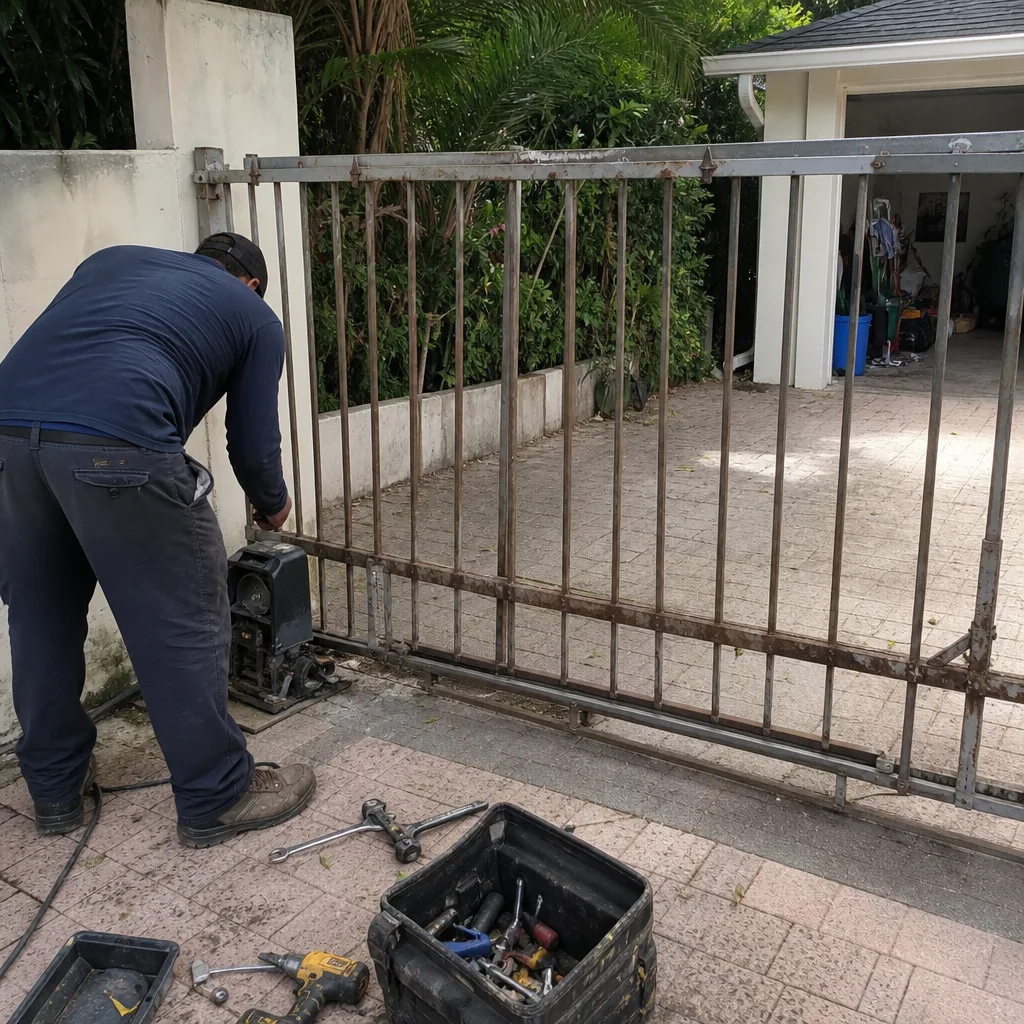
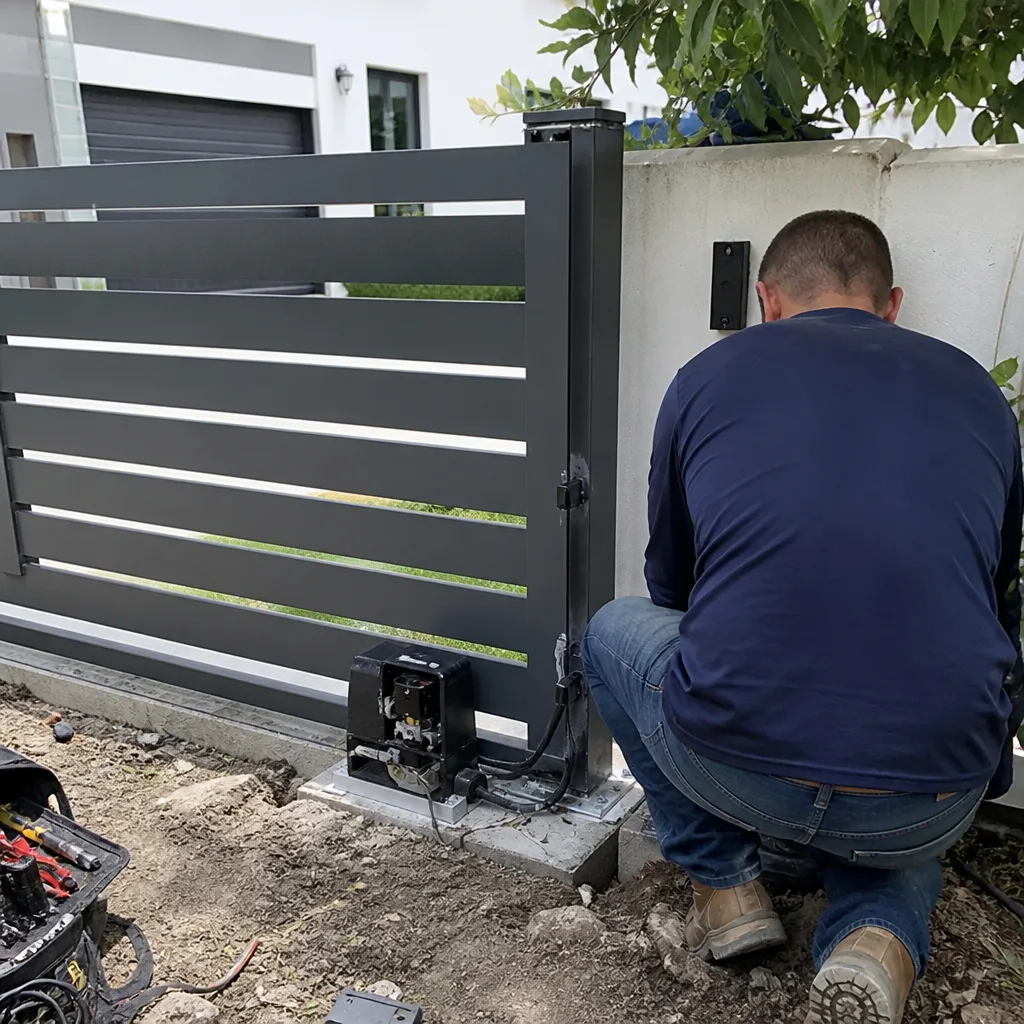
See the difference
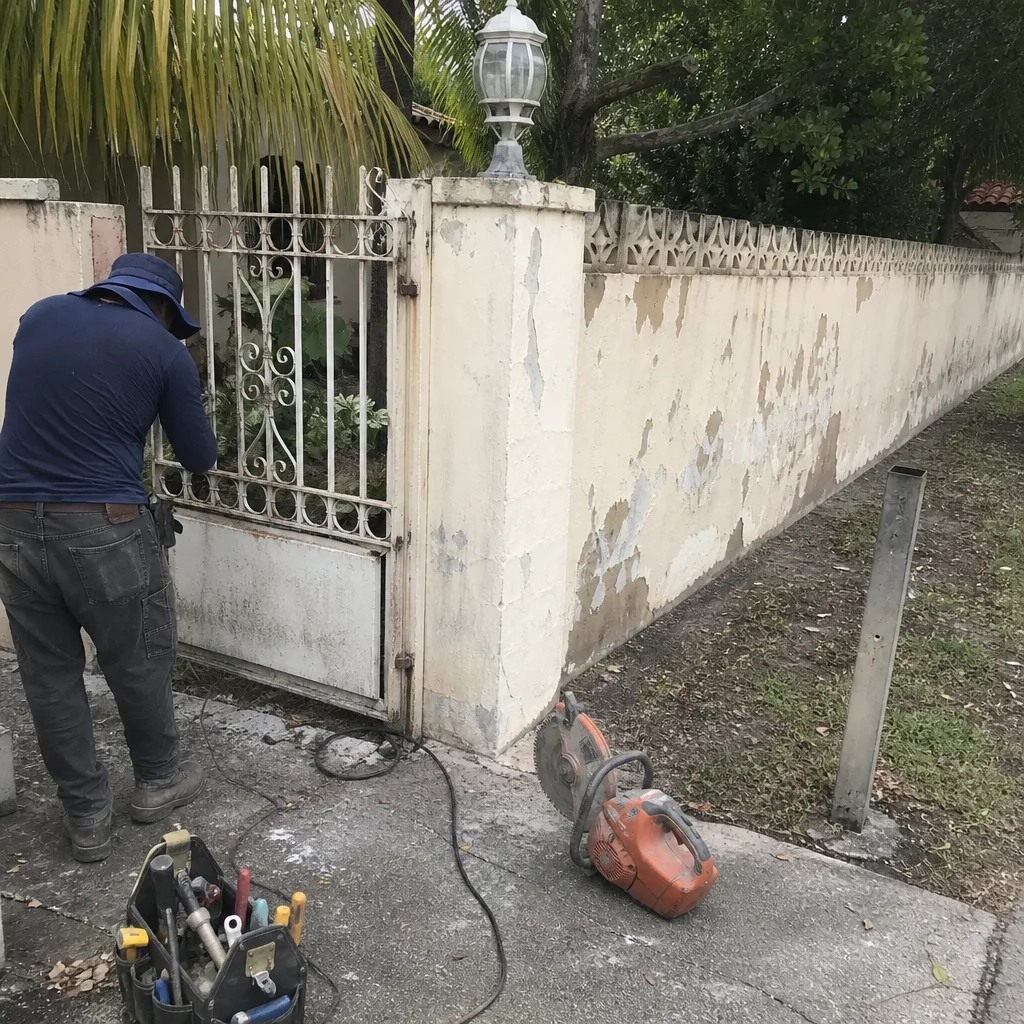 Before
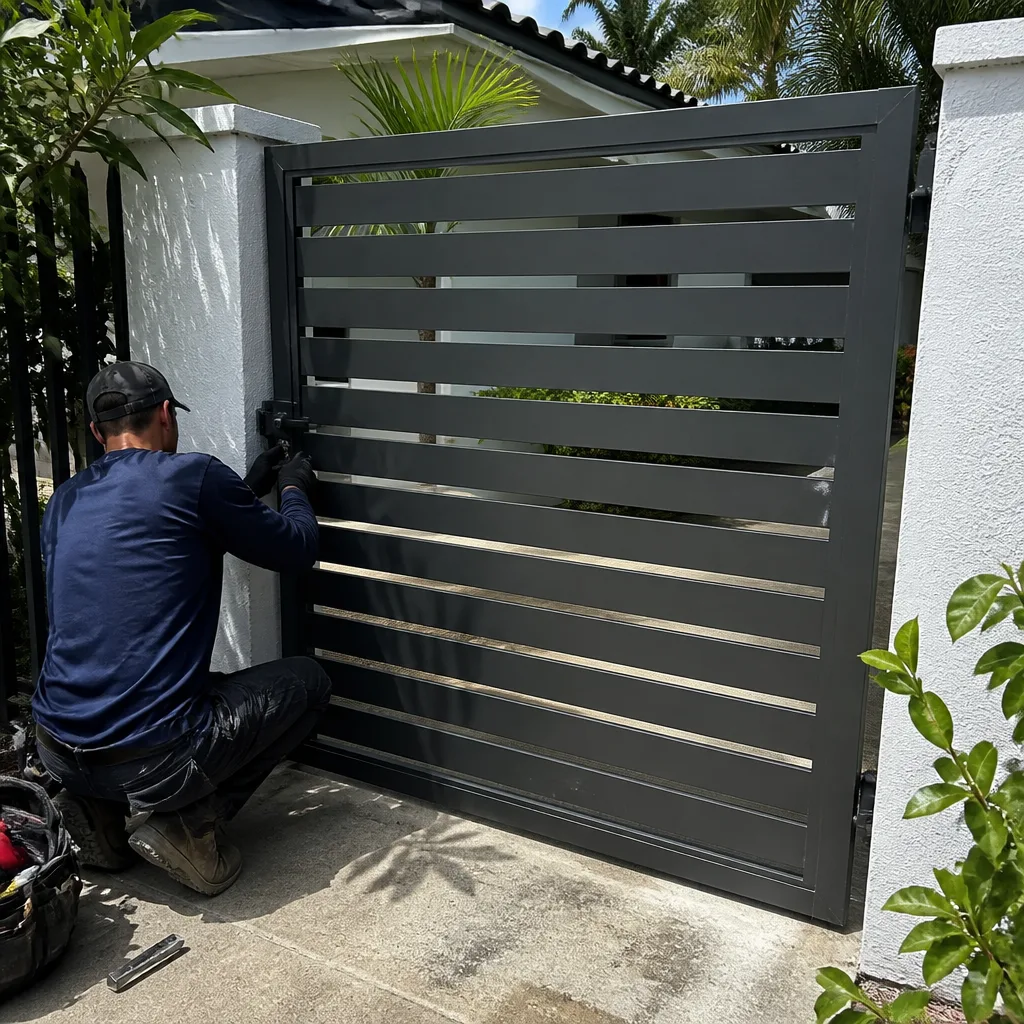 After
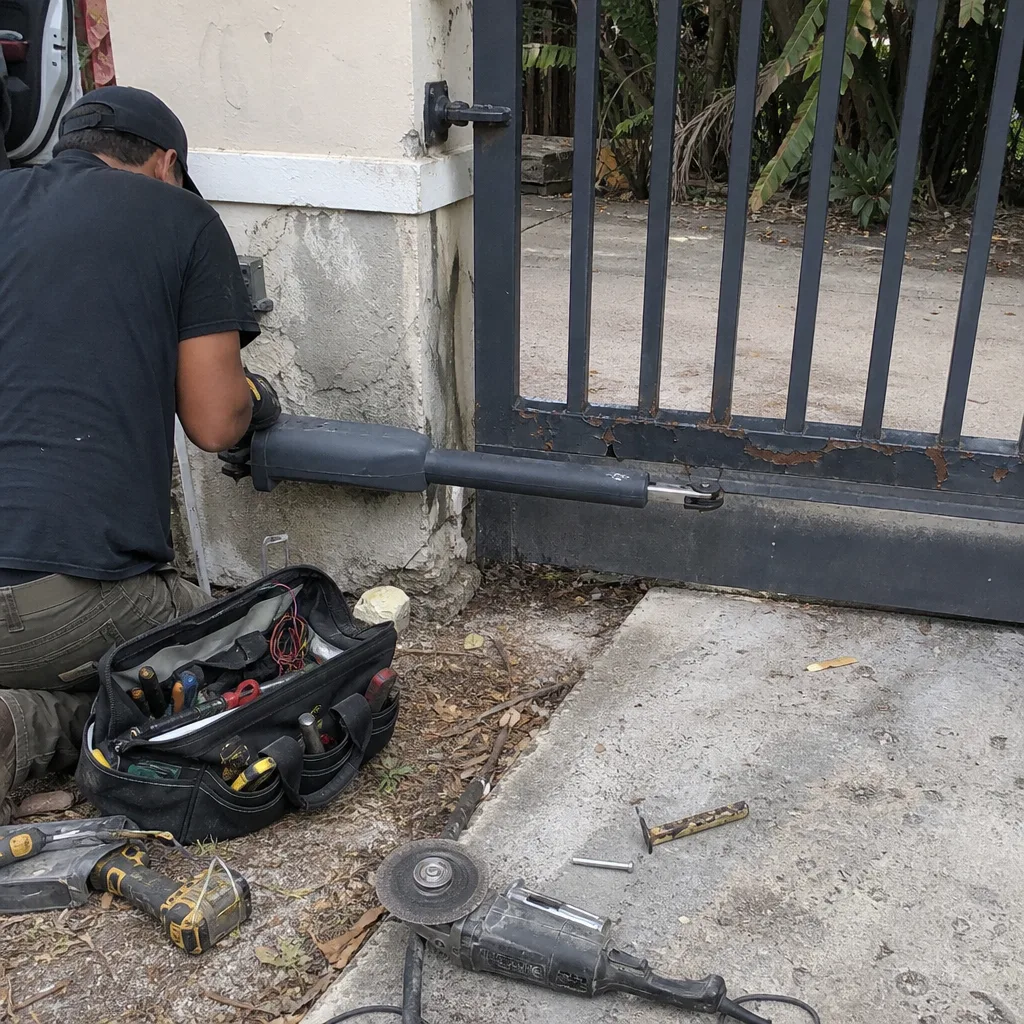 Before
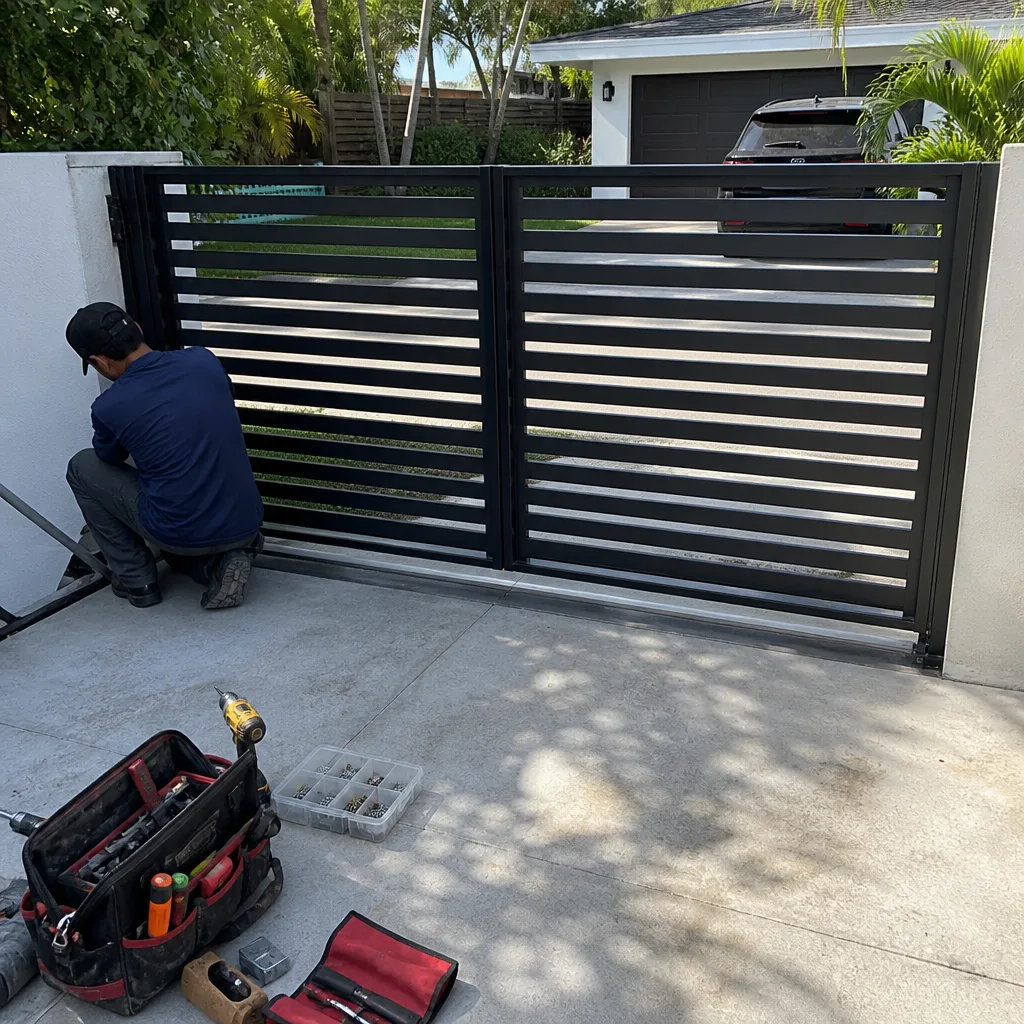 After
 Before
 After
When to Call a Professional
Some seasonal gate maintenance tasks are doable for a homeowner with a wrench and patience. Hinge lubrication, visual inspection, and clearing vegetation are all reasonable. But when you find cracks in welds, play in the hinge fasteners, intermittent electric failures, or a gate that has sagged enough to scrape the ground, the problem has moved beyond lubrication. These are structural and electrical failures that need a professional diagnosis and repair. Attempting to weld a gate frame without knowing the load path or opening an operator housing without understanding the capacitor discharge risk is how small problems become expensive ones. Miami Gate Company offers free estimates in Miami – call (833) 570-5807 and we’ll diagnose what’s actually wrong, not just what’s visible.
If you’re in the Boca Pointe area specifically, we have a dedicated Gate Repair in Boca Pointe page with local details. For electric gate issues, start with our Electric Gate Repair in Boca Pointe breakdown. And if you’re considering a new gate rather than another repair cycle, our Gate Installation in Boca Pointe page covers what goes into a full installation. Regardless of your location, you can always start with the Miami Gate Company home page to see our full service area.
Frequently Asked Questions
April and May are the best months for gate maintenance in Miami because the weather is mild, the ground is dry, and the service gives your gate its best chance to survive the humid season without failure. Schedule ahead, because this is also the busiest time for Miami gate contractors who understand the seasonal cycle.
We prioritize urgent repairs, and many Miami service calls can be scheduled quickly depending on our current workload and your location. Call (833) 570-5807 and we’ll tell you honestly when we can be there – estimates are free.
Seasonal maintenance costs less than a single emergency repair in most cases. The exact price depends on your gate type, operator brand, and what we find during the inspection, and we quote the price and agree on it before any work starts. Call (833) 570-5807 for a specific quote on your gate.
Yes, and it’s predictable. Miami’s humidity drop in October and November causes wood and composite gate components to shrink and shift, which changes the alignment and creates sticking. It’s not normal to leave it that way, though: a sticking gate is putting extra load on the operator and the hinges, and that load becomes a real failure if it’s not addressed.
We service the entire Miami area, including coastal neighborhoods where salt wind accelerates corrosion. In our experience, gates within a mile of the ocean need more frequent hinge and operator maintenance than inland gates, and we account for that in our seasonal recommendations.
We work on virtually any gate system. Whatever brand you have, we know it. That includes current and discontinued models from Linear, Viking, Ghost Controls, DoorKing, and others, which matters when you’re trying to keep a 15-year-old operator running rather than replacing it unnecessarily.
The Bottom Line
Seasonal gate care in Miami is not about following a generic four-season checklist. It’s about understanding the three real stress periods that our climate creates and scheduling maintenance to get ahead of each one. Pre-hurricane season inspection in May, post-storm assessment in October, dry-season adjustment in January, and a comprehensive spring service in April. That’s the rhythm. Gates that follow this calendar last longer, fail less, and cost less in the long run. Gates that get ignored until they break tend to break at the worst possible time, and the repair is always more expensive than the maintenance would have been. The best time to schedule your next gate inspection in Miami is before the season changes, not after the failure.
Written by the team at Miami Gate Company, serving Miami since 2012.