
Last updated October 30, 2026
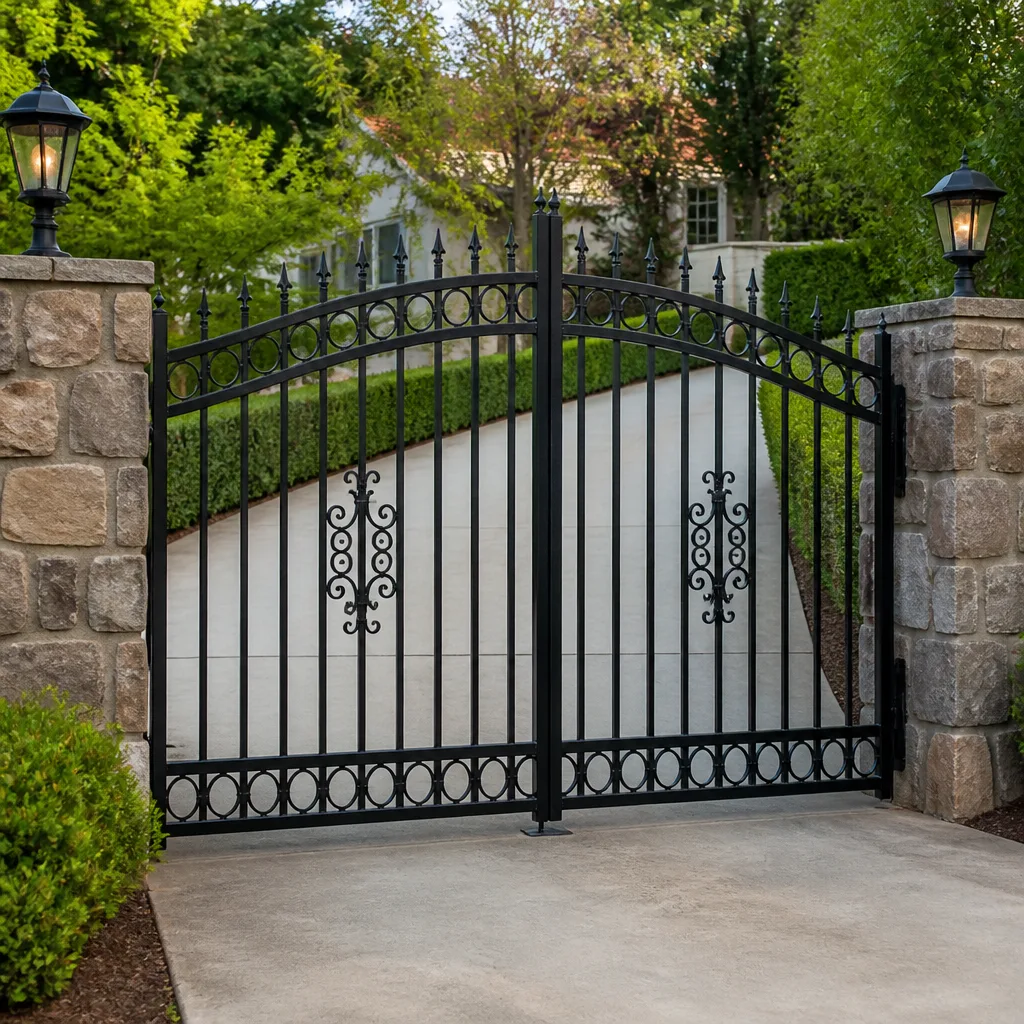 Wrought iron
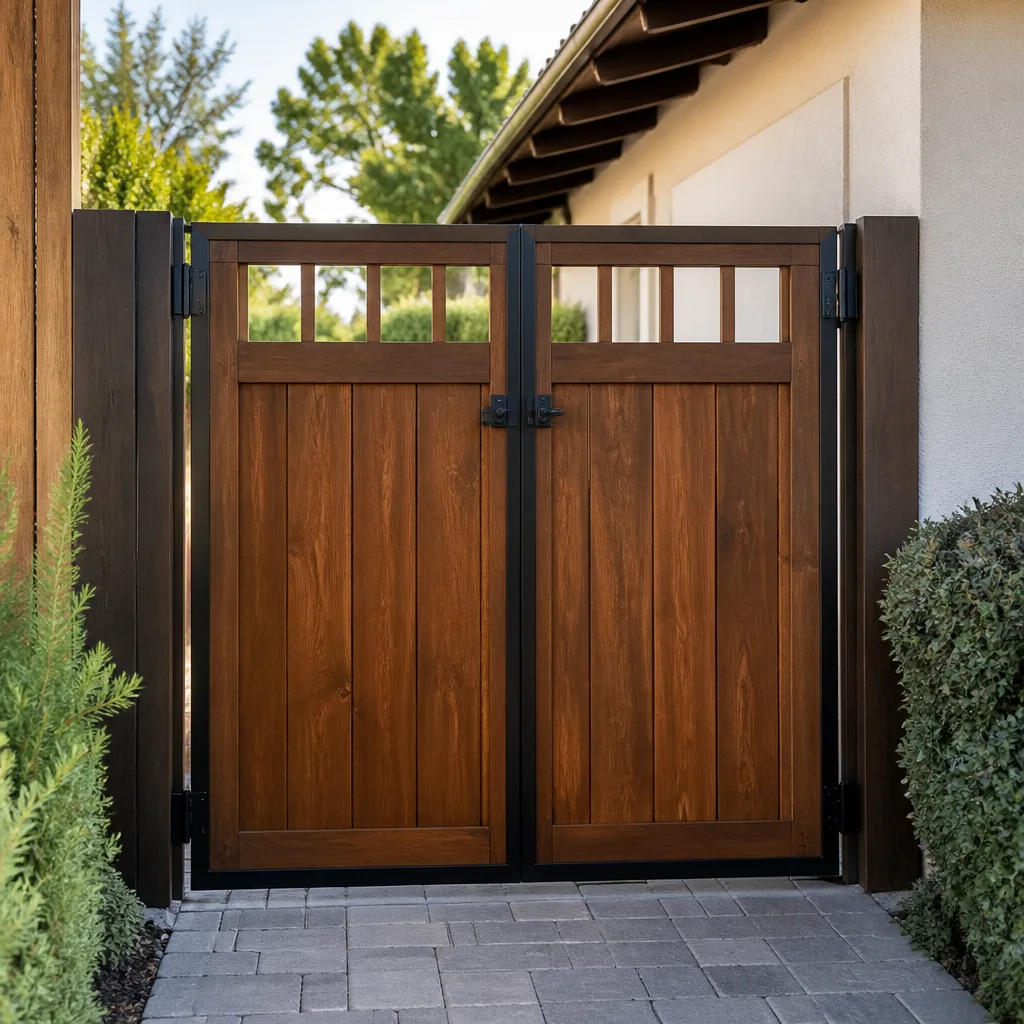 Wood & steel frame
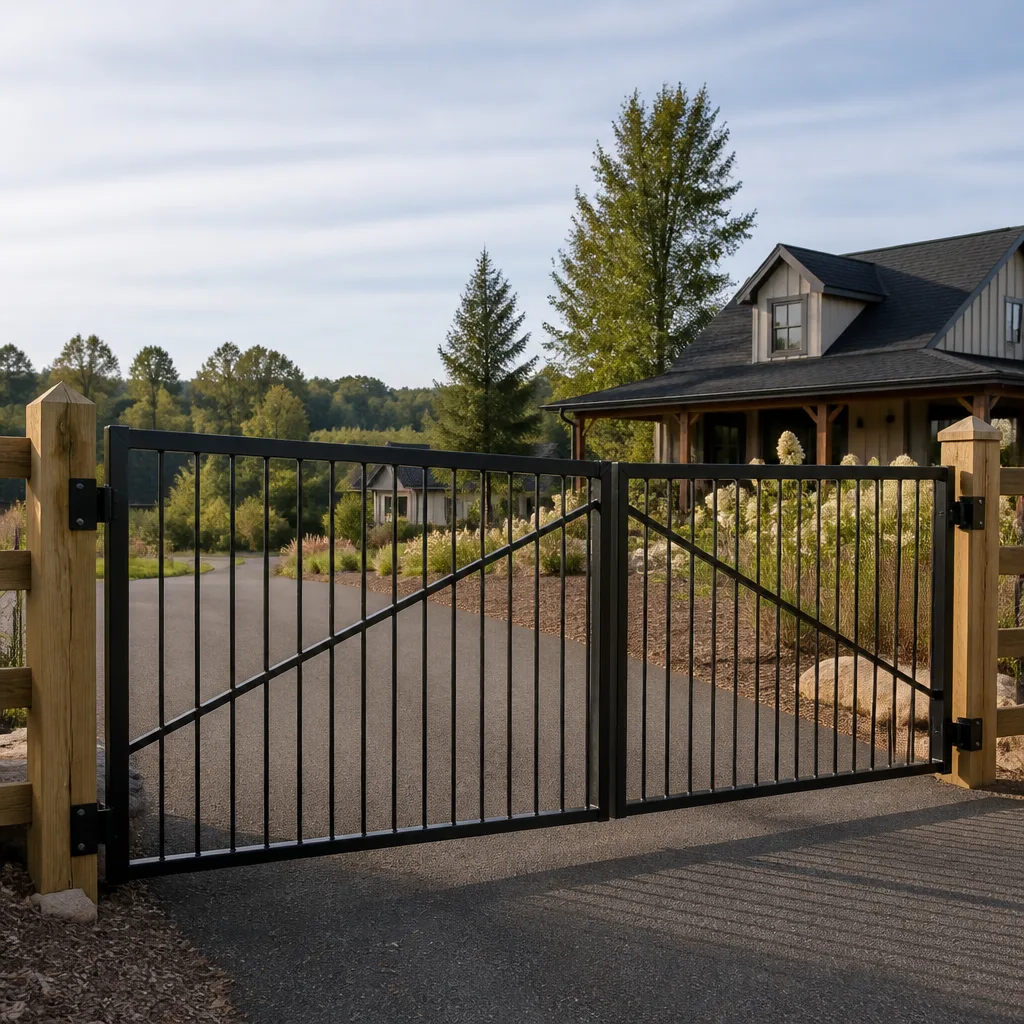 Farm & ranch
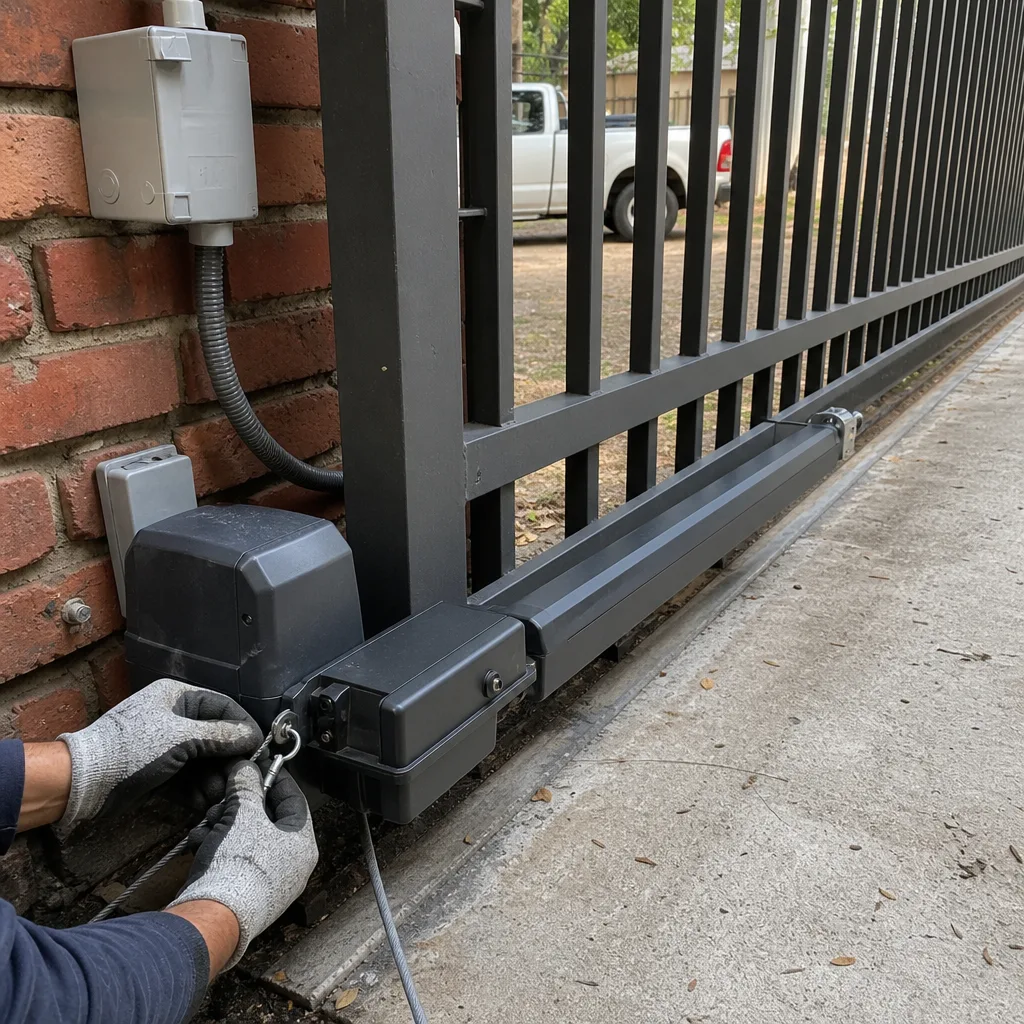
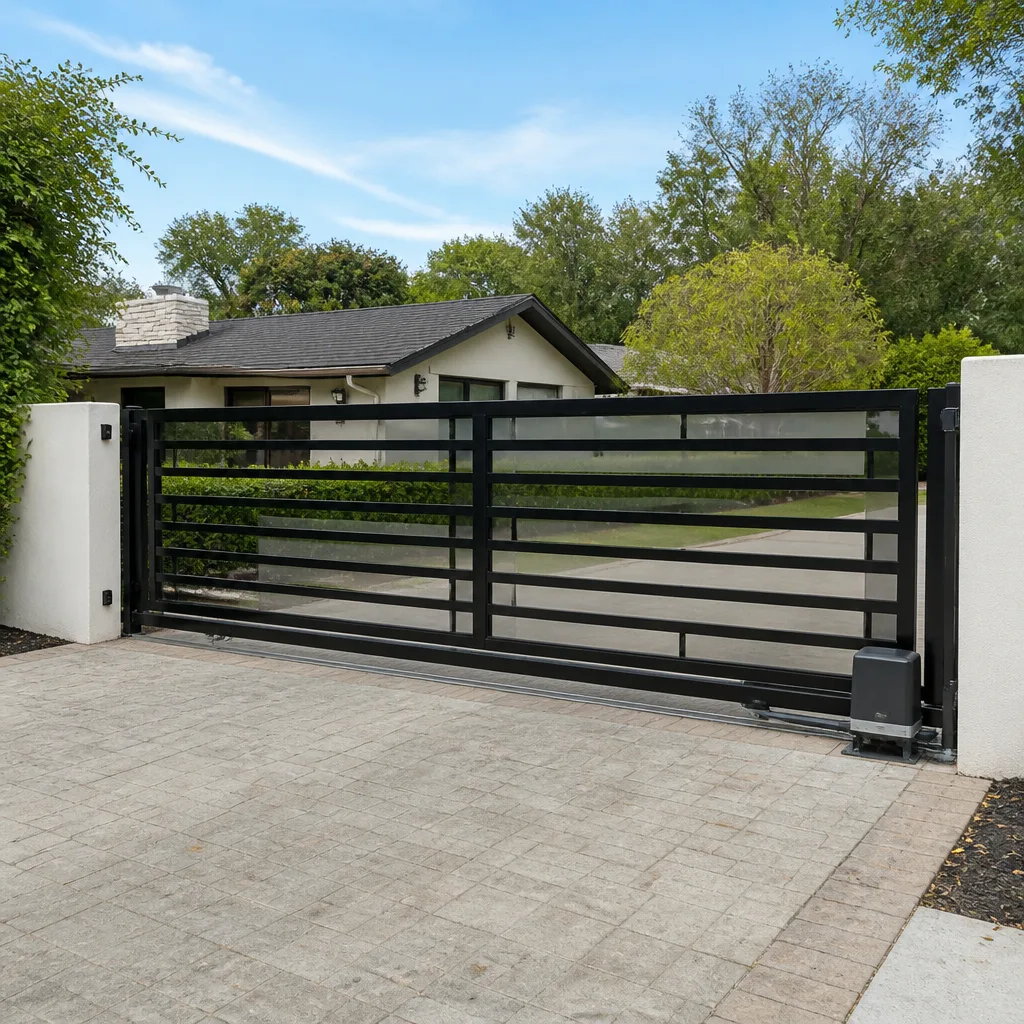 Sliding driveway gates
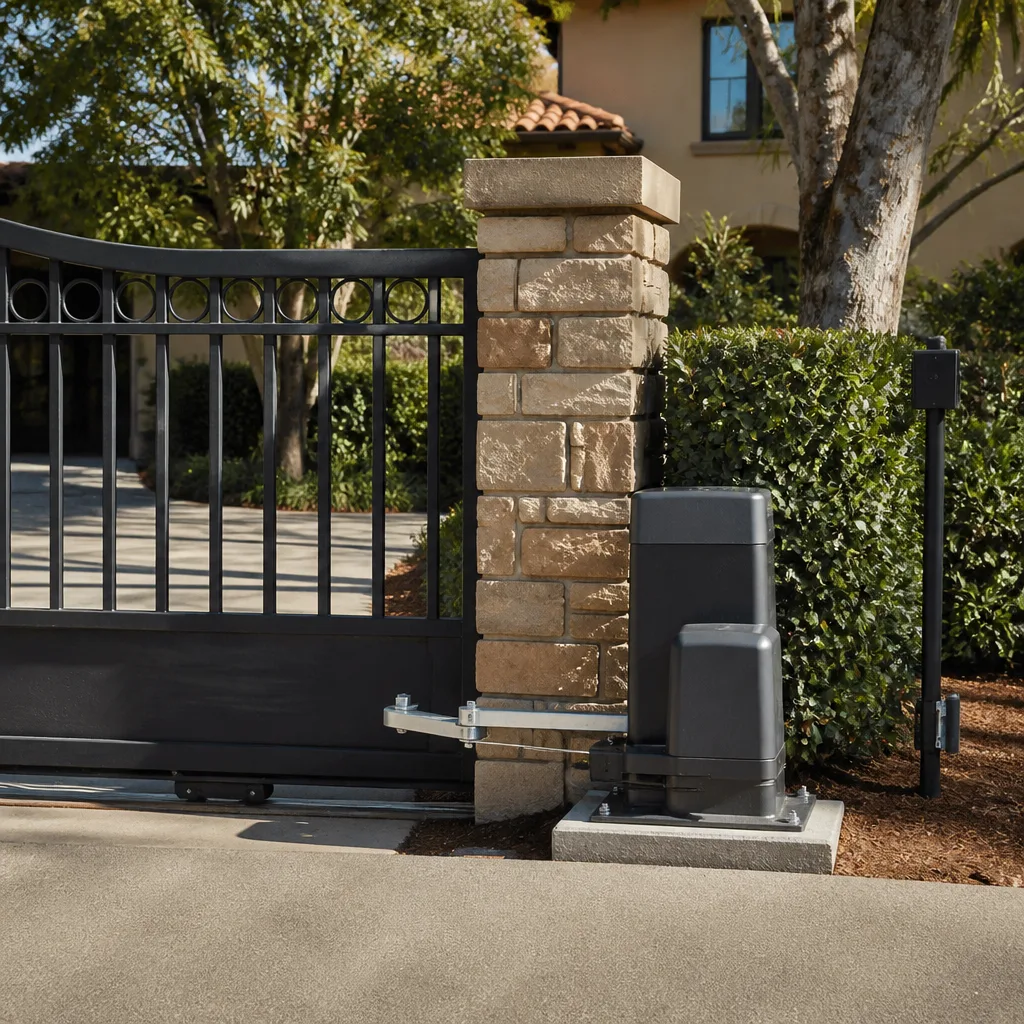 LiftMaster operators
Free on-site gate assessment - hinges, posts, and your LiftMaster or Nice gate operator checked before anything is quoted
The assessment is free and the quote is the invoice.
Get your free estimateGate Repair Warning Signs: A Miami Homeowner’s Reference Guide
A gate that hesitates for two seconds before opening in Cleveland has six months before it fails. The same symptom on the same gate model in a Miami waterfront community typically has six weeks, because the motor is already fighting corrosion-increased mechanical resistance, not just aging. This guide was written from the perspective of technicians in Miami who see how salt air, humidity, and afternoon thunderstorms compress every gate failure timeline. You will learn which warning signs are false alarms, which ones demand same-week service, and how Miami conditions change what “normal wear” actually means.
Styles & brands we work with
Quick Answer
The clearest gate repair warning signs in Miami are a gate that opens or closes slower than it did six months ago, grinding or scraping sounds during travel, intermittent failure to respond to a remote or keypad, visible rust blooming at weld points or hinge barrels, and a motor that hums without moving the gate. In Miami’s coastal climate, any of these signs appearing together usually means a component is within weeks of outright failure, not months.
Table of Contents
- Why Miami Fails Gates Differently Than the Rest of the Country
- Symptom to Cause: A Miami Translation Table
- Power Quality and Control Boards: The Misdiagnosed Problem
- Reading Rust Like a Technician, Not a Homeowner
- The 30-Day Watch List vs. the Same-Week List
- HOA Gates vs. Single-Family Gates: Different Wear Patterns
- The Four Questions We Ask on Every Diagnostic Call
- Common Mistakes to Avoid
- When to Call a Professional
- Frequently Asked Questions
- The Bottom Line
Why Miami Fails Gates Differently Than the Rest of the Country
Most national gate repair guides are written for dry inland climates. They assume a motor lasts eight to ten years, a steel gate frame lasts fifteen, and a control board dies from old age. None of those assumptions hold in Miami.
The difference starts with salt. Miami’s coastal air carries sodium chloride in concentrations that vary by distance from the water. Within five miles of Biscayne Bay or the Atlantic, the air is corrosive enough to pit unprotected steel within 18 months and destroy factory powder coating within four years. That corrosion is not cosmetic. It creates micro-roughness on every moving surface, which increases friction. Motors then work harder to move the same gate. Boards heat up. Capacitors swell. Wear accelerates across the entire system.
Humidity is the second accelerator. Miami averages over 70% relative humidity year-round. Condensation forms inside control boxes, on circuit boards, and across electrical connections every morning. That moisture breeds corrosion at the component level, and it does not need oceanfront property to happen. We see it in every Miami neighborhood, from Coral Gables to Kendall to communities near the Gate Repair in Boca Pointe service area where proximity to the Intracoastal makes salt exposure unavoidable.
Then there is the heat. A black gate exterior in July can reach 160 degrees. Control boards in direct sun or poorly ventilated housings degrade faster than their rated lifespans would suggest. Capacitors, which are temperature-sensitive, fail early. Solder joints crack as boards expand and contract daily.
The practical takeaway is that Miami homeowners cannot use a national reference guide to judge whether a gate symptom is urgent. The failure timelines here are compressed. A slow gate in Phoenix is a minor annoyance. A slow gate in Miami is a motor burning toward failure.
Symptom to Cause: A Miami Translation Table
Here is the translation table we use on diagnostic calls. It maps what a homeowner observes to what is actually happening inside the gate system under South Florida conditions.
What you see vs. what is happening
- Gate opens noticeably slower than it did a year ago. In Miami, this usually means the motor is fighting corrosion-increased resistance at the hinge bearings or roller track. The motor is working harder than it should, drawing more current, and building heat. If ignored, this becomes a burned-out motor in weeks, not months.
- Grinding or metallic scraping during travel. This is almost always a bearing or roller failing under rust load. Salt air causes pitting inside bearing races. Once pitting starts, the bearing self-destructs quickly. Grinding is the sound of the race coming apart.
- Gate starts to open, then stops and reverses. This is a safety sensor trip or a current-sense trip. In Miami, the underlying cause is often increased mechanical drag from corrosion. The board reads the extra current as an obstruction and stops the gate. The board is not broken; it is reacting to a mechanical problem upstream.
- Gate opens halfway and stops. Partial travel with no reversal is usually a limit switch failure, a slipped gear, or a control board that is losing its travel memory. In Miami’s humid conditions, limit switches corrode internally and fail intermittently before they fail permanently.
- Remote works only at close range or intermittently. Intermittent radio reception is often mistaken for a remote battery problem. In Miami, the more likely cause is moisture intrusion in the antenna housing or corrosion on the receiver board. If replacing the remote battery does not fully resolve the issue, the receiver or antenna is compromised.
- Motor hums but the gate does not move. The capacitor is usually dead or the start winding has failed. Miami’s heat shortens capacitor life dramatically. A humming motor that is not moving is drawing locked-rotor current and can destroy itself within minutes.
- Gate moves, but jerks or stutters during travel. This is often a gearbox or chain/sprocket issue. Salt air corrodes chain links unevenly, creating tight spots. The gate then moves in a stutter pattern as the chain binds and releases.
- Keypad lights up but nothing activates. With Miami humidity, keypad membrane switches fail from moisture absorption. The keypad passes voltage but the switch contacts no longer close. This is a classic Miami presentation that looks like a wiring problem but is actually component-level moisture damage.
What these symptoms share
Every symptom above has two things in common. The first is that most Miami homeowners attribute them to age or normal wear. The second is that in this climate, “normal wear” is not slow. It is accelerated. The hinge bearing that would take five years to fail in Denver fails in two years in Coconut Grove. The control board that would last a decade in Scottsdale lasts four years in Brickell. Understanding that compression is the core of this reference guide.
Power Quality and Control Boards: The Misdiagnosed Problem
Here is something most gate repair guides never mention: Miami’s power quality causes gate control board failures that look like mechanical problems.
Miami has one of the highest lightning strike densities of any major U.S. city. Afternoon thunderstorms in the summer are a daily occurrence. Every nearby strike sends microsurges through the local power grid. Those microsurges are not dramatic enough to trip a breaker, but they are more than enough to degrade sensitive electronics over time.
A control board that has absorbed a season of microsurges will develop symptoms that mimic other problems. The gate may open but not close. It may close but not fully latch. It may work normally for two weeks and then refuse all commands for an afternoon. The remote may lose programming. The keypad may reset to factory settings.
These symptoms look like wiring problems, bad remotes, or even motor failures. In our experience in Miami, a significant percentage of what looks like a mechanical gate repair is actually a control board that has been slowly cooked by power irregularities.
- Step one on any intermittent gate failure in Miami is to check the power supply and surge protection. If there is no surge protection on the gate circuit, the board is exposed. This is the most common setup oversight we find in Miami homes and HOAs.
- Step two is to inspect the control board for visible heat damage or swollen capacitors. Swollen capacitors look like small cylinders with domed or bulging tops. This is a definitive sign the board has been stressed by heat or surge and is near end of life.
- Step three is to test the low-voltage side under load. A board that tests fine with a multimeter may fail under operating current. This is a load-dependent failure that only appears when the gate is actually moving.
- Step four is to compare the board’s behavior pattern to Miami’s weather pattern. If failures happen more frequently during thunderstorm season, the power quality issue is almost certainly the contributing factor. A board that fails after storms is a board that has been surging.
This is also why we recommend that every Miami gate installation includes a dedicated surge suppressor on the gate circuit. It is inexpensive insurance, and it directly addresses the most common local cause of premature board failure that most national guides do not even mention. If you are in a community where power irregularities are frequent, the Electric Gate Repair in Boca Pointe page describes how we diagnose board-level issues in more detail.
Reading Rust Like a Technician, Not a Homeowner
Not all rust on a gate is a problem. Some rust is cosmetic and can be monitored for years. Other rust is structural and means the gate is weeks from a broken weld or a failed hinge. Knowing which is which is something most Miami homeowners never learn because no one explains what to look for.
Cosmetic rust: monitor, do not panic
Cosmetic rust is orange-brown and sits on the surface. It appears where the factory paint or powder coat has been scratched or chipped. It wipes off with a rag, leaving pitting behind but not deep penetration. On a steel gate in Miami, cosmetic rust is common, especially near the bottom of posts and on decorative elements. It can be sanded and repainted, and the gate will function fine.
Structural rust: act quickly
Structural rust tells a different story. It appears as bubbling under still-intact paint, not just at scratches. The bubbling means corrosion is working underneath the coating and pushing it up from below. When you tap the bubbled area lightly with a screwdriver handle, it sounds hollow or dull, not solid. That is the sound of metal being consumed from the inside.
The locations where structural rust matters most are:
- Weld points. Anywhere two pieces of steel are joined, the weld is the most corrosion-susceptible spot on the gate. Structural rust at a weld point means the joint itself is weakening. On a swinging gate, the bottom hinge weld carries the entire weight of the gate panel. Rust there is an emergency.
- Hinge barrels and pins. The hinge is the highest-load, highest-movement point on any swinging gate. When rust pits the hinge pin or the barrel, the gate starts to sag. Sagging changes the center of gravity, which increases the load on the motor. A sagging gate in Miami is not a future problem; it is a current problem that is compounding.
- Inside box sections. Gate frames are often hollow steel tubes. Water gets in through tiny gaps in the welds and sits inside. The frame rusts from the inside out. By the time rust is visible on the outside of a box section, the wall thickness may already be compromised by 50% or more. A gate that feels unexpectedly light when you push it manually is a gate with internal frame loss.
- Rust streaks running down from hardware. When a bolt or screw rusts and leaves a streak of orange running down the gate, the fastener itself is failing. A failed fastener on a hinge or a wheel bracket turns a heavy gate into a falling hazard.
In Miami, we train our eyes to look past the surface. A gate with deep bubbling at the lower hinge welds is a gate that needs attention within days, not months, regardless of how good the paint job looks on top.
The 30-Day Watch List vs. the Same-Week List
Not every warning sign requires an immediate call. Some symptoms can be monitored for 30 days while you budget for the repair, as long as you check them weekly. Others indicate that the gate is weeks from a failure that will either lock you in, lock you out, or cause property damage. Here is how we separate them based on the patterns we see in Miami.
Safe to monitor for 30 days
- Light surface rust with no structural bubbling. Sand it, seal it, repaint it when convenient. The gate will not fail from superficial corrosion in that timeframe.
- A remote that occasionally needs a second press to work. This could be a remote battery issue, which is a one-minute fix. Replace the battery first. If the issue persists, escalate.
- A gate that is slightly slower than normal but still moves smoothly. This is a yellow flag, not a red flag. Document the current travel time with a phone stopwatch. Check it weekly. If it is getting slower each week, escalate. If it holds steady, schedule service within the month.
- A keypad that works but the buttons feel less responsive. This is early moisture intrusion. It will get worse, but rarely fails completely within 30 days.
- A gate that squeaks once per cycle but operates fine otherwise. A dry hinge bearing makes noise before it fails. A light lubricant can buy you time to schedule a proper bearing replacement.
Requires same-week service
- A grinding noise during travel. This is a bearing coming apart. Every cycle increases the damage. If the bearing seizes completely, the gate will either stop moving or rip the hinge off the post.
- A gate that stops and reverses with no obstruction present. This is a safety trip caused by excess mechanical drag. The board is protecting itself, but it is doing so because a component underneath is failing. The underlying failure is accelerant: the longer it runs, the worse it gets.
- Visible bubbling at hinge welds or box sections. This is structural corrosion. The gate’s load-bearing points are compromised. A swinging gate that fails at the hinge is a crushing hazard.
- A motor that hums but the gate does not move. This is a capacitor or winding failure. Continuing to hold the activation will destroy the motor. This needs immediate attention.
- Any gate that has stopped responding to remotes, keypads, and manual release at the same time. This indicates a total electrical or control board failure. The gate is stuck in whatever position it was in when power was lost or the board died. If it is stuck open, the entire property is unsecured.
- Sparks, smoke, or a burning smell from the control box or motor. This is a fire hazard, not a gate problem. Shut off power to the gate circuit at the breaker and call a professional.
Miami’s failure-rate data changes where these lines fall. If you are in a non-coastal city, the same-week list above is more like a two-to-four-week list. Here, salt and humidity do not give you that grace period.
HOA Gates vs. Single-Family Gates: Different Wear Patterns
A single-family residential gate in Miami typically cycles 10 to 20 times per day. A gate at a community entrance in a place like Boca Pointe, where hundreds of residents pass through daily, cycles 300 to 600 times. That is a 20 to 30 times difference in mechanical workload.
The failure presentations are not the same. An HOA gate in a high-traffic community will show specific warning signs that a single-family gate simply does not have time to develop.
What HOA gates show first
- Premature limit switch wear. Limit switches are mechanical switches that tell the control board where the gate is in its travel. On a high-cycle gate, these switches can wear out in 12 to 18 months in Miami. The symptom is the gate stopping a few inches short of fully open or closed, or overshooting and bouncing off the stop post.
- Chain or belt stretching. High cycle counts stretch drive chains faster than motors wear out. A stretched chain creates slack that causes the gate to jerk or bounce. The symptom is unpredictable travel speed at different points in the opening arc.
- Photo eye and loop sensor failures from constant exposure. In a community entrance, safety sensors are exposed to Miami’s rain, sun, salt, and humidity 24 hours a day. They fail faster than gate components that sit in enclosures. The symptom is the gate stopping and reversing with nothing blocking it, or the gate refusing to close at all.
- Control board overheating from constant duty. A board that cycles 500 times a day generates heat. In Miami’s summer temperatures, an under-ventilated control box pushes boards past their thermal limits. The symptom is the gate working normally in the morning, then becoming erratic in the afternoon heat.
What single-family gates show first
- Corrosion at hinges and welds. A single-family gate cycles less, so mechanical wear is slower. But the gate is usually exposed to the same salt air as an HOA gate, and it accumulates corrosion during idle hours. The primary failure mode is structural, not mechanical.
- Motor capacitor failure from infrequent use. Contrary to intuition, sitting idle is hard on electric motors. Capacitors degrade over time even when not in use. A gate that cycles 10 times a day can have a capacitor fail from age without ever showing a mechanical symptom first.
- Battery backup failure in the gate operator. Many residential operators in Miami include battery backup for storm season. Those batteries age out in three to five years. The symptom is the gate working normally when power is on, but failing to operate or operating erratically on battery power.
If you manage an HOA gate, the warning signs listed in the table above still apply, but the timeline to failure is expressed in days, not weeks. High-cycle gates do not degrade slowly once a component starts to fail. If you need help evaluating the patterns in a community system, the Gate Installation in Boca Pointe page covers full system replacements when repair is no longer the right investment.
The Four Questions We Ask on Every Diagnostic Call
When a Miami homeowner calls us about a misbehaving gate, we ask four questions that tell us more than any single symptom description. These questions are designed to separate climate-driven failures from ordinary mechanical wear. Homeowners who answer them before calling can often shorten the diagnostic time significantly.
1. When did the symptom first appear, and has it changed since then?
The onset pattern tells us a lot. A symptom that appeared suddenly on a Tuesday afternoon, right after a thunderstorm, points toward a power quality event. A symptom that developed gradually over several weeks points toward corrosion-increased friction. A symptom that comes and goes points toward thermal stress or moisture intrusion. Miami’s weather patterns create specific failure signatures, and this question exposes them.
2. Does the problem get worse at a specific time of day?
A gate that works fine in the morning and struggles in the afternoon is almost always a heat issue. The motor is running hotter because Miami’s afternoon sun has heated the gate panel, the track, and the operator housing. Heat increases electrical resistance in the motor windings, which reduces motor torque. The gate moves slower or stalls. If the problem disappears after sunset, it is heat-related, not a dying motor. This is a critical distinction because a heat-related issue may be solved with better ventilation or a higher-duty-rated operator, not a motor replacement.
3. Has anyone else worked on this gate recently?
You would be surprised how many Miami gate failures trace back to a previous repair that was done incorrectly. A misaligned photo eye, a limit switch that was set too aggressively, a control board that was replaced with an incorrect model. We work on gate systems from LiftMaster, FAAC, Elite, and Mighty Mule, among others, and we routinely find that a previous technician made a brand-specific error because they were not trained on that particular platform. Brand-agnostic diagnosis means the right fix is based on what the system actually needs, not what a single manufacturer incentivizes or what one technician happens to know.
4. How far are you from the water, and does the gate face east or south?
This is the question that makes national guides irrelevant. A gate five blocks from the ocean in Miami Beach is exposed to vastly more salt than a gate in West Kendall. A gate that faces east is exposed to the morning sun and the prevailing onshore breeze, which carries salt. A south-facing gate gets direct sun all day and runs hotter. These are Miami-specific variables that change the diagnosis. The same symptom in two different Miami locations can have entirely different root causes.
Common Mistakes to Avoid
- Lubricating a grinding bearing instead of replacing it. Grinding means the bearing race is already damaged. Lubrication quiets it temporarily and masks the symptom while the damage accelerates. In Miami, that temporary quiet can cost you a motor when the bearing finally seizes.
- Ignoring a slow gate because it still works. A slow gate is a gate that is pulling excess current. Excess current cooks the motor and the control board. A Miami homeowner who waits for a slow gate to actually fail is usually replacing the motor, the board, and sometimes the gearbox instead of one component.
- Replacing the remote battery and assuming the problem is solved. If a remote works at 20 feet today but stops working at that distance next week, the issue is not the battery. It is the receiver or antenna in a salt-air environment. You have masked the problem, not solved it.
- Painting over bubbling rust without addressing the underlying corrosion. Paint over structural rust seals the corrosion in and hides the visual warning sign. The gate looks better while it gets weaker. A year later, the hinge weld fails without any new visible warning.
- Resetting the breaker or power cycling the gate to clear a fault, then forgetting about it. Power cycling clears a control board fault, but the fault was not random. Something caused it. In Miami, the cause is often a microsurge or a moisture-induced short. The next time the fault occurs, it may not reset.
- Using a non-gate electrician to diagnose a control board problem. General electricians are excellent at what they do, but gate control boards are specialized equipment. Boards from LiftMaster, FAAC, and Elite have different diagnostic protocols and failure modes. A generic electrical diagnosis often replaces a board that was not the root cause, and the symptom returns within weeks.
When to Call a Professional
Call a professional when the gate makes any grinding sound, when it stops and reverses without an obstruction, when it moves noticeably slower than it did a month ago, when rust is bubbling under the paint at hinge welds, or when the gate is completely unresponsive to every access method. Any single one of these conditions in Miami is a legitimate same-week service call. Any two of them together means the gate is days away from a failure that will leave you either locked in or locked out. Miami Gate Company offers free estimates in Miami. Call (833) 570-5807 and describe what the gate is doing. We will tell you if it is urgent or if it can wait, no charge for the consultation.
Frequently Asked Questions
How much does gate repair cost in Miami?
Gate repair costs in Miami typically range from $150 for a simple limit switch adjustment or remote reprogramming to $1,800 or more for a full motor and control board replacement on a high-end operator. The biggest cost driver is whether the failure is mechanical, electrical, or structural, and how long the problem has been allowed to progress. A bearing replacement caught early is a few hundred dollars. The same bearing allowed to fail completely can destroy a motor, a gearbox, and a control board in one event. That is why we emphasize early diagnosis. Call (833) 570-5807 for an exact quote on your specific gate.
Can you come today if my gate is stuck open?
If your gate is stuck open in Miami and you cannot secure the property, that is an emergency. We prioritize emergency repair calls for gates that are stuck open, stuck closed, or making dangerous sounds. Call (833) 570-5807 and tell us the gate position and the symptoms. We will get you on the schedule as quickly as possible.
What does a full gate installation include?
A full gate installation includes site evaluation, gate fabrication or sourcing to the correct specifications for the opening and the application, post setting, hinge and track installation, operator mounting, electrical wiring and connection, safety sensor installation, limit switch programming, and remote and keypad setup. A proper installation also includes surge protection on the gate circuit, which is essential in Miami. The Gate Installation in Boca Pointe page details the process.
Do you work on my gate brand?
We work on virtually any gate system. Our technicians are trained on LiftMaster, FAAC, BFT, Linear, Viking, Ghost Controls, DoorKing, Elite, and Mighty Mule platforms, covering the overwhelming majority of residential and commercial gates in Miami. Whatever system you have, we know it.
Why does my gate only act up after it rains?
Rain in Miami means moisture intrusion. The likely culprits are a control board enclosure that is not sealed properly, a photo eye that is absorbing water, or an electrical connection that is corroding and shorting when wet. These are climate-driven failures that national guides rarely address. The fix is usually straightforward once the intrusion point is found.
Is it worth repairing an old gate or should I replace it?
The answer depends on the structural condition of the gate frame and posts. If the frame is solid and only the operator or electrical components have failed, repair is almost always the better value. If the frame has structural rust at the welds or the posts are rusted through at ground level, the gate is nearing the end of its service life and replacement is the smarter investment. We give you an honest assessment either way, because we are brand-agnostic and not pushing you toward a sale that benefits one manufacturer over another.
The Bottom Line
Miami’s climate compresses every gate failure timeline. The symptoms that national guides treat as early warnings are, in this city, often the last warning you will get. A slow gate, a grinding bearing, intermittent remote response, rust bubbling at welds, a power board acting erratically after storms: these are the signs that separate a $300 repair from a $3,000 failure. Learn to read them. Act on them early. And when in doubt, call a specialist. The Miami Gate Company home page has more information about our services, or you can call (833) 570-5807 directly for a free estimate.
Written by the team at Miami Gate Company, serving Miami since 2012. Explore more guides & resources from our experts.
See the difference
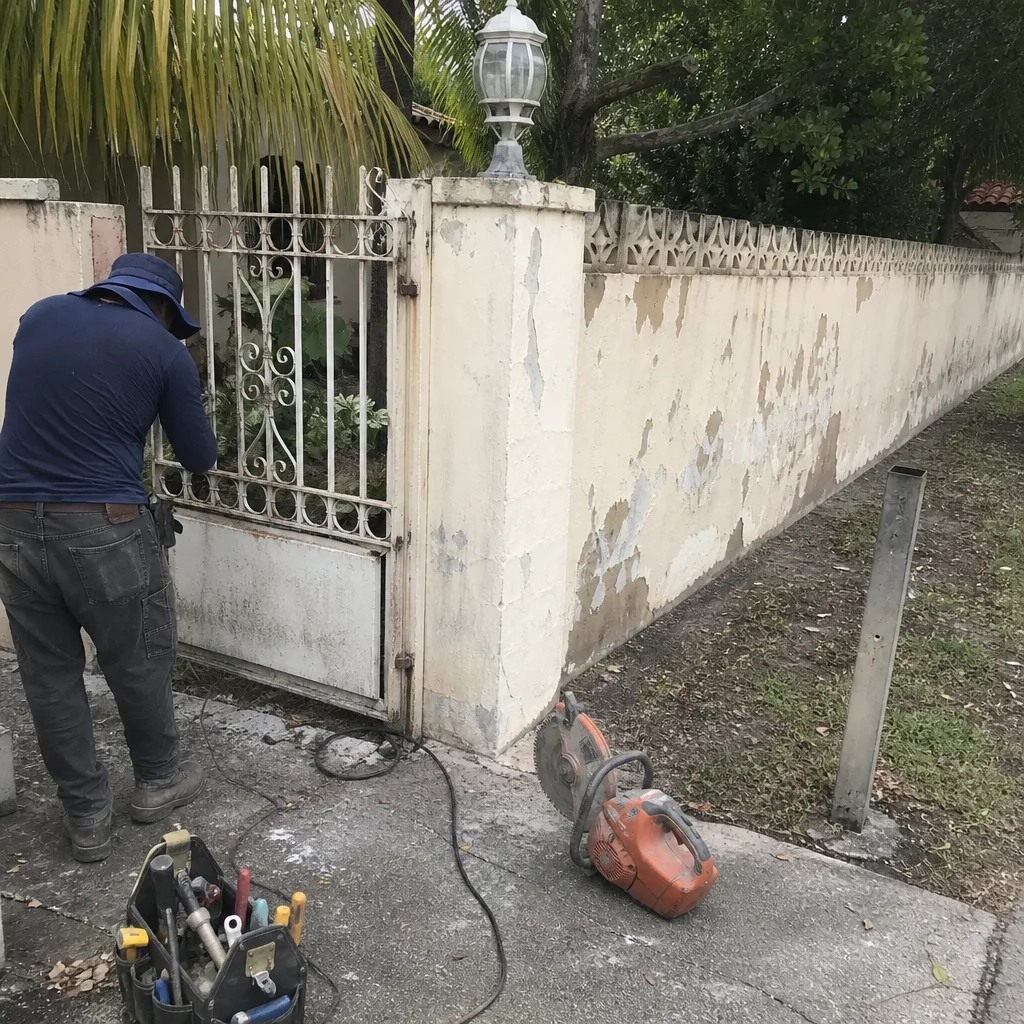 Before
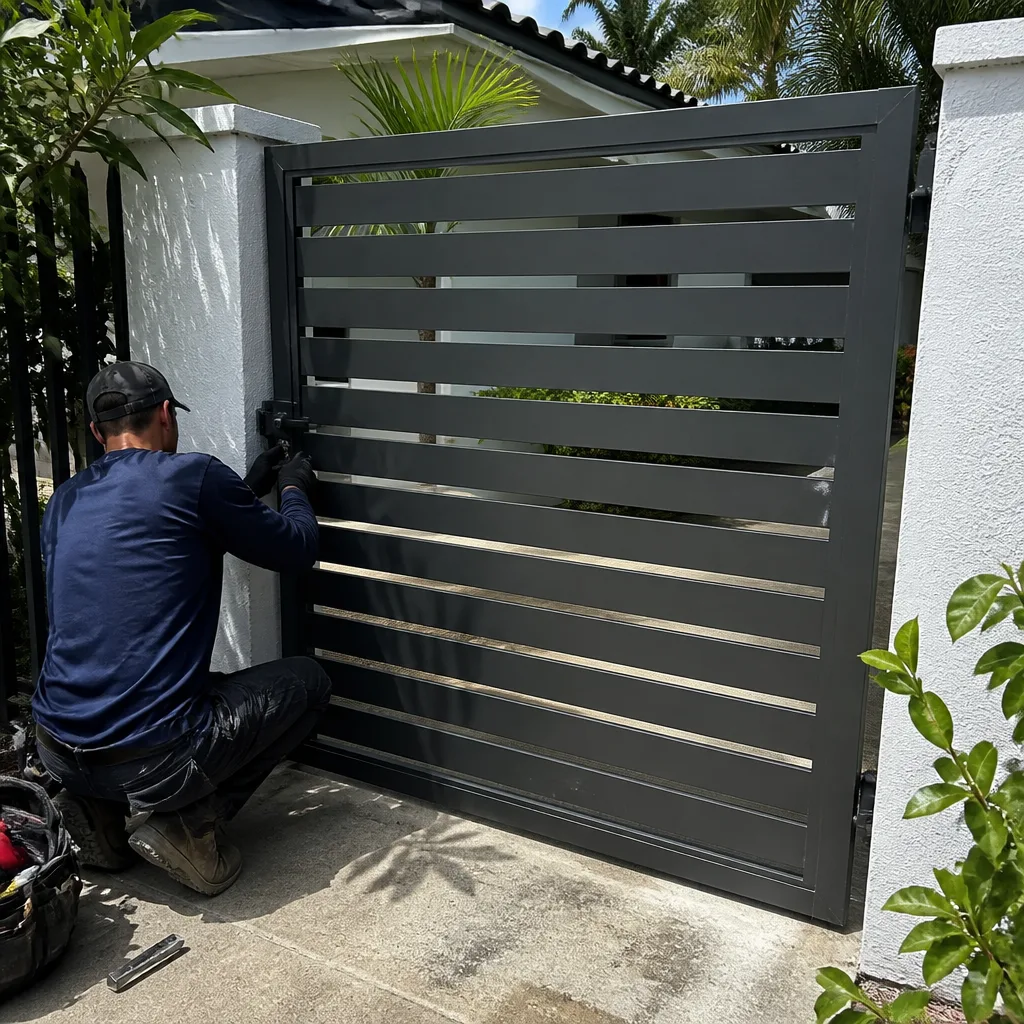 After
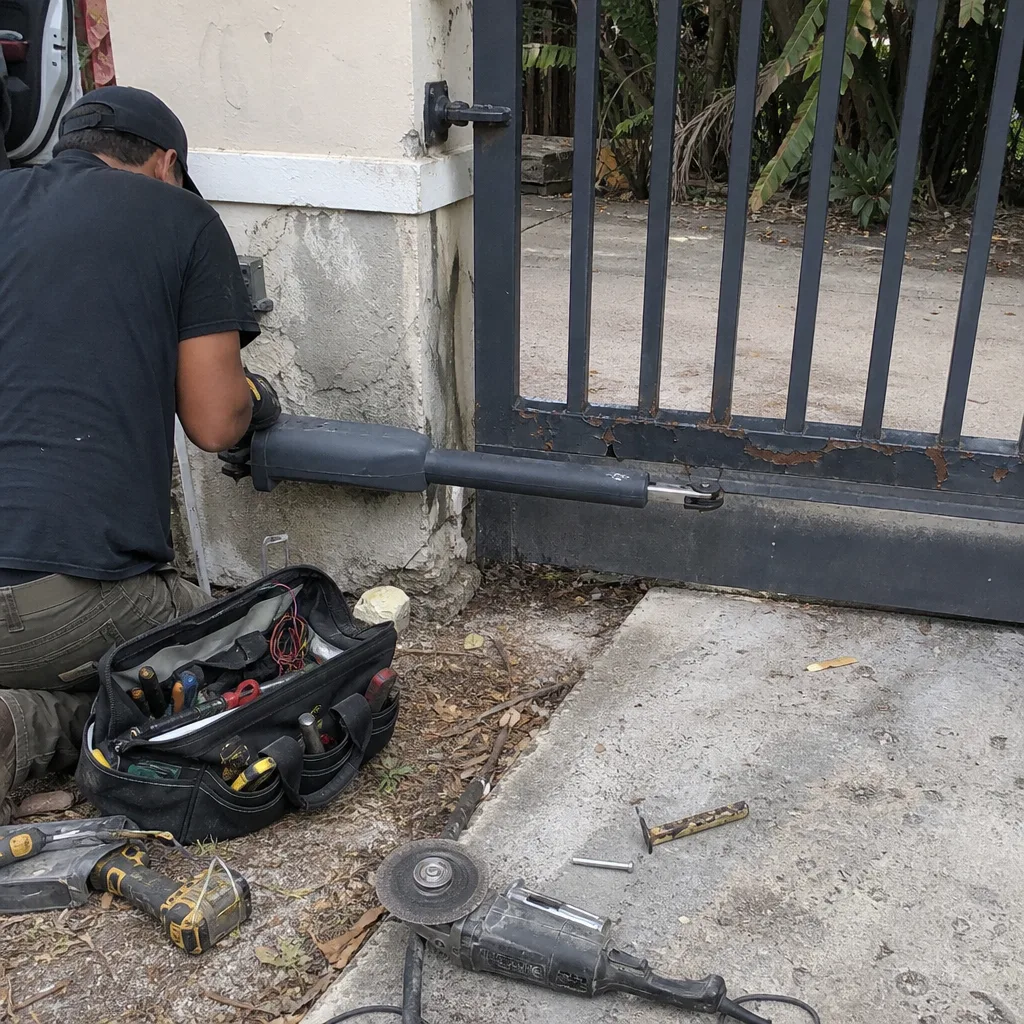 Before
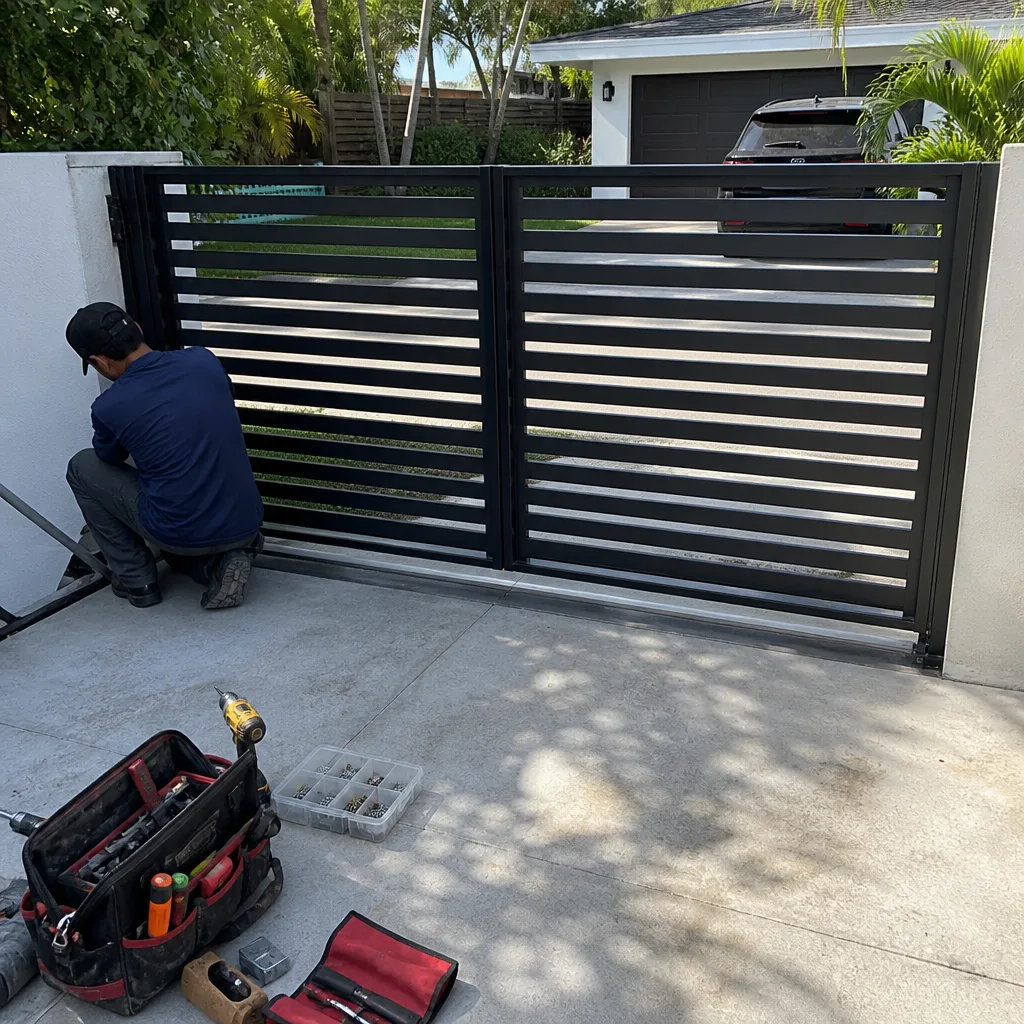 After
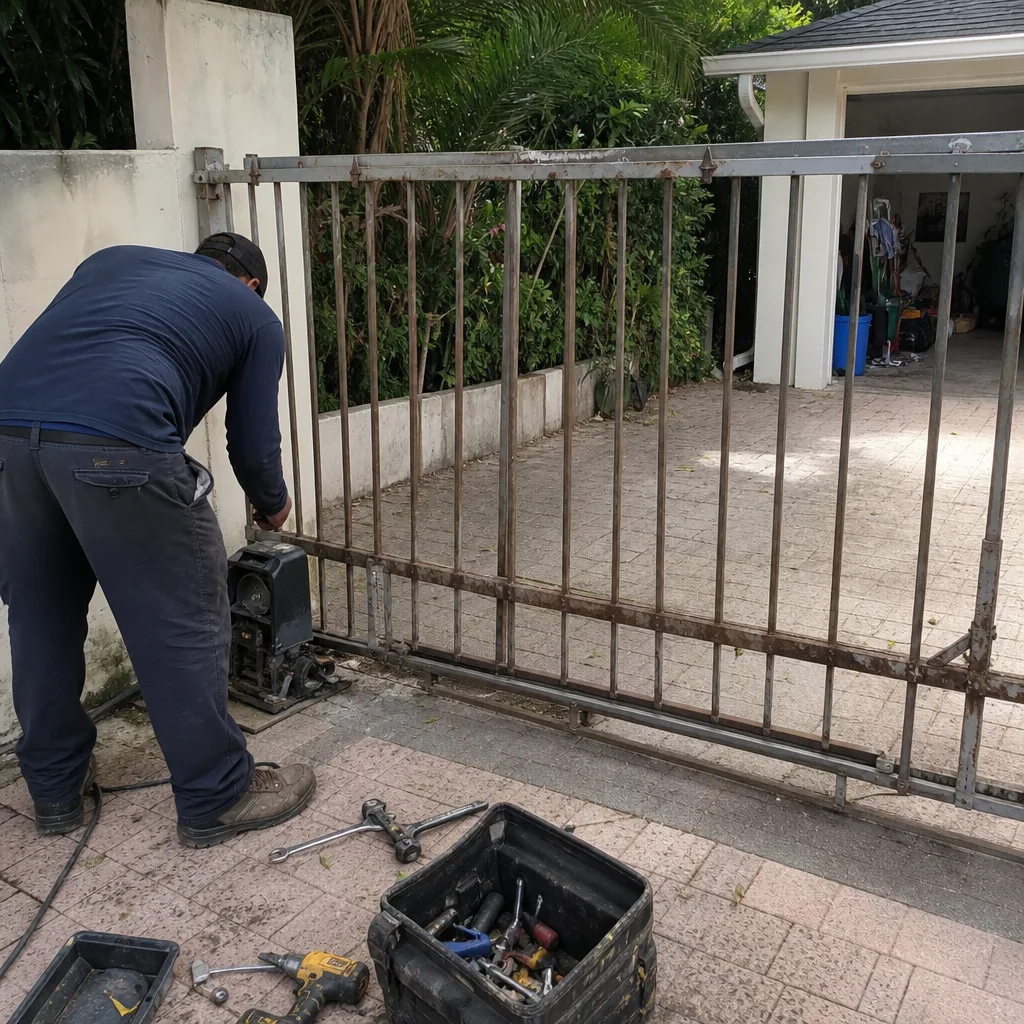 Before
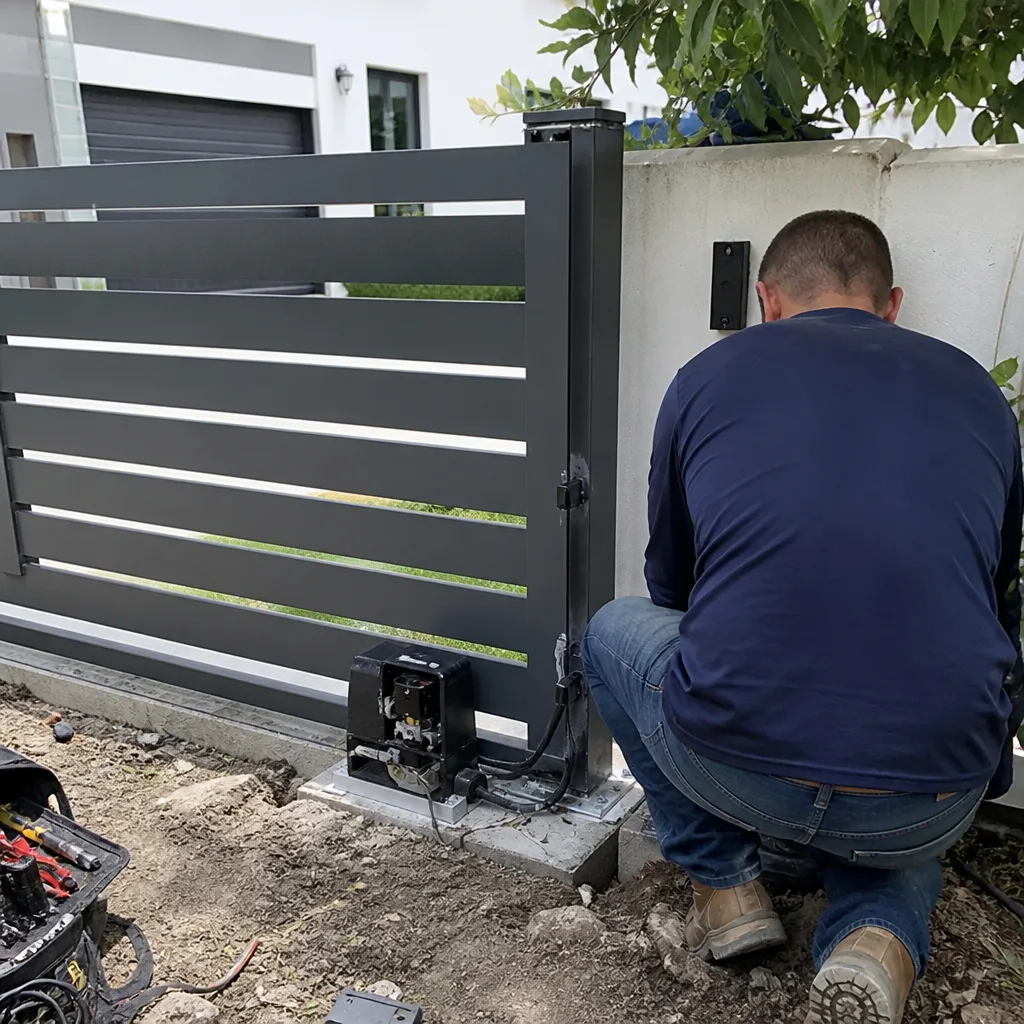 After