
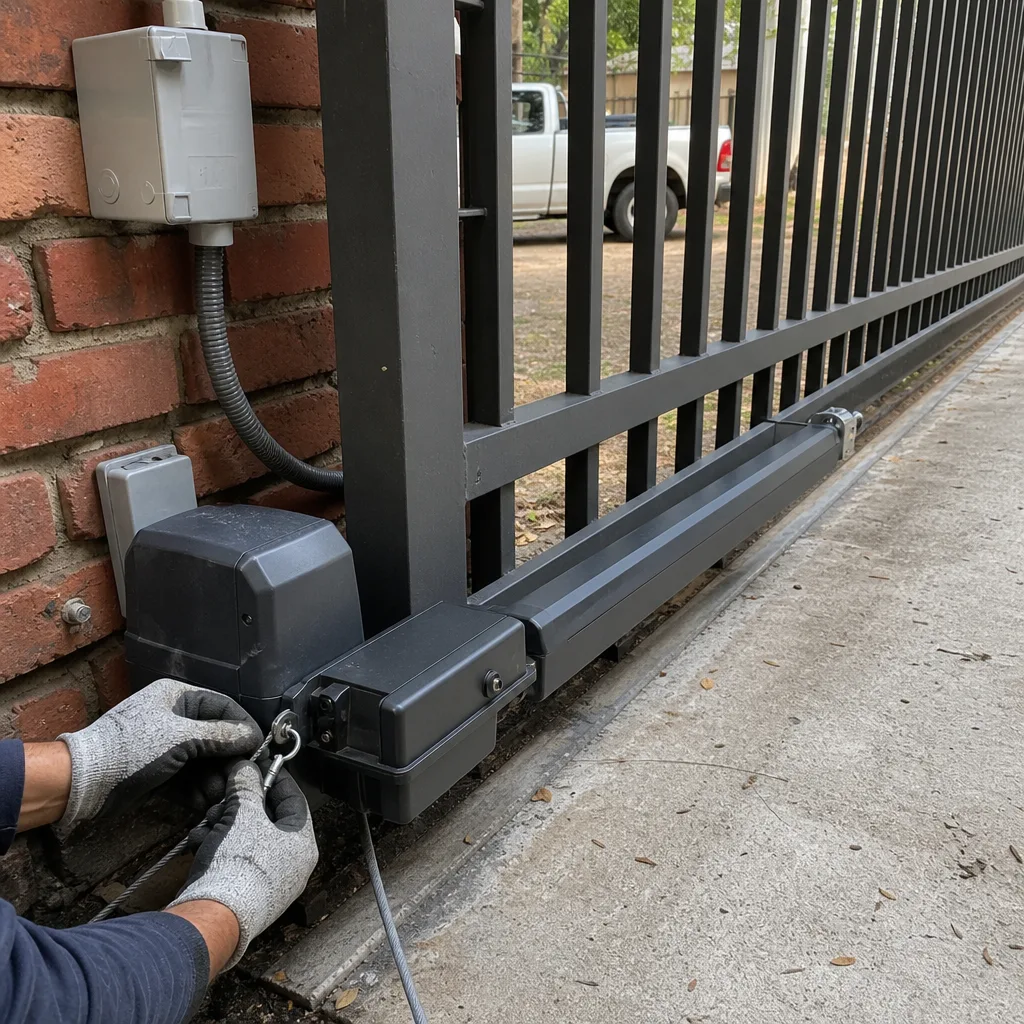
Last updated October 30, 2026
 Wrought iron
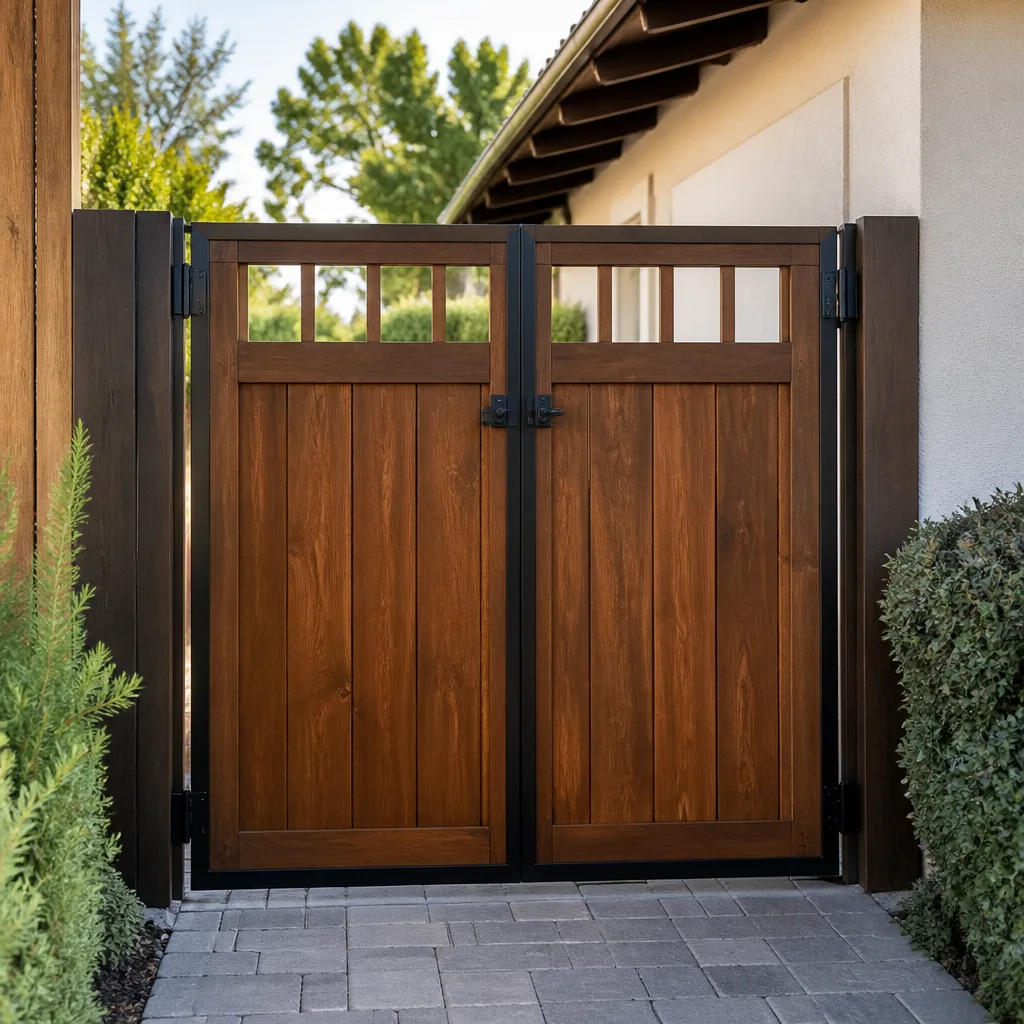 Wood & steel frame
 Farm & ranch
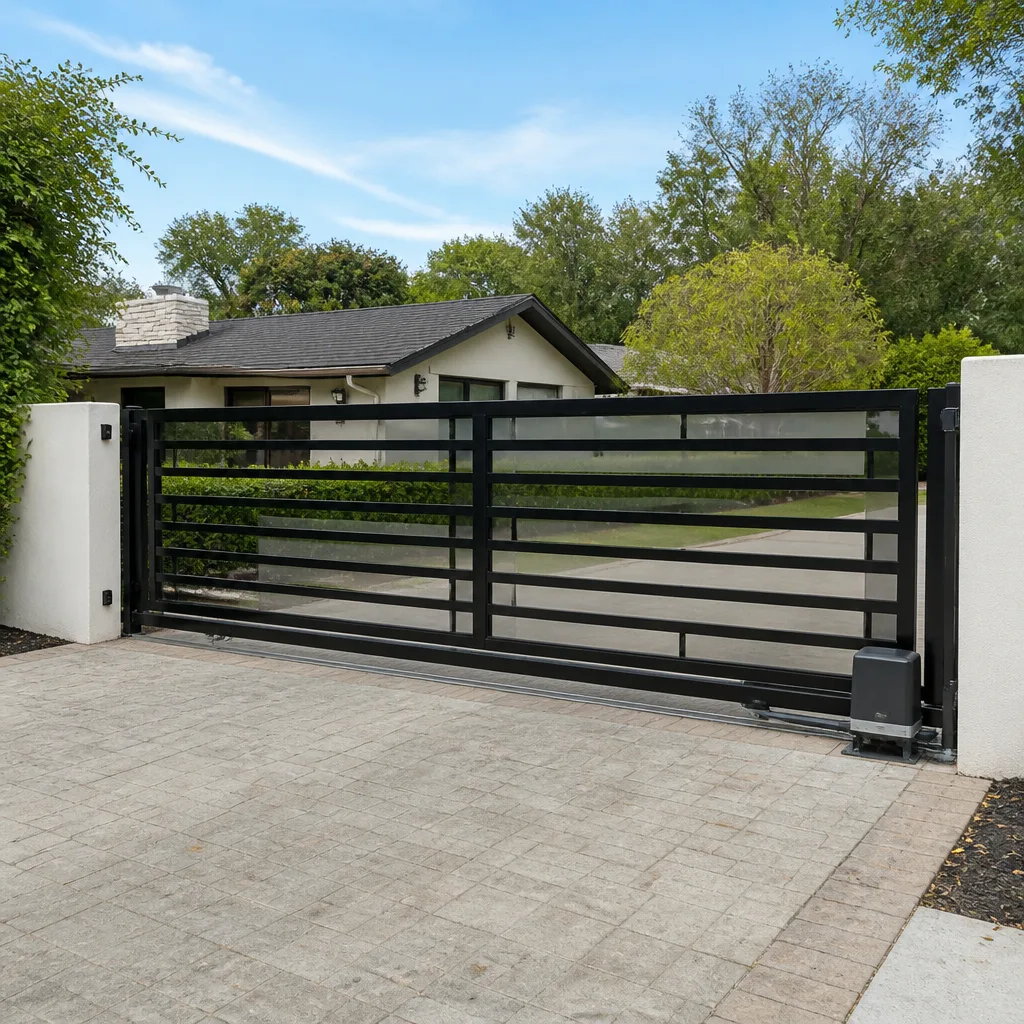 Sliding driveway gates
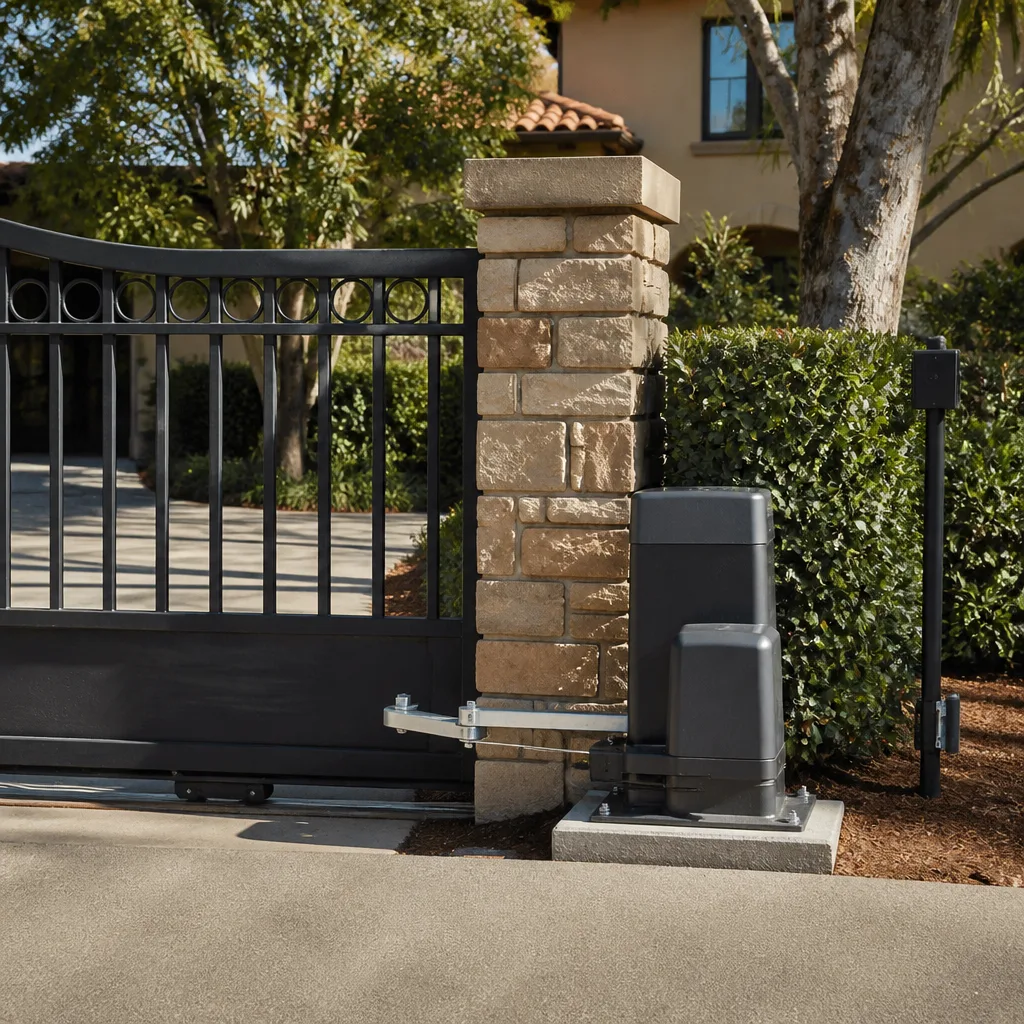 LiftMaster operators
Free on-site gate assessment - hinges, posts, and your LiftMaster or Nice gate operator checked before anything is quoted
The assessment is free and the quote is the invoice.
Get your free estimateGate Repair Troubleshooting: Common Problems and How to Fix Them
Here’s something most gate troubleshooting guides won’t tell you: the problem is rarely what it looks like. A gate that “randomly stops working” is usually a photoeye reading the shadow of a new palm frond as an obstruction, not a dead battery. A gate that reverses halfway through its cycle might be a failing capacitor on a LiftMaster board or a misaligned limit switch on a FAAC operator, and treating the symptom instead of the source means you’ll be back in the same spot in two weeks. In Miami, where salt air corrodes contacts, afternoon thunderstorms trigger phantom sensor trips, and irrigation systems quietly cut buried loop wires, the failure patterns are even more location-specific. This guide is built around symptoms, not brands, because a gate doesn’t care what logo is on the control board. Whether you’re on a quiet street in Coral Gables or managing an HOA entrance in Kendall, you’ll learn how to read what your gate is telling you, separate electrical faults from mechanical ones, and avoid the three DIY fixes that make technicians wince.
Styles & brands we work with
Quick Answer
Most gate problems fall into one of five symptom categories: the gate won’t open, it opens but won’t close, it reverses mid-cycle, it moves slowly, or it makes grinding or clicking sounds. The most common root causes across all brands are photoeye misalignment or obstruction, low battery voltage in the operator, corroded or loose wiring connections, and limit switch failure. Before calling a technician, document when the problem happens, whether it correlates with rain or time of day, and what the gate does exactly, because that pattern information cuts diagnosis time dramatically.
Table of Contents
- The Symptom-First Diagnostic Tree: Five Ways Gates Fail
- How to Tell Electrical Faults from Mechanical Faults (Without Opening the Panel)
- Gate Won’t Open: The Seven Root Causes We See Most in Miami
- Gate Opens But Won’t Close: Why Your Gate Is Stuck Open
- Gate Reverses Mid-Cycle: The Photoeye Problem Everyone Misses
- Gate Moves Slowly: Battery, Capacitor, or Mechanical Drag
- Grinding and Clicking Sounds: Decoding the Noise
- Loop Detector vs. Photoeye vs. Edge Sensor: Why Replacing the Wrong One Wastes a Service Call
- How to Document a Failure Pattern That Cuts Diagnosis Time in Half
- Common Mistakes to Avoid
- When to Call a Professional
- Frequently Asked Questions
- The Bottom Line
The Symptom-First Diagnostic Tree: Five Ways Gates Fail
Every automatic gate failure, whether it’s a LiftMaster slide gate at a warehouse off 87th Avenue or a FAAC swing gate on a residential property in Pinecrest, expresses itself in one of five ways. Brand doesn’t change the symptom. What changes is what’s inside the box causing it. Here’s the tree we use to start every diagnosis, and you can use it too before you pick up the phone.
Symptom 1: The Gate Won’t Open At All
No movement, no motor hum, nothing. This usually points to power, battery, or control board failure. In Miami, we also see a seasonal spike in this symptom during summer afternoons when lightning strikes nearby and takes out control boards. If the gate has a manual release and it moves freely by hand, the mechanical side is fine and you’re dealing with an electrical fault.
Symptom 2: The Gate Opens But Won’t Close
The gate swings or slides open, then just sits there. This is almost always a safety device issue: a photoeye that thinks something is in the path, an edge sensor that’s triggered, or a loop detector that’s reading a false signal. Less commonly, it’s a limit switch that isn’t registering the open position, so the board doesn’t know it’s time to close.
Symptom 3: The Gate Reverses Mid-Cycle
It starts closing, gets halfway, then reverses back open. Most people assume the motor is failing. It’s usually not. It’s usually a safety input interrupting the close cycle. The gate is doing exactly what it’s designed to do: it thinks something is in the way.
Symptom 4: The Gate Moves Slowly
Sluggish operation, especially first thing in the morning or after a rain. This points to battery voltage issues (for DC operators), a failing capacitor (for AC operators), or mechanical drag: rusted rollers, dry hinges, debris in the track. In Miami’s humidity, corrosion accelerates mechanical drag faster than in drier climates.
Symptom 5: The Gate Makes Grinding or Clicking Sounds
Noise tells you where to look. A grinding sound is mechanical: gears, chain, rollers. A rapid clicking is electrical: a relay on the control board, a starter capacitor, or low battery voltage causing the solenoid to chatter. We’ll decode these sounds in a later section.
Here’s what matters: none of these symptoms is brand-specific. A BFT operator and a Linear operator will both reverse mid-cycle if the photoeye is blocked. That’s why we train our technicians across all the major platforms, from LiftMaster and FAAC to BFT and Linear. The symptom leads the diagnosis. The brand just tells us which cover to open.
How to Tell Electrical Faults from Mechanical Faults (Without Opening the Panel)
You don’t need to touch a control board to know whether your problem is electrical or mechanical. You just need to know what to observe. Here’s a simple test sequence any homeowner in Miami can do safely:
- Find the manual release. Every automatic gate has one. On swing gates, it’s usually a lever or pull handle on the operator arm. On slide gates, it’s often a red handle or a keyed release on the side of the motor housing. If you can’t find it, check the installation manual for your brand or call a professional rather than forcing anything.
- Disengage the operator. With the power still on, pull the release. The gate should now move freely by hand.
- Push the gate manually. Does it glide smoothly, or does it feel like you’re dragging it through wet concrete? Smooth movement means the mechanical side is fine and your problem is electrical. Resistance, grinding, or binding means you have a mechanical issue: rusted hinges on a swing gate, worn rollers or a bent track on a slide gate, or debris wedged in the path.
- Re-engage the operator. This step is important. Leave the release pulled and the gate won’t operate automatically, which some homeowners don’t realize until they’ve already called a technician for a “dead” motor.
- Observe what happens next. If the gate moved freely by hand but won’t move under power, the problem is in the electrical system: battery, board, transformer, or wiring. If it was hard to move by hand, the electrical system might be fine and working too hard against a mechanical failure, which can eventually burn out the motor.
This five-step sequence saves a service call. We’ve had customers in Brickell and Coconut Grove describe a “completely dead” gate that turned out to be a release lever left disengaged after a hurricane evacuation. Other times, the manual test reveals that the gate moved fine by hand, which tells us instantly that we’re looking at the electronics, not the iron.
One note for Miami homeowners specifically: if you have a slide gate on a track, check the track for sand and debris buildup before doing the manual test. Beachfront properties from Key Biscayne to Sunny Isles deal with wind-blown sand accumulating in the track, and sand creates enough drag to trigger the operator’s obstruction detection, which can mimic an electrical fault.
Gate Won’t Open: The Seven Root Causes We See Most in Miami
When a gate won’t open at all, the list of possible causes is longer than most people expect. Here are the seven we encounter most often on residential and commercial gates across Miami-Dade County, in rough order of frequency:
- Dead or weak operator battery. DC operators run on sealed lead-acid or lithium batteries that degrade over 2 to 5 years. Miami’s heat shortens that lifespan. When the battery can’t hold a charge, the gate stops responding entirely or moves only a few inches before dying. This is the most common cause of a “dead” gate on a DC swing or slide system.
- Photoeye misalignment or obstruction. If the photoeye beam is broken or misaligned, the board thinks something is in the path and won’t run at all in some configurations. New foliage, a parked car, or a shifted sensor mount after a storm can trigger this.
- Blown fuse or tripped breaker. On AC systems, a power surge from one of Miami’s frequent thunderstorms can trip the breaker or blow the fuse on the control board. Check your panel before assuming the operator is dead.
- Failed control board. Lightning strikes are the leading cause of control board failure in South Florida. Even a strike half a mile away can induce enough voltage on buried wires to fry a board. If the board shows no LED status lights or shows error codes, this is likely your problem.
- Corroded wire connections. Salt air near the coast accelerates corrosion on terminal blocks and splice points. A corroded connection has high resistance, which means voltage drops and the gate electronics behave erratically or not at all.
- Limit switch failure. If the operator’s limit switch is stuck or fused, the board may refuse to run because it can’t determine the gate’s position. This is common on older FAAC and BFT arms that have been through several hurricane seasons.
- Manual release left disengaged. As mentioned above, a release lever that’s been pulled and not re-seated will make the gate appear completely dead. We’ve seen this more times than we can count after homeowners test their gate’s manual operation before a storm.
For safety sensors and wiring, this is a good place to note something important: the photoeyes, loop detectors, and wiring in an automatic gate system operate on low voltage, but the motor circuit carries line voltage. If you suspect a wiring issue, don’t open the panel and start probing unless you’re trained to work on gate electronics safely. A capacitor can hold a charge even with the power off. This is where calling a specialist makes sense.
Gate Opens But Won’t Close: Why Your Gate Is Stuck Open
A gate that opens fine but refuses to close is telling you that the open direction works mechanically and electrically, but the close direction is being blocked by something. The question is what. In our experience across Miami, from commercial properties in Doral to residential gates in Palmetto Bay, here are the usual suspects:
- Obstructed or misaligned photoeye. The photoeye sits near the ground on each side of the gate opening. If a plant has grown in front of it, if a dog knocked it out of alignment, or if dirt has accumulated on the lens, the beam is broken and the board interprets that as an obstruction. The gate will open, because opening doesn’t require the photoeye to be clear, but it won’t close, because closing does. This is the number one cause of a gate stuck open.
- Reflection interference. In Miami’s intense sun, especially during certain times of day, a reflective surface near the photoeye can confuse the sensor. A new white paver, a car bumper, or even a shiny gate surface can bounce the beam back and create a false “beam blocked” reading. We’ve seen gates in Miami Beach that only refused to close between 2 and 4 pm when the sun hit the sensor at a specific angle.
- Failed edge sensor or safety edge. If your gate has a contact edge strip or a wireless edge sensor, and that sensor is malfunctioning, the board sees a constant obstruction signal and won’t run the close cycle. This is common after power surges or when the edge strip physically wears out.
- Open limit switch not registering. The operator thinks the gate hasn’t fully opened, so it won’t initiate the close sequence. This is a limit switch or encoder issue, more common on older operators or systems that have been adjusted repeatedly over the years.
- Loop detector stuck in “detect” mode. If a vehicle loop detector is wired to hold the gate open while a car is present, and that loop is faulting, the gate may think a car is permanently sitting on the driveway. This is a classic problem for commercial properties in Miami where the loop is in a high-traffic drive lane.
The fix for the most common cause is simple: walk over to the photoeyes and check for anything blocking the beam path, including plants that have grown since the last time you looked. Clean the lenses with a dry cloth. If the gate still won’t close, the problem is deeper and needs a technician with a multimeter and experience reading board diagnostics.
Gate Reverses Mid-Cycle: The Photoeye Problem Everyone Misses
The single most misdiagnosed gate problem in South Florida is the gate that starts closing, gets partway, and then reverses back open. Most homeowners assume the motor is failing or the gate is “out of balance.” They replace the remote battery. They reset the operator. They maybe even replace the control board. And the problem comes back, because the real issue is the photoeye reading something that isn’t there.
Here’s the scenario we see constantly in Miami neighborhoods: a homeowner plants a bougainvillea near the gate. It grows. One afternoon, the gate starts reversing mid-cycle. The homeowner checks the photoeye and sees nothing blocking it. What they don’t realize is that the photoeye isn’t looking at the gate leaf, it’s looking at the beam path a few inches off the ground, and the shadow from that bougainvillea is landing right across the sensor at certain times of day. The photoeye sees the shadow as a solid object, sends an obstruction signal, and the gate reverses. This is not a motor problem. It’s a landscaping problem.
Other causes of mid-cycle reversal include:
- Low battery voltage causing intermittent sensor drops. When the battery is weak, the photoeye may lose power momentarily during the close cycle, which the board reads as a safety interrupt. This is common on DC operators that are 3 years or older.
- Loose wire connection at the safety input terminal. Vibration from the gate movement jostles a marginal connection, the safety circuit opens briefly, and the gate reverses. We find this often on installations that have gone through multiple hurricane seasons without a wiring inspection.
- Mechanical binding mid-cycle. If the gate hits a tight spot in its travel, maybe a roller hanging up or a hinge that’s rusted, the motor draws more current and the operator’s obstruction detection kicks in. The gate reverses because it genuinely is hitting resistance.
- False obstruction from a failed edge sensor. If the edge sensor is water-damaged (very common in Miami’s rainy season), it may send spurious obstruction signals. Water intrusion into the edge sensor wiring is one of the most frequent commercial gate issues we repair.
What distinguishes these from each other is timing. A shadow-related reversal happens at specific times of day. A battery-related reversal gets worse over weeks. A loose wire reversal is intermittent and random. A mechanical binding reversal happens at the same spot in the travel every time. Documenting that pattern before you call a technician is the difference between a 20-minute diagnosis and a two-hour hunt.
Gate Moves Slowly: Battery, Capacitor, or Mechanical Drag
A slow gate is a gate that’s working harder than it should be. The question is whether the problem is in the power supply or the mechanical drive. Here’s how to think about it:
Battery voltage. On DC operators, which are common for gate opener retrofit kits and solar-powered systems, the battery provides the muscle. As the battery ages, its voltage under load drops. The motor gets less current, and the gate moves slower. In Miami’s heat, sealed lead-acid batteries degrade faster than their rated lifespan suggests. If your gate is slower in the morning and faster after a few open-close cycles, the battery is likely the issue.
Capacitor failure. On AC operators, a start capacitor gives the motor its initial kick. When a capacitor is failing, the motor struggles to start and runs at reduced torque. You might hear a humming sound before movement starts, or the gate might need a push to get going. Capacitor failure is common on older LiftMaster and Linear AC operators, and it’s often misdiagnosed as a “bad motor” by technicians who don’t test the capacitor first.
Mechanical drag. Here’s where Miami’s environment works against your gate. Humidity accelerates rust on uncoated steel components. Salt air near the coast corrodes bearings and rollers. Sand gets into tracks. A slide gate in a beachfront property in Bal Harbour faces more mechanical stress in one year than the same gate would face in a decade in a drier climate. If the gate moves freely by hand when you disengage the operator, mechanical drag is not your problem. If it resists, it is.
Pressure from wind. Solid-panel swing gates act like sails in Miami’s afternoon thunderstorms. If the gate is fighting a 30 mph wind gust while trying to close, it will move slowly, and the operator’s obstruction detection may reverse it. This isn’t a fault in the gate, it’s a design consideration. Vented or slatted panels reduce wind load significantly.
One more Miami-specific factor: if your gate runs on a solar panel system, check the panel for dirt, salt residue, and bird droppings. A solar panel that’s 30% occluded means the battery isn’t charging fully, which means the gate runs slow and eventually stops running at all. This is a particularly common issue for properties near the water, where salt spray coats the panel surface.
Grinding and Clicking Sounds: Decoding the Noise
Gates make noise, but certain noises are diagnostic. Here’s a quick guide to what your gate is saying:
Grinding from the motor housing. This is a gear train problem. Plastic or metal gears inside the operator have worn or stripped. You’ll typically hear it during movement and it will be consistent with gate speed. On older FAAC and BFT arms, gear wear is common after 8 to 10 years. The fix is a gear set replacement, which is usually cheaper than a full operator replacement.
Grinding from the gate itself, not the motor. This points to the hinge side on swing gates or the track side on slide gates. Rusted hinges groan and grind, especially after rain. Slide gate rollers with flat spots or worn bearings create a rhythmic grinding that matches the gate’s travel. A quick test: if the noise happens when the gate moves manually with the operator disengaged, it’s mechanical, not electrical.
Rapid clicking from the control box. This is an electrical sound. A fast clicking from the control board usually indicates a relay that’s being energized but not holding, which points to low battery voltage on DC systems or a failing transformer on AC systems. It can also be a solenoid on the operator lock if your gate has one.
A single click, then nothing. This is the classic pattern of a start capacitor that’s failed. The board clicks the relay, the capacitor doesn’t provide the starting boost, and the motor just sits there. On LiftMaster and Linear AC operators, this is one of the most common failure modes we replace. If you hear a click and the gate doesn’t move, chances are the capacitor is done.
Squealing or high-pitched whine. This is usually a belt tension issue on systems that use belt drive, or a bearing that’s failing. Bearings in slide gate rollers are particularly prone to this as they age, especially in humid conditions where the grease washes out.
If you’re hearing any of these sounds consistently, documenting when and where the sound occurs, and whether it changes with weather, is genuinely helpful for the technician who eventually opens the panel. A video with audio, taken at the moment of failure, is even better. We’ve diagnosed bearing failures from a 10-second phone video that showed exactly where the noise was originating.
Loop Detector vs. Photoeye vs. Edge Sensor: Why Replacing the Wrong One Wastes a Service Call
Here’s a distinction that most gate owners never learn, and it’s the reason technicians sometimes end up making two or three trips to “fix” the same problem. An automatic gate system has multiple safety devices, and they work differently. When one fails, the symptom can look identical to a failure in another, but the fix is completely different.
Loop detectors are buried wire coils in the driveway, usually on the vehicle side. They detect the metal mass of a car and tell the gate to open or stay open. Loop failures happen when the wire gets cut, often during landscaping, driveway resurfacing, or utility work. A failed loop presents as a gate that won’t open when a car pulls up, but works fine from a remote. The fix is locating the break and splicing the wire, which sometimes means cutting a new sawcut in the driveway and laying a new loop.
Photoeyes are the paired sensors on either side of the gate opening. They project an infrared beam across the path. If the beam is broken, the gate won’t close, or won’t start a close cycle if it’s already open. Photoeye failures present as a gate that opens but won’t close. The fix is realigning, cleaning, or replacing the photoeye pair.
Edge sensors are pressure-sensitive strips mounted on the leading edge of the gate or the gate post. They detect physical contact. If the gate hits something, the edge sensor triggers and reverses the gate. Edge sensor failures often happen after water intrusion or physical wear, and they present as a gate that reverses mid-cycle or refuses to close entirely.
Notice that all three failures can present as “the gate won’t close.” This is why replacing parts based on guesswork is expensive. If a technician replaces the photoeyes when the actual problem is a failed loop detector, the symptom doesn’t change. At Miami Gate Company, we test each safety input in sequence before replacing anything, because multi-brand experience means we know where each system’s failure points are, whether it’s a Viking loop detector or a BFT edge sensor. If you’re calling around for gate repair in Miami and a technician quotes you a part replacement without testing first, get a second opinion.
How to Document a Failure Pattern That Cuts Diagnosis Time in Half
The most valuable thing you can do before calling a gate technician is also the simplest: write down what’s happening. Not a paragraph, just a few specific observations. Here’s what actually helps:
- When did it start? Note the date. If it started after a storm, after landscaping work, after a power outage, or after you replaced something on the property, that’s relevant. In Miami, post-storm failures are common enough that we ask this question first.
- Does it happen every time or intermittently? A gate that fails every single time points to a hard failure: a dead battery, a blown fuse, a stripped gear. A gate that fails sometimes points to an environmental factor: sun angle, moisture, temperature, or a loose connection that only opens when the gate vibrates.
- Is there a time-of-day pattern? If the gate only fails between 2 and 4 pm, that’s a sun and shadow issue on the photoeyes. If it only fails after rain, that’s water intrusion somewhere. If it fails first thing in the morning, that’s often low battery voltage after the overnight standby drain.
- What exactly does it do? “Won’t open” is not the same as “opens an inch and stops” or “opens fine but won’t close” or “reverses halfway through closing.” The specific behavior is the diagnostic clue. Write it down, or better yet, film it.
- What did you already try? Be honest about this. If you reset the breaker, pulled the manual release, replaced the remote battery, or adjusted the photoeyes, tell the technician. It rules things out and rules things in. A homeowner who says “I already did X, Y, and Z” saves 20 minutes of diagnostic time, and any good technician appreciates that.
This documentation practice has saved countless Miami homeowners money, because it reduces the time the technician spends narrowing the problem. When we show up and the customer says “it started reversing after the landscapers installed new sod, and it only happens when the sun is low,” we know exactly which wire run to check first. That’s the difference between a $150 diagnostic call and a $400 diagnostic call with parts thrown at it.
Common Mistakes to Avoid
- Forcing a gate open manually when the operator is engaged. Pulling or pushing an automatic gate without disengaging the operator can strip gears, bend the arm, or damage the motor windings. If you need to open the gate and the release lever isn’t obvious, call for service rather than muscling it.
- Bypassing the photoeyes. Some homeowners tape the photoeyes together or wire around them to “fix” a gate that won’t close. This disables a safety device that exists to prevent the gate from closing on a person, a pet, or a car. It’s not a fix. It’s a liability. And in many Miami-area municipalities, a gate that operates without functioning safety sensors is a code violation.
- Resetting the operator repeatedly. Cutting power and restoring it multiple times doesn’t fix the underlying fault. If the operator has a reset button or a breaker, one reset is reasonable. If you’re resetting it daily, something is wrong and you’re just masking it while the fault gets worse.
- Lubricating everything with WD-40. WD-40 is a solvent and water displacer, not a gate lubricant. On hinges and rollers it washes out the existing grease and leaves the metal unprotected against Miami’s humidity. Use a proper lithium or silicone-based grease on gate hardware, and never spray lubricant into the operator housing.
- Replacing the remote battery before checking the gate itself. If the gate won’t respond to any remote, not just one, the problem is not the remote battery. Replacing batteries in every remote is a waste of money when the real issue is a dead operator battery or a failed receiver board.
- Ignoring a slow gate until it stops completely. A gate that’s moving slowly is warning you. The battery is failing, the capacitor is on its way out, or the mechanical components are binding. Fixing it while it still moves is usually a smaller repair than fixing it after it’s frozen in place, which in Miami usually happens during a rainstorm when you need the gate closed the most.
When to Call a Professional
Some gate problems are safe to investigate as a homeowner: cleaning photoeye lenses, checking the breaker, observing the failure pattern. But there’s a clear line. If you hear grinding from inside the operator, if the gate smells like burning electronics, if you see scorch marks on the control board, or if the gate moves unpredictably, stop troubleshooting and call a specialist. Line voltage, stored capacitor charge, and several hundred pounds of moving gate are all things that deserve respect. At Miami Gate Company home, we handle gate repair, electric gate repair, and gate installation in Miami and throughout Miami-Dade County. If your gate is acting up and you’re not sure what to do next, call (833) 570-5807 for a free estimate. We’ll tell you honestly whether it’s a 20-minute fix or a full system replacement, and we quote the price before any work starts.
Frequently Asked Questions
Gate repair costs in Miami typically range from $150 for a basic diagnosis and photoeye realignment to $800 or more for a control board replacement or gear set rebuild, with most repairs falling between $200 and $450. The final price depends on the brand, the part that failed, and whether the gate is residential or commercial. Call (833) 570-5807 for a quote on your specific system, estimates are free and the price is agreed before any work begins.
In most cases, yes, for common failures like photoeye realignment, battery replacement, or limit switch adjustment, a same-day or next-day appointment is usually available in Miami. Larger repairs that require ordering a brand-specific part, like a LiftMaster control board or a FAAC gear set, may take a few days depending on part availability. Call (833) 570-5807 and describe the symptom, and we’ll tell you what the timeline looks like for your specific gate.
Yes, we service LiftMaster, FAAC, BFT, and Linear operators, along with Viking, Ghost Controls, DoorKing, Elite, and Mighty Mule. Our technicians are trained across all nine brands, which means we diagnose based on the symptom, not on a brand preference. Whatever gate system you have in Miami, we work on it.
Rain-related gate failures in Miami usually point to water intrusion: a cracked photoeye housing, a splice in the low-voltage wiring that’s not sealed properly, or a conduit joint that’s letting water into the operator. The fix is finding the water entry point and sealing it, along with replacing any corroded connections inside. Call (833) 570-5807 and mention the rain correlation when you schedule, it speeds up the diagnosis significantly.
If the gate structure itself is solid and the operator is less than 10 years old, repair is usually the better value, especially when the failure is a single component like a battery, capacitor, or photoeye. If the operator is older, the gear train is worn, and the control board is obsolete, replacement often makes more sense than pouring money into a system that will keep failing. We give you an honest recommendation based on the condition of your specific system, not on what’s easier for us to sell.
Yes, we repair electric gates for commercial properties throughout Miami, including office complexes, warehouse facilities, parking garages, and gated communities. Commercial systems often involve loop detectors, longer wiring runs, and higher-duty-cycle operators, which is exactly what our Electric Gate Repair in Boca Pointe expertise covers. Call (833) 570-5807 to schedule a commercial diagnostic.
The Bottom Line
A gate that’s acting up is rarely broken in the way it looks. The symptom, not the brand, points to the real problem, and that’s true whether you’re running a LiftMaster slide gate at a Miami warehouse or a FAAC swing gate at a house in Pinecrest. The five failure patterns, won’t open, won’t close, reverses mid-cycle, moves slowly, makes noise, each map to a specific set of root causes. You can distinguish electrical from mechanical faults with a simple manual test. You can avoid expensive misdiagnosis by learning how photoeyes, loop detectors, and edge sensors fail differently. And you can save a technician’s time, which is your money, by documenting the failure pattern before you call. When you need help, whether you’re looking for Gate Repair in Boca Pointe or Gate Installation in Boca Pointe, call Miami Gate Company at (833) 570-5807. We’ll diagnose it right the first time, quote the price before we start, and get your gate working again. Gates are all we do, and that focus shows in the diagnosis.
Written by the team at Miami Gate Company, serving Miami since 2012.
See the difference
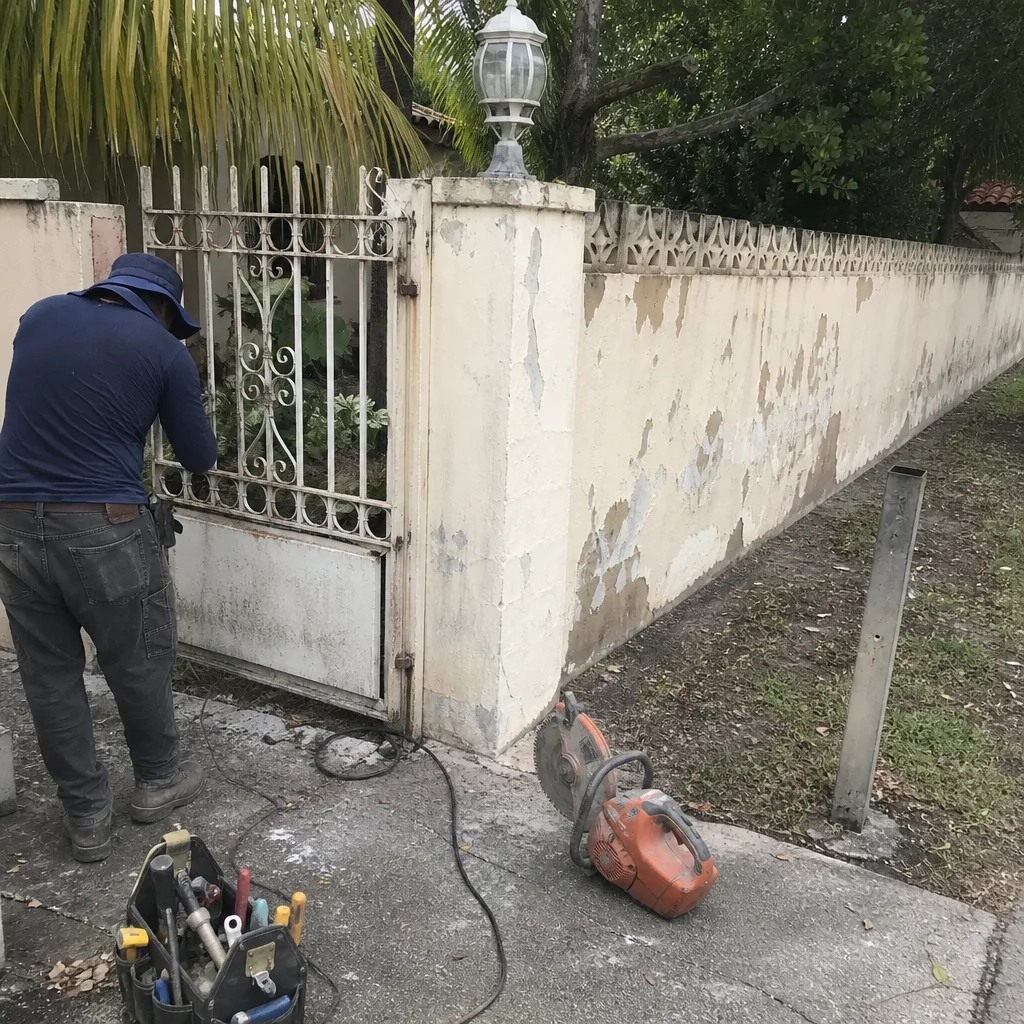 Before
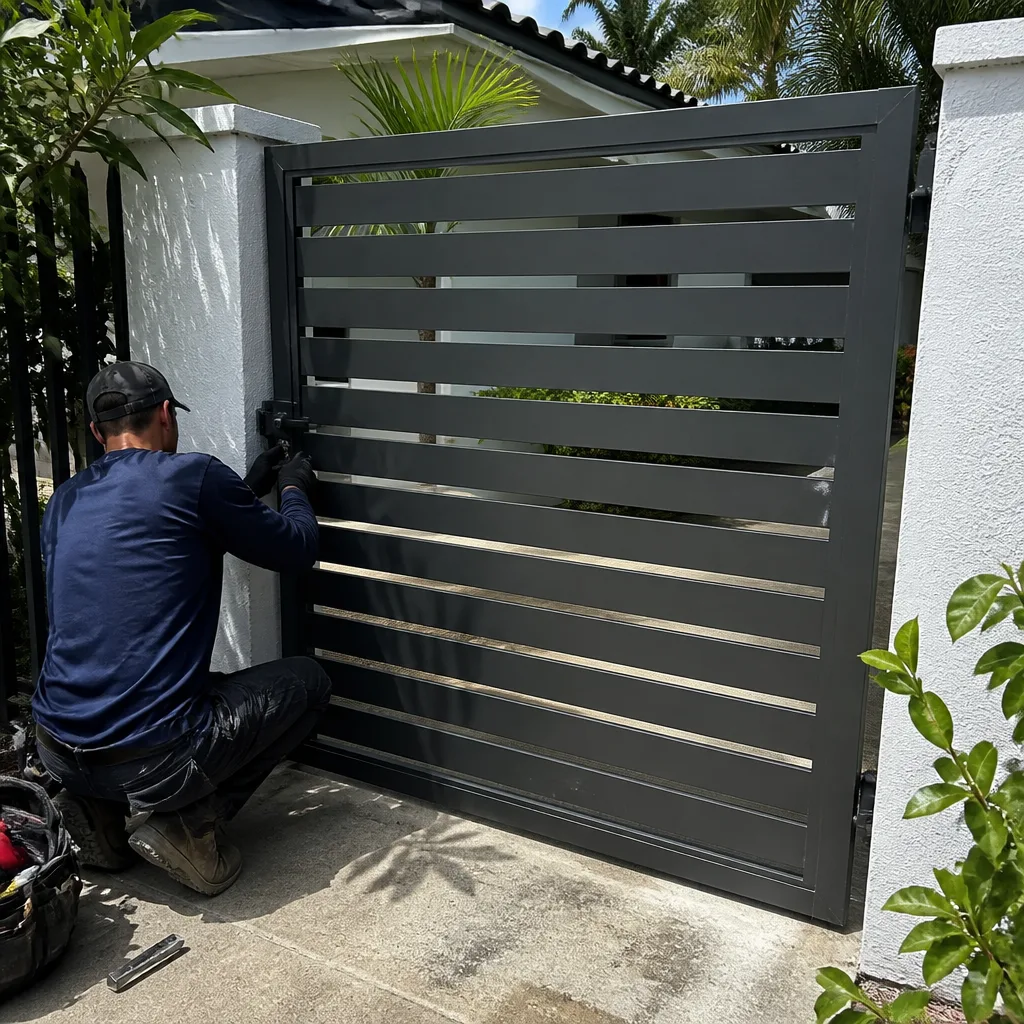 After
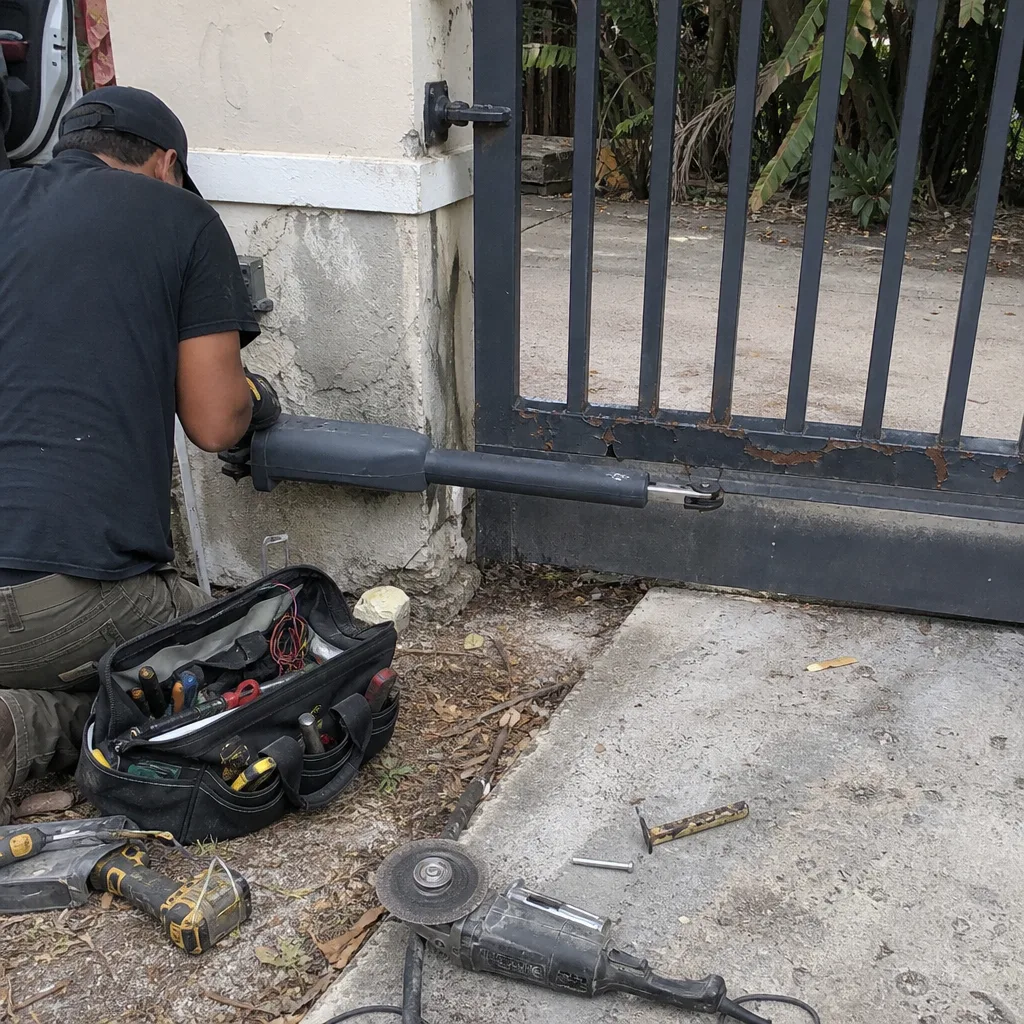 Before
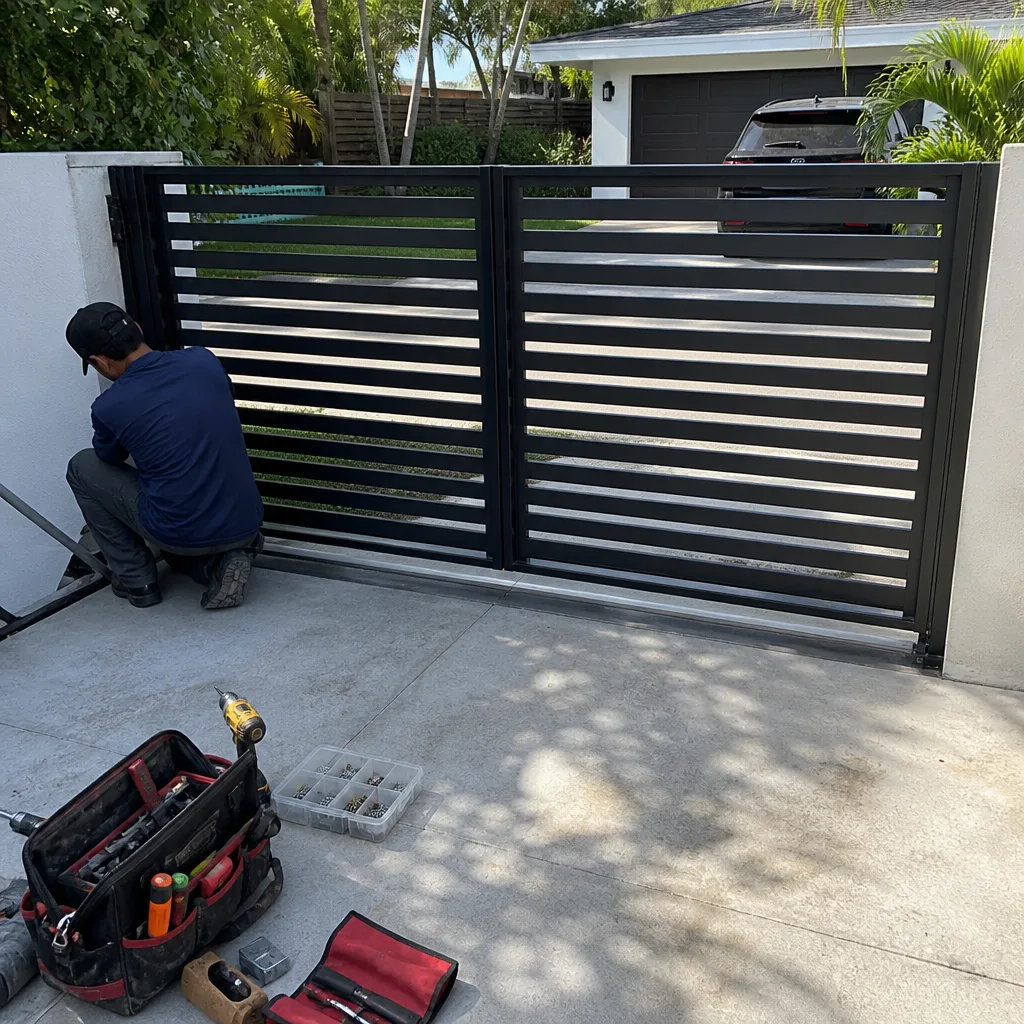 After
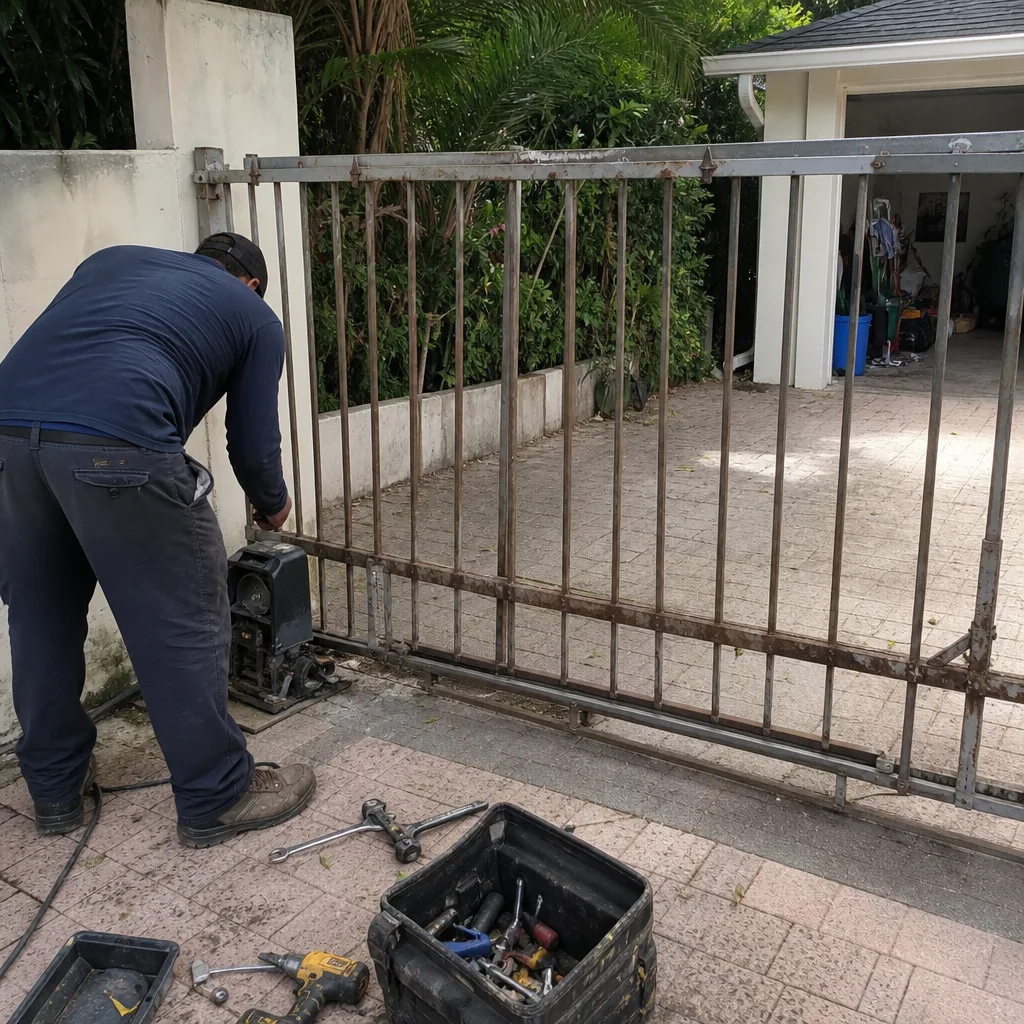 Before
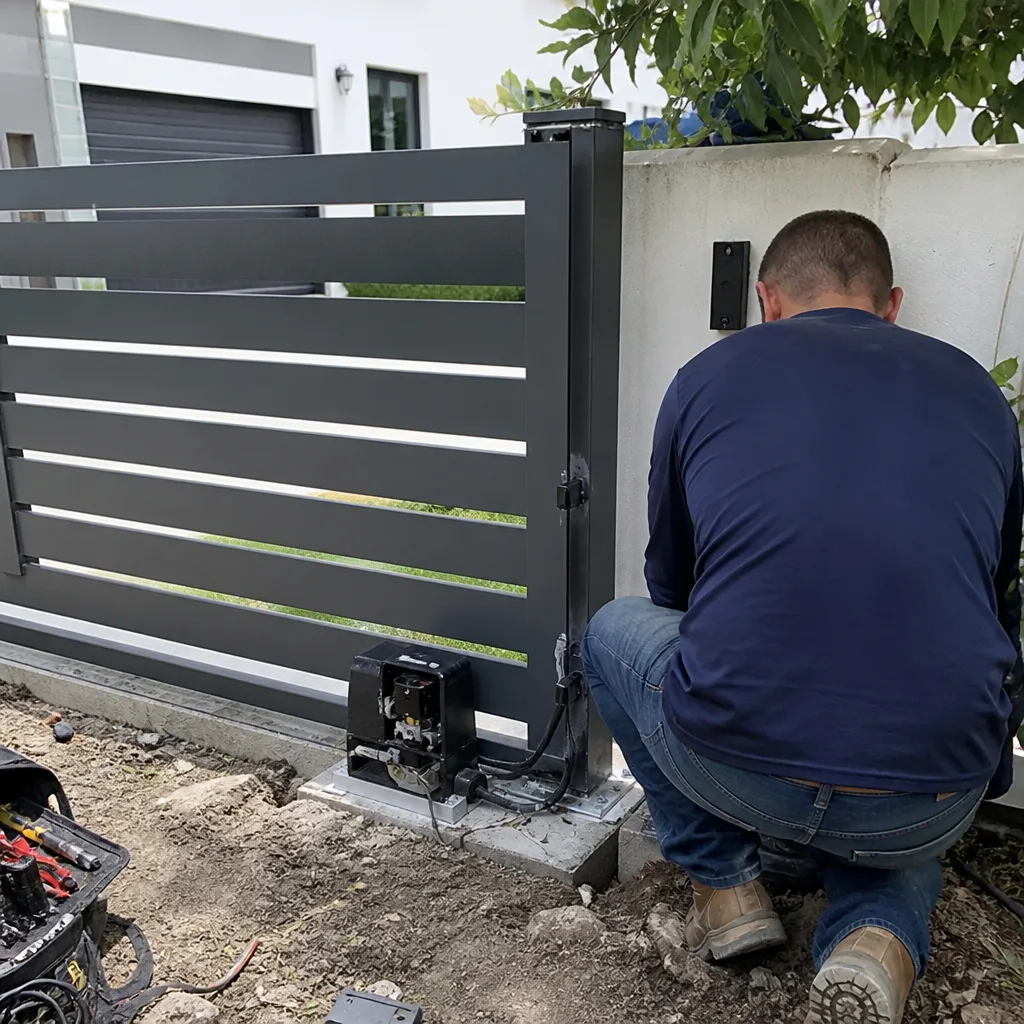 After