
Last updated October 30, 2026
 Wrought iron
 Wood & steel frame
 Farm & ranch
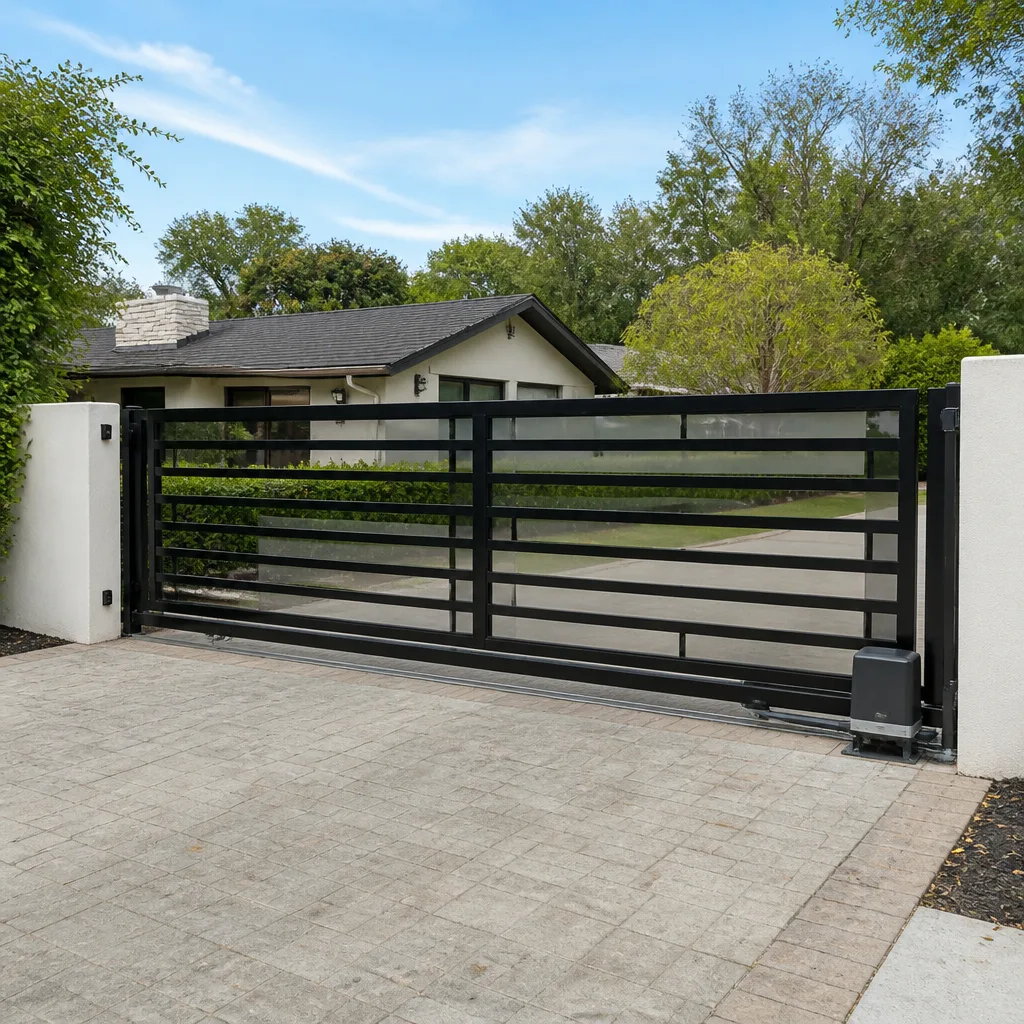 Sliding driveway gates
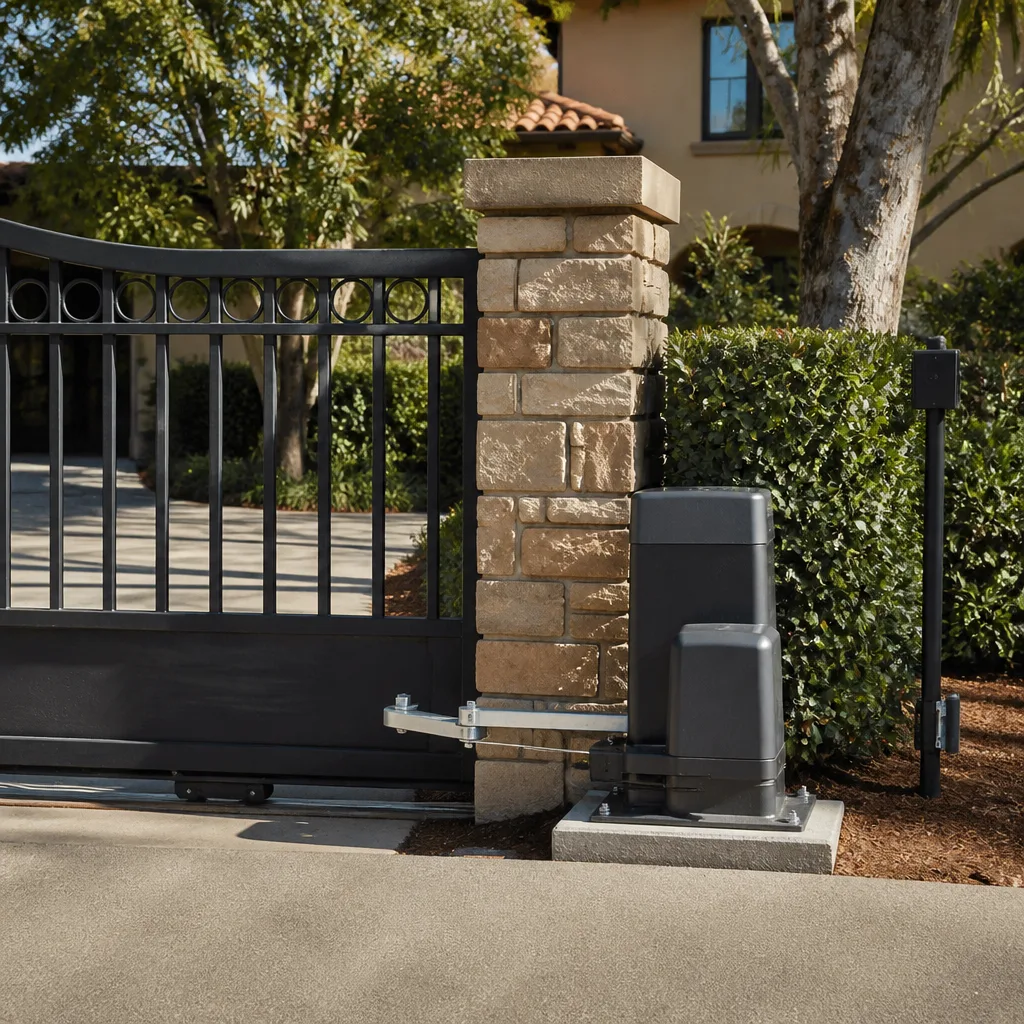 LiftMaster operators
Free on-site gate assessment - hinges, posts, and your LiftMaster or Nice gate operator checked before anything is quoted
The assessment is free and the quote is the invoice.
Get your free estimateGate Repair Permits, Codes & Inspections in FL: What You Need to Know
Replacing a broken hinge doesn’t require a permit in Boca Pointe. Replacing that same hinge with a heavier-gauge model rated for a wider gate panel might, because you’ve just altered the structural load calculation, which triggers Miami-Dade’s wind-load review process. Most property owners in Miami don’t discover this distinction until a home inspector, insurance adjuster, or title company flags unpermitted work years after the repair was completed. In this guide, we’ll walk through the exact line between routine maintenance and permitted alteration, how Florida’s High-Velocity Hurricane Zone rules change gate requirements in Miami-Dade and Broward, what inspectors actually look for, and where HOAs like Boca Pointe add another approval layer most contractors skip. For professional help, see our Gate Repair services.
Quick Answer
Most routine gate repairs in Florida, such as replacing a hinge, latch, or control board, do not require a permit. However, any structural alteration that changes the gate’s size, weight, wind-load profile, or foundation footprint typically triggers a building permit, especially in Miami-Dade and Broward counties where the High-Velocity Hurricane Zone code applies. HOA communities like Boca Pointe often require architectural review approval on top of municipal permits for any gate work visible from the street.
Styles & brands we work with
Table of Contents
- The Line Between Repair and Alteration
- How Florida’s High-Velocity Hurricane Zone Changes Gate Rules
- Florida Building Code Gate Requirements: What Applies
- Step-by-Step: Getting a Gate Permit in Miami-Dade
- What Inspectors Actually Check on Gate Work
- HOA Requirements: The Boca Pointe Approval Layer
- What Happens When Gate Work Is Unpermitted
- Electric Gate Repair and Permits: What Counts
The Line Between Repair and Alteration
Florida’s building code draws a theoretical distinction between “repair” and “alteration,” and the practical application of that line determines whether you need a permit. Repair means restoring something to its original condition using like-for-like materials. Alteration means changing the structure, configuration, or load characteristics of the gate system. The problem in Miami is that few gate failures fall cleanly on one side of that line.
Here’s a working framework we use when advising customers:
- Like-for-like replacement (no permit): Swapping a worn hinge for the same size and gauge, replacing a bent latch with an identical model, replacing a failed control board with the same unit, swapping a capacitor or limit switch on an existing operator.
- Alteration (permit likely required): Widening the gate opening, adding a pedestrian gate where none existed, replacing a lightweight aluminum panel with a solid steel panel, changing from a single swing gate to a double swing, adding or replacing a cantilever slide track that changes footing loads, installing a gate operator where the gate was previously manual.
- Gray zone (check before you start): Upgrading hinges to a heavier gauge to fix sagging, replacing a chain-link panel with ornamental aluminum of a different weight, relocating the operator mounting post, extending gate height with additional pickets or screening.
The hinge example from the opening is worth expanding on because it’s the most common surprise we see in Gate Repair in Boca Pointe. A homeowner has a sagging gate, a handyman tells them the fix is heavier hinges, and the work gets done without a permit. Two years later, the property goes under contract, the buyer’s inspector checks the gate against county records, and the heavier hinges plus added bracing are flagged as an unreviewed structural modification. The seller is now negotiating a credit or holding up closing to pull a retroactive permit. In Miami-Dade, retroactive permits for already-completed work are harder to get than original permits, because the inspector can’t verify what’s hidden behind the finished installation.
How Florida’s High-Velocity Hurricane Zone Changes Gate Rules
The single most important code distinction for gate work in Miami is the High-Velocity Hurricane Zone, or HVHZ. Florida splits into two wind-load regions: most of the state follows the Florida Building Code’s standard wind provisions, but Miami-Dade and Broward counties operate under a stricter set of requirements designed for winds up to 175 mph or higher in certain exposure categories.
What this means for gates specifically:
- Structural calculations are mandatory for new installations and alterations. In non-HVHZ parts of Florida, a contractor can often install a standard gate package without engineered drawings. In Miami-Dade, the gate’s frame, hinges, posts, and footing design must be signed by a Florida-licensed engineer for a permit to be issued.
- Wind-load exposure is site-specific. A gate on a canal-front property in open exposure faces different requirements than the same gate installed in a densely built inland subdivision. Inspectors evaluate the site’s Exposure Category (B, C, or D) as part of the review.
- Gate panels must resist missile impact in some applications. While impact-rated glazing gets most of the attention, metal gates that are part of a building envelope or protect rated openings can face debris-impact testing requirements.
- Cantilever and slide gates have stricter footing requirements. The overturning moment on a slide gate during a hurricane is substantial, and Miami-Dade inspectors pay close attention to footing depth, reinforcement, and base-plate anchoring.
We’ve seen this play out in practice many times in Miami. A homeowner buys a beautiful wrought-iron double swing gate from a national supplier, hires a general contractor to install it, and the permit gets rejected because the manufacturer’s engineering package wasn’t calculated for HVHZ wind loads. The homeowner now owns a gate that’s sitting in the driveway while an engineer re-draws the plans for a Miami-specific installation. Knowing the HVHZ requirements before purchasing a gate system saves thousands of dollars and months of delay.
Florida Building Code Gate Requirements: What Applies
The Florida Building Code, 8th Edition (2023), which governs all gate work in the state, addresses gates across several chapters. Understanding which sections apply to your project is half the battle when dealing with a permit office.
Here are the code sections that most commonly apply to gate work in Florida, and what they cover:
- FBC Chapter 16 (Structural Design): Sets the wind-load requirements, exposure categories, and structural calculation standards. This is where Miami-Dade’s HVHZ amendments live.
- FBC Chapter 18 (Soils and Foundations): Governs footing depth, concrete specifications, and soil bearing capacity for gate posts and operator mounting pads.
- FBC Chapter 30 (Exterior Walls and Openings): Applies when a gate is part of a wall system or protects a rated opening, triggering missile-impact and cyclic-wind testing requirements in HVHZ zones.
- FBC Chapter 33 (Safeguards During Construction): Applies only during installation, particularly for temporary pedestrian protection around gate openings.
- ASTM F2200 (Automated Vehicular Gate Construction): The national standard for gate safety, incorporated by reference in Florida. Covers entrapment protection, sensor placement, and gate operator safety features.
One thing most property owners in Miami don’t realize is that the building code’s gate safety provisions apply even when no permit is required. If a gate operator was installed with a permit in 2015 and the control board fails today, the replacement board must be installed with the entrapment protection features current at the time of the original installation, at minimum. If the gate system’s safety sensors are found to be failing or bypassed during an electrical inspection, that’s a code violation regardless of permit status. ASTM F2200 compliance isn’t optional just because the work is classified as repair.
Step-by-Step: Getting a Gate Permit in Miami-Dade
If your gate project crosses into alteration territory, here’s the process we typically walk customers through in Miami-Dade County. The exact steps vary slightly by municipality, but the overall flow is consistent:
1. Determine permitting jurisdiction
Unincorporated Miami-Dade uses the county permitting system. If you’re inside city limits, call the municipality. If you’re in a gated community like Boca Pointe, start with the HOA architectural committee, because their approval often requires drawings that the city or county will also want to see.
2. Obtain engineered drawings
In HVHZ territory, a Florida-licensed engineer must prepare or review the structural drawings for the gate, hinges, posts, and footings. This typically costs between $400 and $1,200 for a residential gate project in Miami, depending on complexity. Commercial gates run higher.
3. Submit the permit application
Submission includes the engineered drawings, a completed building permit application, a site plan showing the gate location and property lines, and product specifications for the gate and operator. Most Miami-Dade municipalities accept online submissions through the county’s e-permitting portal.
4. Wait for plan review
Expect 2 to 6 weeks for initial review in most Miami-Dade jurisdictions. Faster in some municipalities, slower during hurricane-season repair surges. If the reviewer flags items, each round of corrections adds 1 to 2 weeks.
5. Pay fees and receive the permit
Residential gate permit fees in Miami-Dade typically run $150 to $800 depending on project scope and municipality. Commercial permits cost more.
6. Complete the work and schedule inspection
The inspector will want to see the footings before concrete pour, the gate after installation, and the operator safety system functioning. More on what inspectors check in the next section.
What Inspectors Actually Check on Gate Work
A gate inspection in Miami-Dade is not a rubber-stamp visit. Depending on the scope, your project may require multiple inspections at different stages. Here’s what inspectors look for, organized by project phase:
Footing and Post Inspection (Before Concrete Pour)
- Footing depth matches the engineered plan, with a minimum 30-inch embedment for most Miami-Dade gate posts in open exposure
- Reinforcement steel is placed per drawing, with proper clearances and ties
- Post material and diameter match the submittal package
- Concrete is ordered at the specified PSI (typically 4,000 PSI minimum for gate footings in HVHZ)
Gate and Operator Installation Inspection (After Installation, Before Covering)
- Gate panel dimensions, materials, and weight match the approved drawings
- Hinges and mounting hardware match the engineered specification
- Operator class (I through IV) matches the application
- All wiring is in conduit and installed per NEC Article 300
- Grounding and bonding connections are visible and correct
Safety and Entrapment Inspection (Final)
- Photoelectric sensors and contact edges are installed at the correct heights and locations per ASTM F2200
- The gate reverses direction when an obstruction is encountered during closing
- The operator’s force limitation settings are calibrated so the gate stops rather than crushes an obstruction
- Warning signs, where required, are affixed permanently to the gate
- Manual release mechanisms function, so the gate can be opened during a power outage
We’ve seen permits pass and fail on all of these items. The most common failure point in Miami is sensor placement on double-swing gates: the outside sensor gets mounted too low or too far from the gate’s travel path, and the inspector refuses to pass the final inspection until it’s corrected. This is one area where working with a gate specialist rather than a general contractor pays off, because the specialist has corrected these issues on dozens of installations and knows where inspectors in each municipality tend to focus. For additional help, read our Gate Repair Troubleshooting: Common Problems and How to Fix Them.
HOA Requirements: The Boca Pointe Approval Layer
In Miami’s gated communities, the HOA adds an approval tier that runs parallel to and often above the municipal permit process. Boca Pointe is a useful example because its architectural review process is typical of South Florida’s more established communities.
What most HOAs require for gate work:
- Architectural review application: A formal application describing the gate’s location, style, materials, dimensions, and finish color. This often requires photos of the existing gate and streetscape context.
- Board or committee approval: The architectural committee meets on a schedule, which may be monthly. Approval timelines of 30 to 60 days are common.
- Design consistency requirements: Many HOAs require gates to match the community’s established aesthetic. A black aluminum ornamental gate may be approved, while a galvanized steel chain-link gate would not be, regardless of code compliance.
- Contractor vetting: HOAs often require contractors to be licensed and insured, and to file a certificate of insurance naming the HOA as an additional insured before work begins.
- Operational rules: Some communities restrict automatic gate hours, remote access protocols, or pedestrian gate placement to manage traffic flow and security.
The key point about HOAs in Miami is that their requirements exist independently of whether the county or municipality requires a permit. A repair that needs no permit can still require HOA approval if it changes the gate’s appearance or configuration. We’ve handled Gate Installation in Boca Pointe projects where the HOA review took longer than the county permit, and the customer’s timeline had to be built around the HOA meeting calendar, not the construction schedule. Skipping the HOA step isn’t an option: most HOA covenants include fines for unapproved work and can require reversal of the installation at the owner’s expense.
What Happens When Gate Work Is Unpermitted
The consequences of unpermitted gate work in Florida fall into three categories, and none of them are theoretical in Miami’s real estate market.
1. Insurance Claim Denial
Florida property insurers have grown increasingly aggressive about denying claims tied to unpermitted work. If a hurricane damages your gate, or a gate failure damages a vehicle or injures a pedestrian, the insurer’s first move in Miami is often to pull county records. No permit for the gate alteration? The claim can be denied on the grounds that the work was never reviewed for wind-load compliance. You may have paid premiums for years and still get a denial letter. This is the highest-stakes consequence most homeowners in Miami face.
2. Real Estate Disclosure Obligations
Florida law requires sellers to disclose known conditions that materially affect property value. Unpermitted gate work falls squarely into this category once a seller is aware of it. The standard Florida sale contract asks specifically about unpermitted improvements, and answering falsely creates legal exposure that follows the transaction. In practice, what we see in Miami is that buyers flag unpermitted gate alterations during inspection, and the seller either credits the buyer for remediation or the deal dies. Some sellers have had to remove the gate entirely and restore the original configuration to close.
3. Municipal Enforcement
Miami-Dade and its municipalities can issue code enforcement citations for unpermitted work, particularly when a complaint is filed. The typical remedy is a hefty fine plus a requirement to bring the work into compliance, which means pulling the permit retroactively. Retroactive permits require exposing the footings and concealed connections for inspection, which usually means tearing out and redoing the gate installation. The cost of redoing the work properly almost always exceeds what the original permitted installation would have cost.
The lesson here is simple: if you’re unsure whether gate work needs a permit in Miami, ask before you start. The downside of asking is a permit fee and a few weeks of review. The downside of not asking is measured in denied claims, failed sales, and mandatory removal orders.
Electric Gate Repair and Permits: What Counts
Electric gate repair creates a separate permitting question from structural work, and it’s one of the most misunderstood areas we deal with in Miami. The general rule is that electrical work behind the gate operator, including the control board, sensors, and low-voltage wiring, doesn’t require a permit when it’s being repaired or replaced with like-for-like components. The gate operator motor replacement, control board swap, and safety sensor replacement are all classified as repairs under the electrical code.
But the line moves again when the work involves new electrical runs. Running new conduit from the gate operator to the power source, adding a new circuit to the electrical panel to serve the gate, or installing a new operator where none existed before changes the scope into new electrical work, which requires an electrical permit in most Miami-Dade jurisdictions. The permit isn’t technically for the gate; it’s for the electrical installation that serves the gate.
What we typically recommend for Electric Gate Repair in Boca Pointe and throughout Miami is a case-by-case evaluation. A board swap inside the existing operator enclosure with no new wiring is a repair. A new conduit run to a relocated operator, or upgrading the circuit from 15 amps to 20 amps to serve a larger motor, crosses into new work. The safest approach is to call your building department and describe the scope honestly; the answer determines whether you need an electrical permit before the electrician opens the panel.
Another electric-specific issue in Miami is the interaction between the gate operator and the structure’s hurricane protection plan. If your gate is part of the building’s wind-borne debris protection strategy, the operator and its safety systems may be subject to different inspection requirements than a freestanding gate at a driveway entrance. This is a code nuance that most electricians don’t deal with, which is why gate-specialist contractors handle this work in Miami.
Common Mistakes to Avoid
- Treating the gate as a standalone structure. In Miami-Dade, permits are reviewed in context: the gate’s wind-load exposure, the property’s setback lines, and the relationship to other structures all matter. Installing first and checking later is expensive.
- Assuming HOA approval equals building compliance. HOA approval is aesthetic and procedural; it has zero bearing on whether the gate meets Florida Building Code wind-load requirements. You need both approvals, not one.
- Using out-of-state or non-HVHZ engineering packages. A gate package designed for Texas or central Florida may not meet Miami-Dade’s wind-load requirements. The manufacturer’s engineering may be irrelevant to your inspector.
- Skipping the footing inspection. The pre-pour inspection is mandatory. Pouring concrete before the inspector sees the rebar and footing depth means cutting out and redoing the work, because the inspector cannot verify what’s hidden.
- Bypassing the safety sensors to get the gate running. We see this on homeowner diagnostic attempts more often than anyone likes to admit. A gate that runs without entrapment protection is a code violation and a serious injury hazard, especially around children and pets.
- Paying cash and getting no paperwork. If there’s no permit and no invoice, there’s no legal record of who did the work or what was done. When the work is questioned later, you’re left holding the liability alone.
- Ignoring the property line and setback rules. Gates built on or over an easement or too close to the street can face removal orders. Miami-Dade setback requirements for gates are specific and enforced.
See the difference
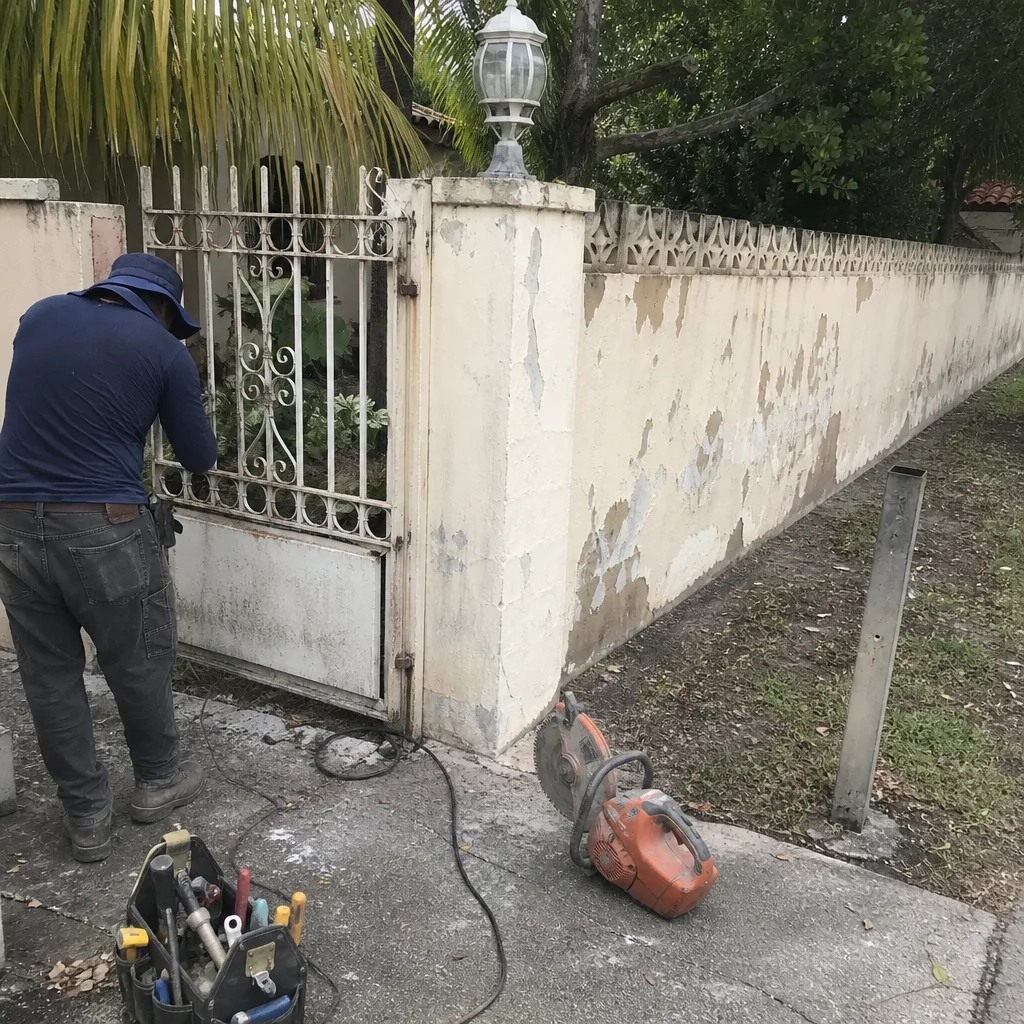 Before
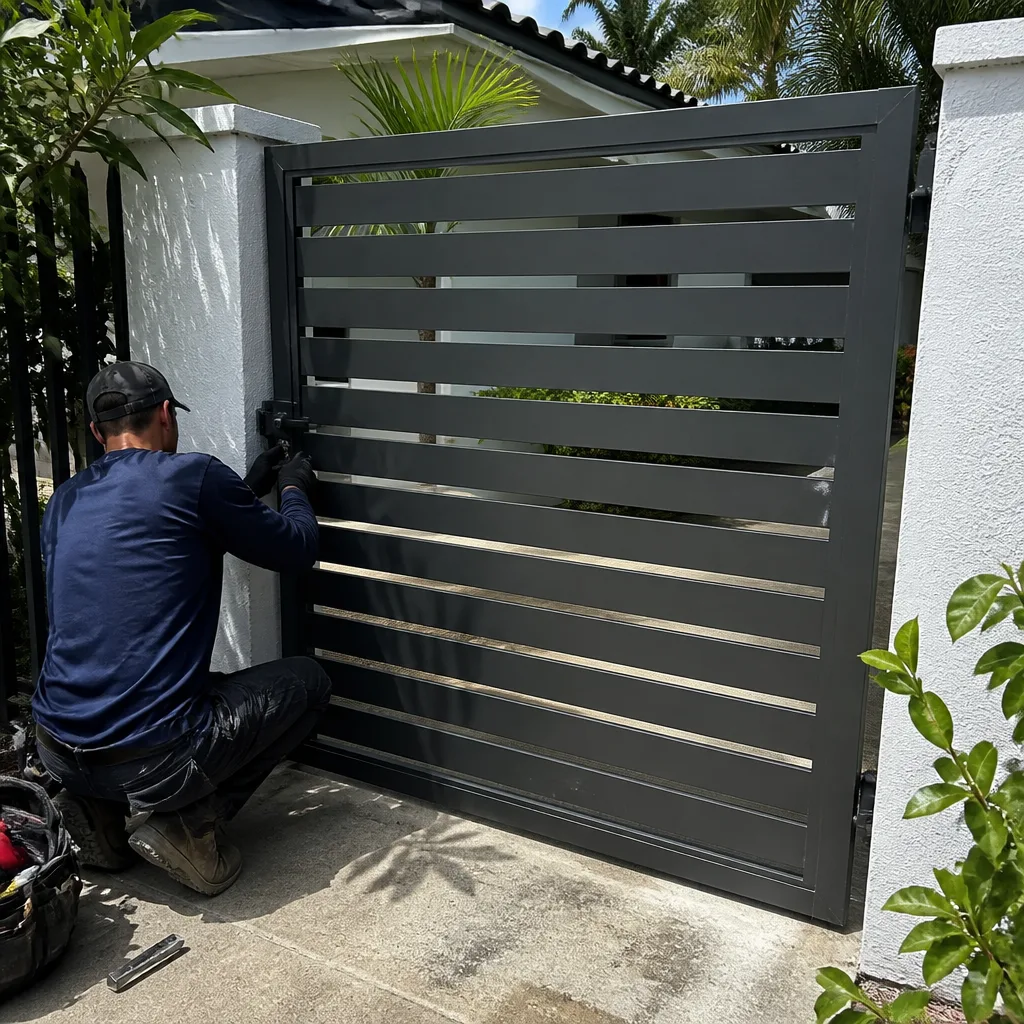 After
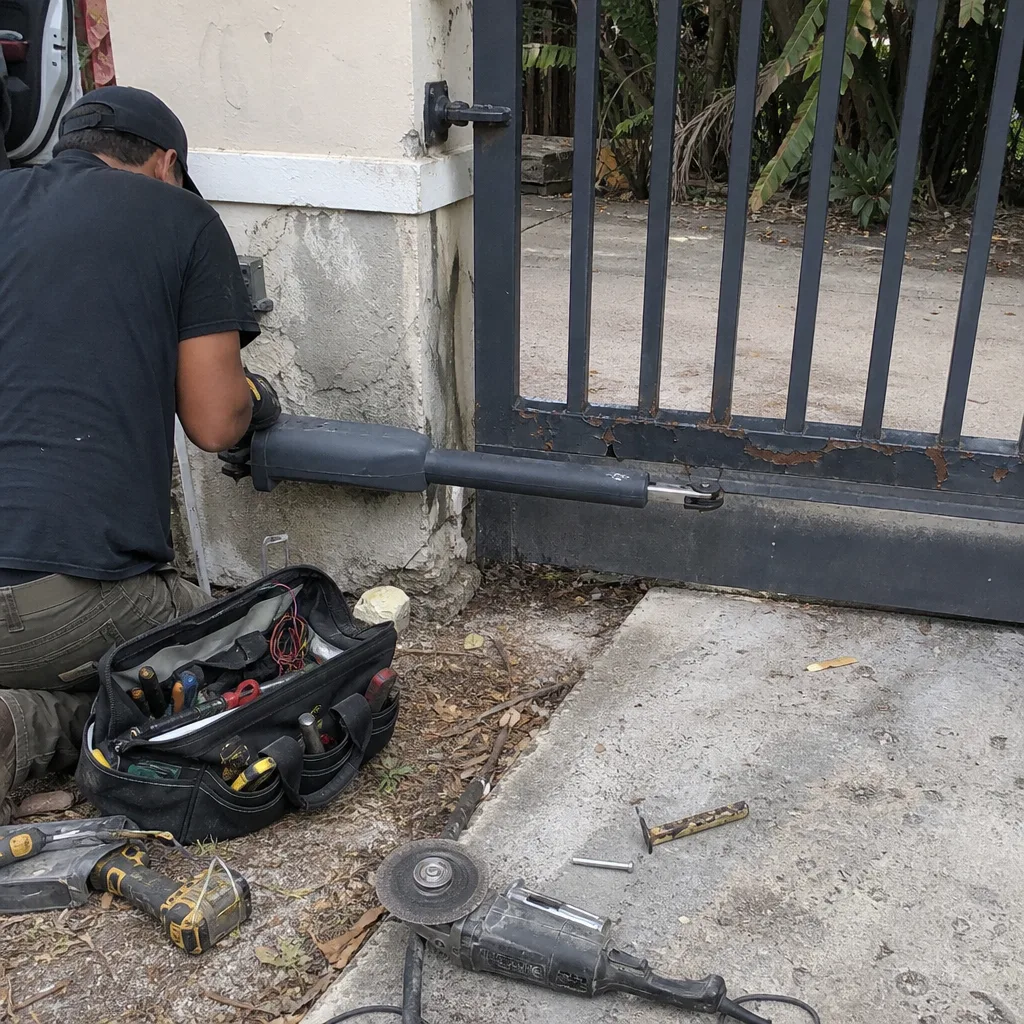 Before
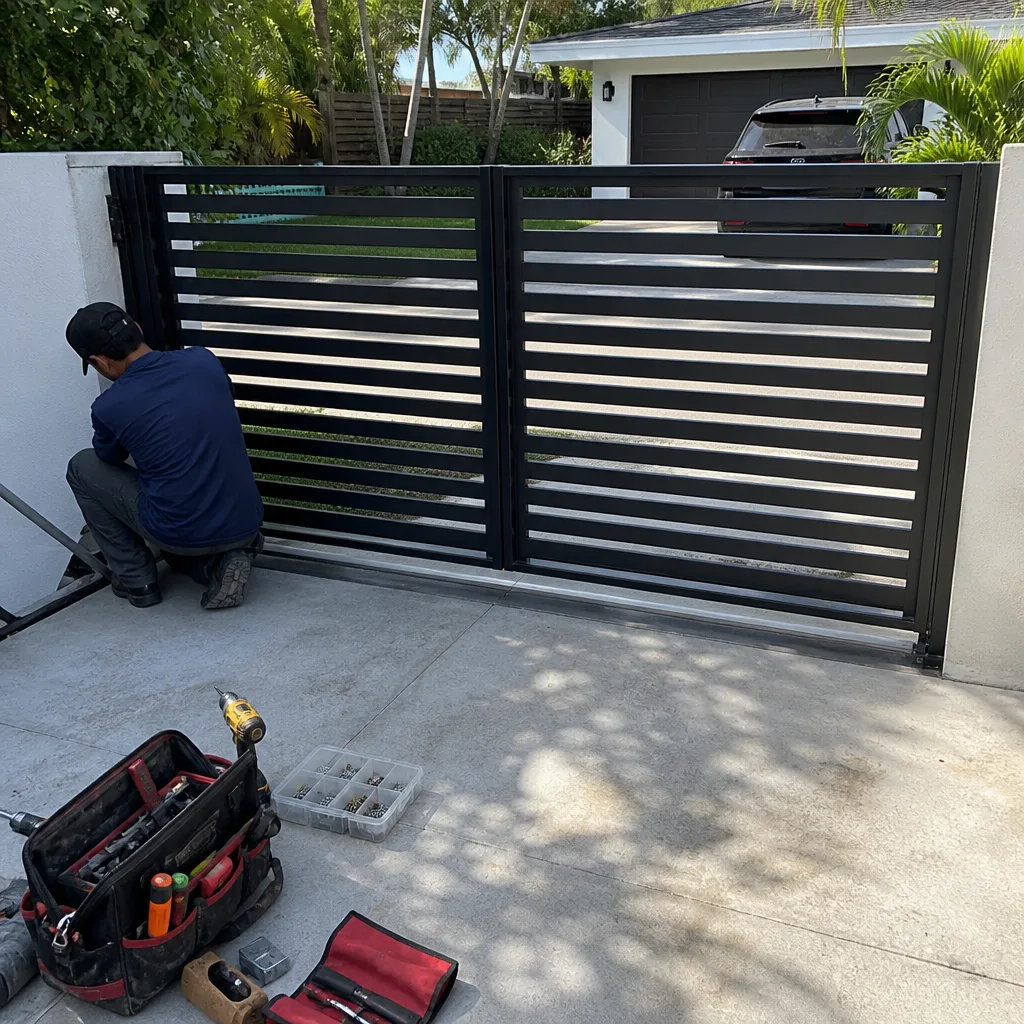 After
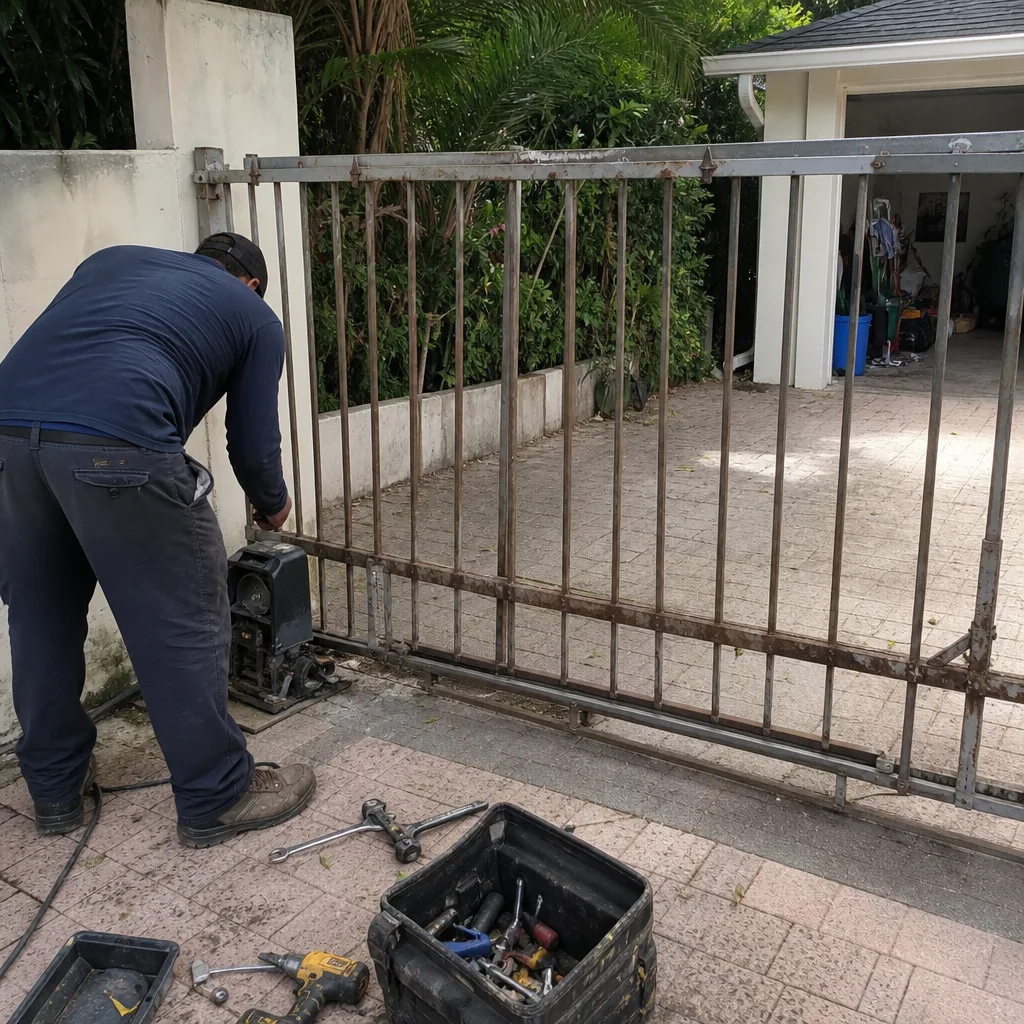 Before
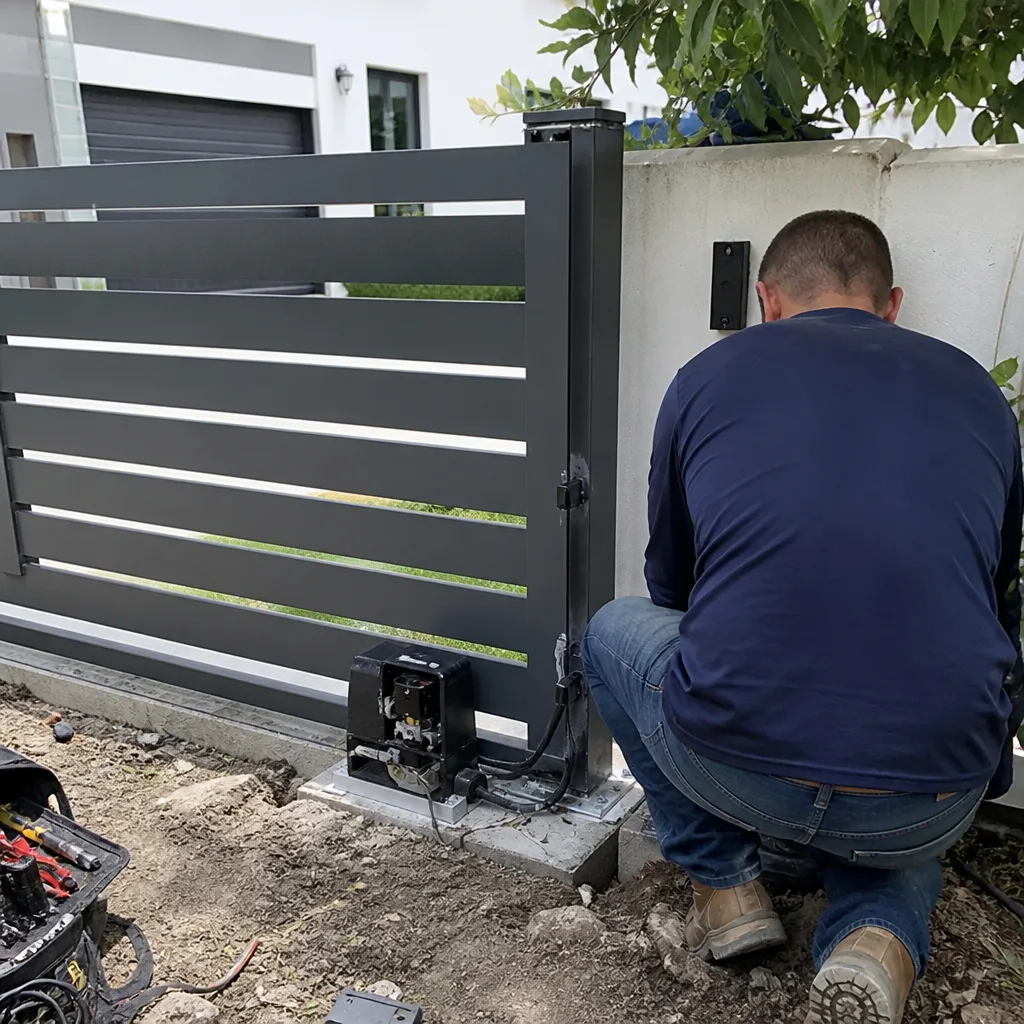 After
When to Call a Professional
If your gate project involves structural changes, a new operator installation, an HOA approval process, or a retroactive permit situation, call a specialist before you pour concrete or hang hardware. The stakes are measured in code violations, insurance exposure, and safety. A gate that fails during a windstorm or crushes a child because entrapment protection was bypassed is not worth the money saved by skipping professional involvement.
Miami Gate Company offers free estimates in Miami, and we handle the permitting and inspection process alongside the gate work so the homeowner isn’t navigating county paperwork alone. Call (833) 570-5807 for a free estimate, and we’ll tell you exactly what your project requires before any work begins.
Frequently Asked Questions
Most like-for-like repairs, such as replacing a hinge, latch, or control board, do not require a permit in Florida. Structural alterations that change the gate’s size, weight, wind-load profile, or foundation footprint generally require a permit, especially in Miami-Dade and Broward counties where HVHZ rules apply. Call (833) 570-5807 for a free assessment if you’re unsure where your project falls.
Residential gate permit fees in Miami-Dade typically range from $150 to $800 depending on the project scope and municipality, plus $400 to $1,200 for engineered drawings in HVHZ territory. Commercial gate permits cost more. Miami Gate Company can give you a written price that includes all permit fees before any work starts.
HVHZ, or High-Velocity Hurricane Zone, is Florida’s stricter wind-load code region covering all of Miami-Dade and Broward counties. Gates in this zone must meet higher structural standards, often requiring engineered drawings and specific footing designs that don’t apply in the rest of Florida.
Yes. Florida sellers must disclose unpermitted work, and buyers frequently flag unpermitted gate alterations during inspection. The result is often a credit to the buyer, a delayed closing, or a deal that falls through entirely. Some sellers in Miami have had to remove the gate and restore the original configuration to close the sale.
Most Boca Pointe HOAs require architectural review approval for any gate work that changes the gate’s appearance or configuration, even if the county doesn’t require a permit. Approval timelines of 30 to 60 days are common, so plan the work around the HOA meeting calendar. Call (833) 570-5807 for help navigating the Boca Pointe approval process.
Electric gate repairs in Miami are diagnosed on-site, and many board, motor, and sensor replacements can be completed in a single visit. The price is quoted and agreed before any work starts. Call (833) 570-5807 to schedule a diagnosis.
The Bottom Line
Gate permitting in Florida is a matrix of state code, county amendments, and municipal overlays, and the Miami-Dade HVHZ rules make the stakes higher than most homeowners realize. The line between repair and alteration matters because it determines everything downstream: whether you need a permit, whether an engineer must sign drawings, and whether your insurance will honor a claim. HOA communities add a parallel approval track that can’t be skipped, and unpermitted structural work creates liability that surfaces during sales and hurricane claims. When in doubt, get a written answer from the building department before work starts, and use a gate specialist in Miami who handles permitting and inspections as part of the job, not an afterthought. Visit our blog for more guides & resources.
Written by the team at Miami Gate Company, serving Miami since 2012.