

Last updated October 30, 2026
 Wrought iron
 Wood & steel frame
 Farm & ranch
 Sliding driveway gates
 LiftMaster operators
Free on-site gate assessment - hinges, posts, and your LiftMaster or Nice gate operator checked before anything is quoted
The assessment is free and the quote is the invoice.
Get your free estimateGate Repair Maintenance Checklist for Miami Homeowners
A generic gate maintenance checklist will fail you in Miami. Not because it’s wrong, exactly, but because it was written for a place where humidity doesn’t hover near 90% for half the year and salt doesn’t ride the air inland from the Atlantic. The most dangerous item on most checklists is “lubricate moving parts” – use the wrong product in Miami’s humidity and you’re not protecting the mechanism, you’re trapping moisture against the steel and accelerating corrosion from the inside out. In our years working on gates across Miami, from Coral Gables to Kendall to Brickell, we’ve learned that maintenance here follows a different order of operations. This guide is built around Miami’s actual failure sequence, not a manufacturer’s boilerplate. You’ll learn what fails first, what to check monthly versus seasonally, which lubricants are actually safe, and how to spot corrosion before it eats through a hinge post.
Quick Answer
Gate maintenance in Miami should follow a monthly rhythm focused on moisture and corrosion: inspect the hinges, wheels, and track for salt buildup and rust, check the control board for condensation and insect activity, test the safety sensors and auto-reverse, and wipe down electrical connections with a dry cloth. Biannual tasks include deep cleaning the track, checking conduit seals, and applying the correct marine-grade lubricant (never WD-40 on gate hardware). Storm-season prep every May through November means securing the gate leaf, verifying the battery backup, and clearing drainage paths around the motor housing.
Styles & brands we work with
Table of Contents
- The Miami Failure Sequence: What Actually Breaks First
- Lubrication in Miami: What to Use, What to Skip
- The Monthly Checklist: 15 Minutes That Prevent Most Repairs
- The Biannual Deep Service: Spring and Fall Tasks
- Storm Season Prep: May Through November in Miami
- Control Board Venting and Conduit Seals: The Two Checks Nobody Lists
- Corrosion Benchmarks: Surface Rust vs. Structural Rust
- Common Mistakes to Avoid
- When to Call a Professional
- Frequently Asked Questions
The Miami Failure Sequence: What Actually Breaks First
If you maintain a gate by working through a generic checklist top to bottom, you’ll spend time on items that rarely fail in Miami while ignoring the ones that fail constantly. The order below comes from what we see in the field, week after week, on residential and commercial gates throughout Miami; for more guides & resources, explore our blog. It’s organized by failure probability, not by gate zone.
- Corrosion on the lower hinge and bottom rail. This is the number one failure point on Miami gates. Water pools at the bottom of the gate leaf, salt from coastal air accelerates oxidation, and within two to three years an unprotected steel gate can develop rust that compromises the weld points. We regularly replace bottom hinges on gates that look fine from the top.
- Control board failure from condensation and insects. The control board sits inside a metal or plastic housing that heats up in the Miami sun. When evening humidity rolls in, the temperature swing creates condensation inside the housing. Add ants and roaches seeking warmth, and you have shorted circuits. This is the most common electric gate repair we perform.
- Track and wheel degradation on sliding gates. Sand and grit from driveways and pavers grind against the wheels. Miami’s frequent rain turns that grit into an abrasive paste. Wheels wear unevenly, the gate starts to drag, and the motor strains harder until it burns out.
- Safety sensor misalignment. Heat expansion and vibration from daily use knock photo-eye sensors out of alignment. The gate then refuses to close, or worse, reverses erratically.
- Battery backup failure. Most Miami homeowners don’t know their gate operator has a battery backup until a storm knocks out power and the gate won’t open manually. Batteries degrade faster in heat, and Miami heat is relentless.
- Chain or belt stretch on slide and swing operators. Constant humidity causes metal chains to develop surface rust, which increases friction and wears the links. Within a few years, the chain sags enough to slip off the sprocket.
Understanding this sequence changes how you maintain your gate. You don’t start at the top with “inspect hinges” as a generic item. You start with the bottom hinge, because that’s where the failure actually begins in Miami’s climate.
Lubrication in Miami: What to Use, What to Skip
We’ve seen more gates damaged by well-meaning lubrication than by neglect. The wrong lube in Miami’s humidity doesn’t just fail to protect – it actively accelerates the problem. Here’s the breakdown.
Never use these on Miami gate hardware:
- WD-40. It’s a solvent and water displacer, not a lubricant. It strips existing grease and leaves a thin film that evaporates within days. On a Miami gate, you’re left with bare metal and no protection.
- General-purpose grease (the brown stuff from a tub). It’s formulated for bearings and automotive joints, not gate hinges. In humidity, it absorbs water and turns into a sticky emulsion that traps salt against the metal.
- White lithium grease in a spray can. The aerosol propellant drives out the thin carrier and leaves a powdery film that washes away in the first afternoon downpour.
- Vegetable-based or biodegradable oils. They break down fast in heat and humidity and become food for mold and bacteria.
Use these instead:
- Marine-grade synthetic grease (e.g., Lubriplate 130-A or similar). Formulated for saltwater environments. It stays put, repels water, and doesn’t break down in heat. This is what we use on hinge pins and wheel bearings on Miami gates.
- Dry PTFE spray (e.g., CRC Dry PTFE or Tri-Flow Dry). For track surfaces and chain links. It leaves a dry film that doesn’t attract sand or grit, which is critical on sliding gates in Miami where driveway grit is constant.
- Silicone spray (food-grade if available). Good for plastic components, rollers, and weather stripping. Won’t degrade rubber or plastic in the heat.
- Corrosion inhibitor spray (e.g., CorrosionX or Boeshield T-9). For electrical connections and the interior of the control board housing. These products were developed for marine and aviation use and actually hold up in coastal South Florida air.
Apply lubricant sparingly. A thin film is enough. Over-lubricating creates a sticky surface that collects salt, sand, and debris. Wipe away any excess with a clean cloth. On chains, apply a light coat, then run the gate once and wipe off what squeezes out. You want the lube inside the link joints, not on the outside where it becomes a dirt magnet.
The Monthly Checklist: 15 Minutes That Prevent Most Repairs
This is the rhythm that catches problems before they become repair bills. Do this once a month. In Miami, the best time is a weekday morning after the dew has burned off but before the afternoon storms build.
- Walk the gate leaf and look for rust blooms. Check the bottom rail, the hinge plates, and the weld points. Any orange discoloration or bubbling paint is a rust bloom starting. Mark it with a paint pen and check again next month. If it’s growing, it’s time for treatment.
- Test the auto-reverse and safety sensors. Place a cardboard box or a trash can in the gate’s path while it’s closing. The gate should stop and reverse within two seconds of contact. Then block the photo-eye beam with your hand. The gate should not close. If either test fails, stop using the automatic operation and call a technician.
- Check for unusual sounds. Run the gate open and closed once. Listen for grinding, squealing, or a change in pitch from the motor. A grinding sound means a bearing is going. A squeal means dry metal on metal. A thump at the end of travel means the limit switch is out of adjustment.
- Inspect the chain or belt for sag. With the gate closed, press down on the chain midway between the sprockets. More than an inch of deflection means it’s stretched and needs adjustment. A loose chain can jump the sprocket and damage the motor shaft.
- Clear debris from the track and wheels. Leaves, palm fronds, and landscape debris accumulate fast in Miami. Sweep the track clean and check that nothing is wrapped around the wheel axles.
- Check the control board housing. Open the cover and look for condensation, insect activity, or corrosion on the terminals. Wipe down any moisture with a dry cloth. If you see ants, they’re nesting inside and need to be removed before they short the board.
- Test the manual release. Every automatic gate has a manual release mechanism, usually a key or a pull handle. Test it once a month so you know how to operate the gate if the power goes out. In Miami, with hurricane season six months long, this is not optional.
The Biannual Deep Service: Spring and Fall Tasks
Twice a year, do a deeper service. Spring in Miami means March or April, before the rains begin in earnest. Fall means October or November, after the worst of hurricane season has passed. Each season has slightly different priorities.
Spring service (March-April):
- Deep clean the entire gate. Pressure wash the gate leaf at low pressure, using a mild detergent. Avoid spraying the motor housing or control board directly. Get the salt film off the metal before the rainy season traps it against the surface.
- Lubricate all moving parts with the correct products as outlined above. Hinge pins, wheel bearings, chain links, and the track surface.
- Check and tighten all bolts and fasteners. Miami’s heat and humidity cause metal to expand and contract daily. Bolts loosen over time. A loose hinge bolt puts uneven stress on the weld and accelerates fatigue cracking.
- Inspect the gate alignment. A gate that’s begun to sag will scrape the ground or bind against the latch post. Measure the gap at the top and bottom of the latch side. A difference of more than a quarter inch means adjustment or hinge replacement is needed.
- Test the battery backup. Kill power to the gate operator at the breaker and verify the battery opens and closes the gate at least twice. Replace batteries older than three years, regardless of test results.
Fall service (October-November):
- Post-storm inspection. Even if you had no direct hits, wind-driven rain and flying debris stress every component. Check for water intrusion in the control board housing, corrosion on electrical connections, and damage to the gate leaf from debris impact.
- Re-torque all bolts. Storm winds shake everything loose. Go over the hinge bolts, the motor mount, and the track anchors.
- Check the drainage around the motor housing. Make sure water isn’t pooling anywhere near the operator. Standing water breeds insects and accelerates corrosion. Regrade or add gravel if water collects.
- Apply a corrosion inhibitor to exposed electrical connections. The post-storm dry period is the ideal time to treat terminals and connectors before winter humidity sets in.
- Inspect the gate’s finish. Touch up any chips or scratches in the paint or powder coating. Bare metal in Miami’s salt air starts pitting within weeks.
Storm Season Prep: May Through November in Miami
Hurricane season in Miami isn’t a seasonal variation. It’s a six-month window where your gate is a potential liability if it fails. A gate that won’t open after a storm traps vehicles and blocks access for emergency services. A gate that won’t close leaves your property exposed. Here’s the storm-specific maintenance protocol.
- Verify the manual release works and the key is accessible. In a power outage, you need to open the gate by hand. Store the release key in a known location, not in a drawer somewhere in the garage. Test the release mechanism monthly during storm season.
- Secure the gate leaf for high winds. If a storm warning is issued for Miami, position the gate in a locked position and engage any mechanical locks. For sliding gates, ensure the gate is fully closed and the latch engaged. For swing gates, consider installing drop rods or cane bolts if your system doesn’t already have them.
- Clear the drainage paths. Make sure water can flow away from the gate track and the motor housing. Blocked drainage leads to flooding around the operator, which is the fastest way to kill an electric gate system.
- Check the battery backup condition. Every operator with a battery backup should be tested at the start of storm season. If the battery is more than three years old, replace it. In our experience, most battery backups fail during their first real test, which is the worst possible time to find out.
- Remove or secure loose items near the gate. Potted plants, trash cans, and yard furniture become projectiles in tropical storm winds. A hit from a flying object can bend a gate leaf, shatter a sensor, or crack the control board housing.
- Document your gate’s condition. Take dated photos from multiple angles before the storm. If you need to file an insurance claim for storm damage, you’ll have a baseline record.
For commercial properties and HOAs in Miami, this protocol should be part of your emergency response plan. Assign a staff member to handle the gate checks when a storm watch is issued. The gate repair specialists we partner with in Boca Pointe see the same failure patterns: gates that were never storm-prepped fail during the storm, not after it.
Control Board Venting and Conduit Seals: The Two Checks Nobody Lists
Here’s the thing about generic maintenance checklists: they cover visible hardware and ignore what’s inside the electrical enclosures. In Miami, what’s inside the enclosures is where the majority of electric gate failures begin. Two items matter more than almost anything else on this list, and neither shows up on manufacturer checklists.
Control board venting. Every control board generates heat when the gate operates. In Miami’s ambient heat, that internal temperature climbs fast. If the housing is sealed tight with no venting, the heat builds and burns out capacitors and relays prematurely. If the housing is vented improperly, Miami humidity condenses inside and shorts the board. You want to see a ventilation design that allows air to circulate while keeping rain and insects out. Check the vent screens monthly. If they’re clogged with dust, pollen, or insect debris, clean them. If the housing doesn’t have any venting and the board runs hot to the touch after operation, that’s a design problem that will cost you a board replacement eventually.
Conduit seals. The conduit that runs from the operator to the control board, the sensors, and the keypad carries low-voltage wiring. Where that conduit enters each device, there should be a seal – usually a rubber grommet or a silicone sealant. Miami’s rain, combined with the natural wicking action of electrical conduit, pulls water into the seals and eventually into the device housing. Check every conduit entry point twice a year. If the seal is cracked, dried, or missing, water is working its way inside. This is a five-minute fix that prevents a $500 control board replacement. We’ve opened board housings in Miami where the conduit seal had failed months earlier and nobody noticed until the board was covered in green corrosion.
These two checks take less than five minutes combined. Do them every month during the rainy season. If you’re not comfortable opening the control board housing, have a technician do it during a biannual service visit (see Gate Repair Permits, Codes & Inspections in FL: What You Need to Know for related requirements).
Corrosion Benchmarks: Surface Rust vs. Structural Rust
Rust on a Miami gate is inevitable. The question isn’t whether rust exists, it’s whether the rust has compromised the metal’s integrity. Knowing the difference between surface rust and structural rust is the difference between a wire-brushing touch-up and an emergency repair.
Surface rust is a discoloration. It’s orange or brown, it sits on top of the metal, and it hasn’t changed the metal’s thickness or shape. You can scratch it with a fingernail and see solid metal underneath. Surface rust on gate hinges, railings, and decorative elements is normal in Miami. Treat it by wire brushing the area, applying a rust converter, and repainting. Do this biannually and the gate will last decades.
Structural rust has penetrated the metal. It’s not a discoloration; it’s a loss of material. Indications include:
- Flaking or scaling. The rust forms in layers that peel away from the underlying metal. What’s left underneath is pitted and thin.
- Bubbling or blistering paint. The rust is expanding underneath the paint, pushing it outward. When you break the blister, you’ll find deep pitting rather than a smooth surface.
- Visible metal loss. Edges that were once square are now rounded. Holes are forming. The metal has visibly changed shape or thickness.
- Cracks at weld points. Stress plus corrosion equals fatigue cracks. These are hairline fractures that form at the edge of a weld joint. They’re dangerous because they can fail suddenly under load.
- Pitting depth greater than 1/16 inch. If you can push a screwdriver tip into the pit and feel depth, the corrosion has gone beyond cosmetic.
The critical locations for structural rust on Miami gates are the bottom rail (where water sits), the hinge plates (where stress concentrates), and the point where the gate leaf meets the drive mechanism (where vibration and friction accelerate corrosion). If you see structural rust on a hinge, replace the hinge now, not next month. A hinge failure on a heavy gate can cause the leaf to drop suddenly, which is a serious safety hazard. The same logic applies to electric gate repair in Boca Pointe and throughout Miami-Dade County: catch the corrosion before it catches the hinge.
Common Mistakes to Avoid
- Using WD-40 as a lubricant. It’s a penetrating oil and water displacer, not a lubricant. In Miami’s humidity, it strips existing protection and leaves bare metal. Use marine-grade grease or dry PTFE spray instead.
- Skipping the monthly auto-reverse test. The safety sensors and auto-reverse are what prevent a closing gate from crushing a person or a car. If you only test them once a year, you’re rolling the dice for eleven months. Test monthly.
- Ignoring a gate that’s slightly out of alignment. A gate that drags slightly or binds on the latch post is telling you something. The problem won’t fix itself, and the extra strain on the motor will shorten its life significantly.
- Pressure washing the control board housing. Direct water spray against the electrical enclosure forces water past the seals. Clean the gate leaf with a pressure washer, but keep the spray away from the operator and any electrical components.
- Letting landscape plants grow against the gate or the track. Hedges and vines trap moisture against the metal and restrict gate movement. Keep a clear zone of at least 12 inches around the gate and the track.
- Painting over rust without treating it first. Paint over active rust just traps moisture and salt against the metal underneath. The rust continues to grow under the new paint. Wire brush, apply a rust converter, then prime and paint.
- Waiting until the gate stops working to call a technician. By the time a gate fails completely, the underlying problem has usually been developing for months. Routine maintenance catches these issues when they’re simple fixes, not full replacements. The gate installation experts serving Boca Pointe and greater Miami will tell you the same thing: early intervention is the cheapest repair.
When to Call a Professional
Most of the maintenance in this guide is DIY-friendly, but there are lines you shouldn’t cross. If you see structural rust on a hinge or weld point, stop and call a gate specialist. That’s not a maintenance issue; it’s a structural repair that affects the safety of everyone who uses the gate. If the control board shows signs of water damage or corrosion, opening it up to investigate can make things worse – leave that to someone who works on boards daily. If the gate motor is grinding, smoking, or tripping the breaker, continued operation risks burning out the motor entirely. If the safety sensors fail the monthly test and realigning them doesn’t fix the issue, something deeper is wrong with the wiring or the board. Miami Gate Company offers free estimates on all gate repair and electric gate work in Miami. Call (833) 570-5807 and we’ll diagnose the problem before quoting a price.
Frequently Asked Questions
Lubricate hinges, wheels, and chains every six months, using a marine-grade grease or dry PTFE spray formulated for high-humidity environments. Monthly lubrication is unnecessary and counterproductive – excess lubricant collects salt and grit from Miami’s coastal air. Never use WD-40 on gate hardware. Call (833) 570-5807 if you’re unsure which lubricant matches your gate’s components.
Control board failure from condensation and insect intrusion is the most common electric gate repair we perform in Miami. The heat and humidity cycle creates condensation inside the operator housing, and ants and roaches short the board terminals. Monthly inspection of the board housing reduces this risk significantly.
You can pressure wash the gate leaf and the structural frame at low pressure, but keep the spray away from the motor housing, control board, sensors, and any electrical conduit. High pressure against seals and gaskets forces water inside. Use a mild detergent and rinse thoroughly. Then dry the metal and check for new rust blooms.
Routine maintenance handles rust that sits on the surface, loose bolts, dry lubrication, and debris in the track. Professional repair is needed if you see structural rust (flaking, pitting, or cracking), if the motor makes grinding noises or trips breakers, if the safety sensors fail repeated tests, or if water or insects have gotten inside the control board housing. When in doubt, our Gate Repair services can help before the damage compounds.
Test the manual release mechanism and make sure the key is accessible, test the battery backup at the start of the season, clear drainage paths around the operator and track, and secure loose items that could become wind-driven projectiles. During an actual storm warning, lock the gate in position and engage any mechanical locking devices. After the storm passes, check for water intrusion in the board housing and re-torque all bolts.
We service gate systems from the major brands homeowners across Miami actually own, including BFT, Linear, Viking, and Ghost Controls, along with LiftMaster, FAAC, DoorKing, Elite, and Mighty Mule. Because we’re brand-agnostic, our recommendations are based on what your specific system needs, not on what a single manufacturer incentivizes us to sell. For installation, our gate installation service covers the same brand range.
The Bottom Line
Gate maintenance in Miami is a different discipline than gate maintenance anywhere else. The humidity, the salt air, the six-month storm season, and the relentless heat combine to attack your gate in a specific sequence: corrosion on the lower hinge, condensation inside the control board, abrasive grit wearing the wheels, and sensor misalignment from thermal expansion. A checklist that ignores that sequence is theater. This one follows the real failure pattern. Do the monthly 15-minute walkthrough, stay disciplined about the biannual deep service, and treat storm prep as a non-negotiable part of living in Miami. If any of it feels beyond your comfort level, call a gate specialist. A five-minute phone call now costs less than an emergency repair after the next tropical storm.
For more guidance on specific gate systems and repair scenarios, start at the Miami Gate Company home page or explore our detailed service articles.
Written by the team at Miami Gate Company, serving Miami since 2012.
See the difference
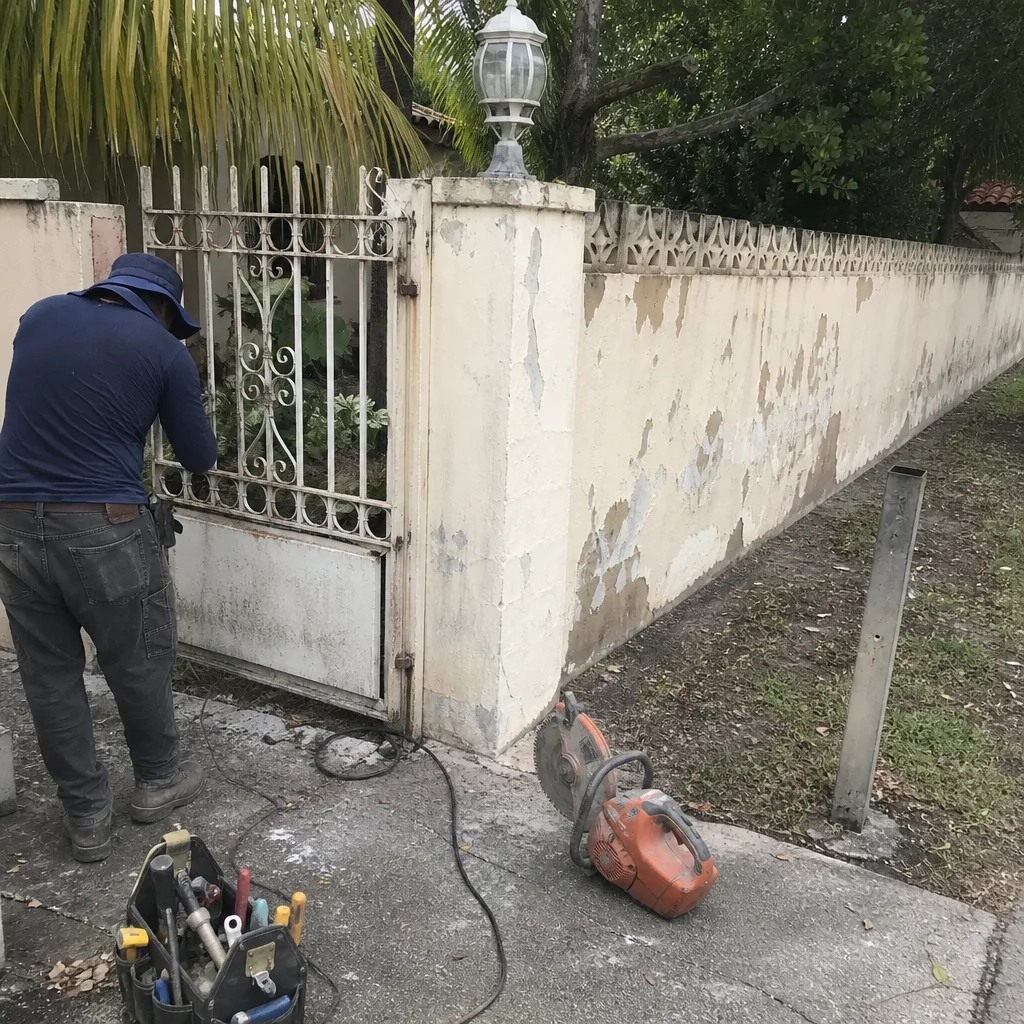 Before
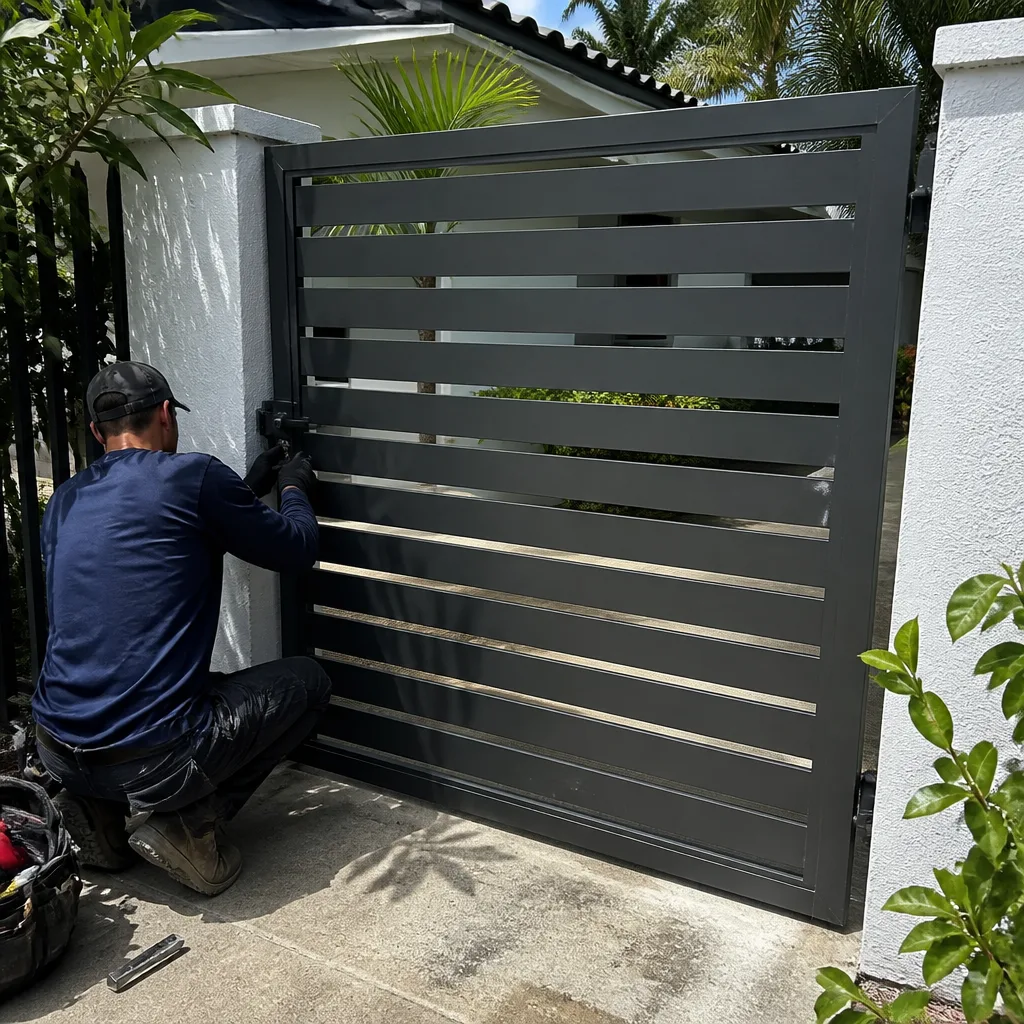 After
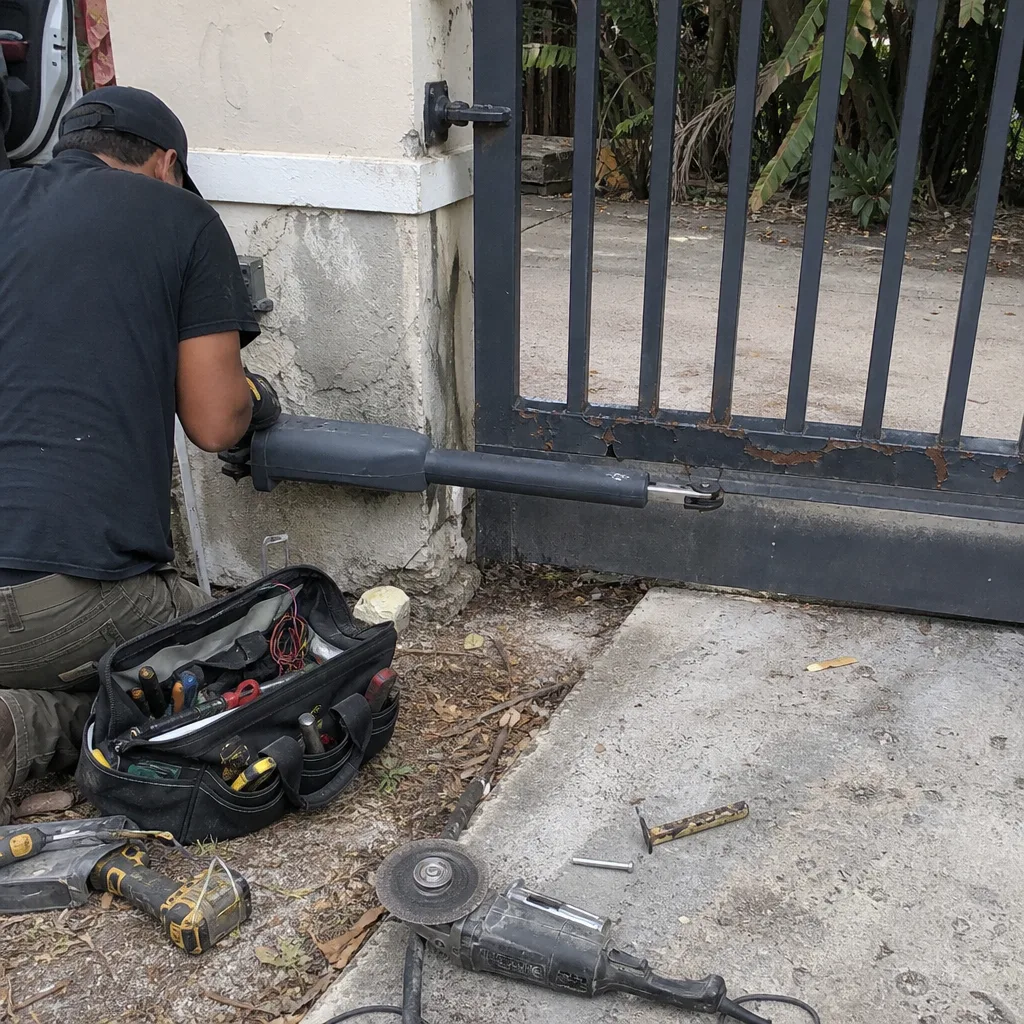 Before
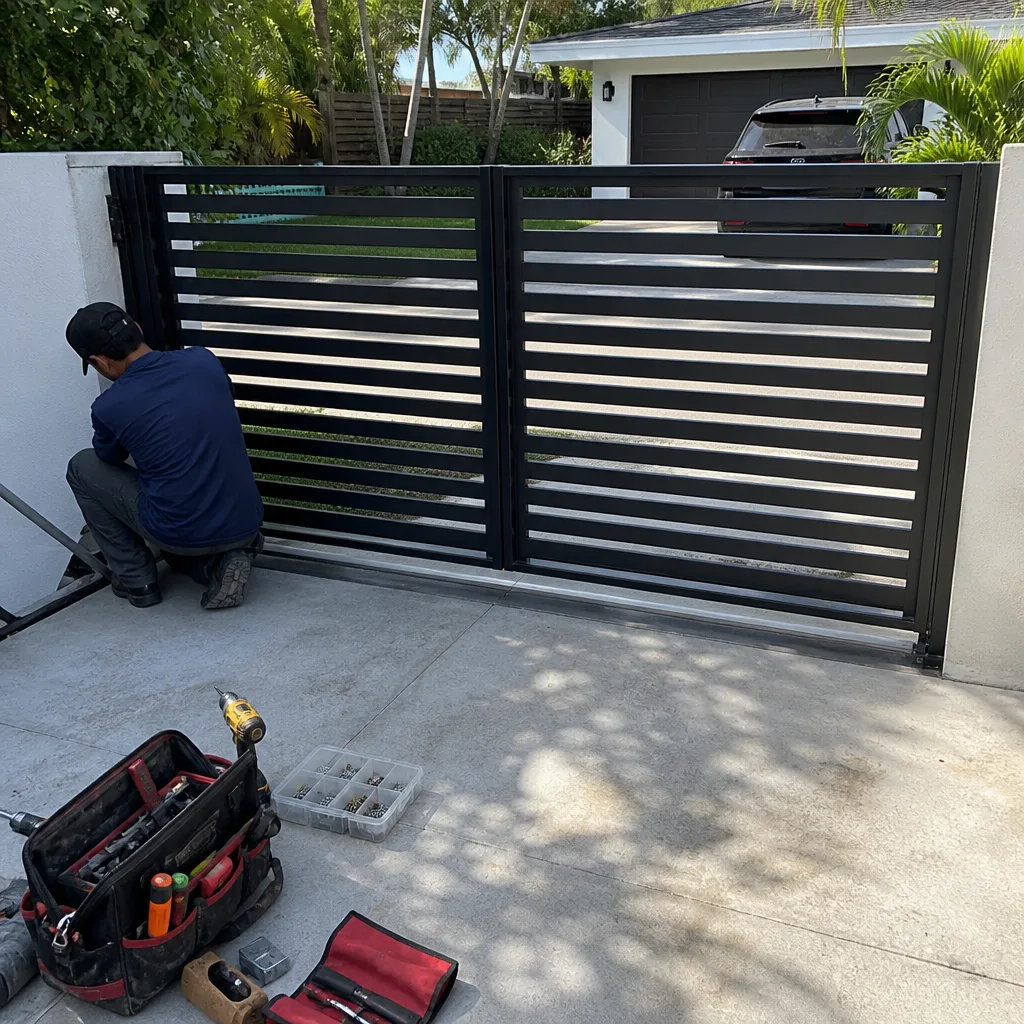 After
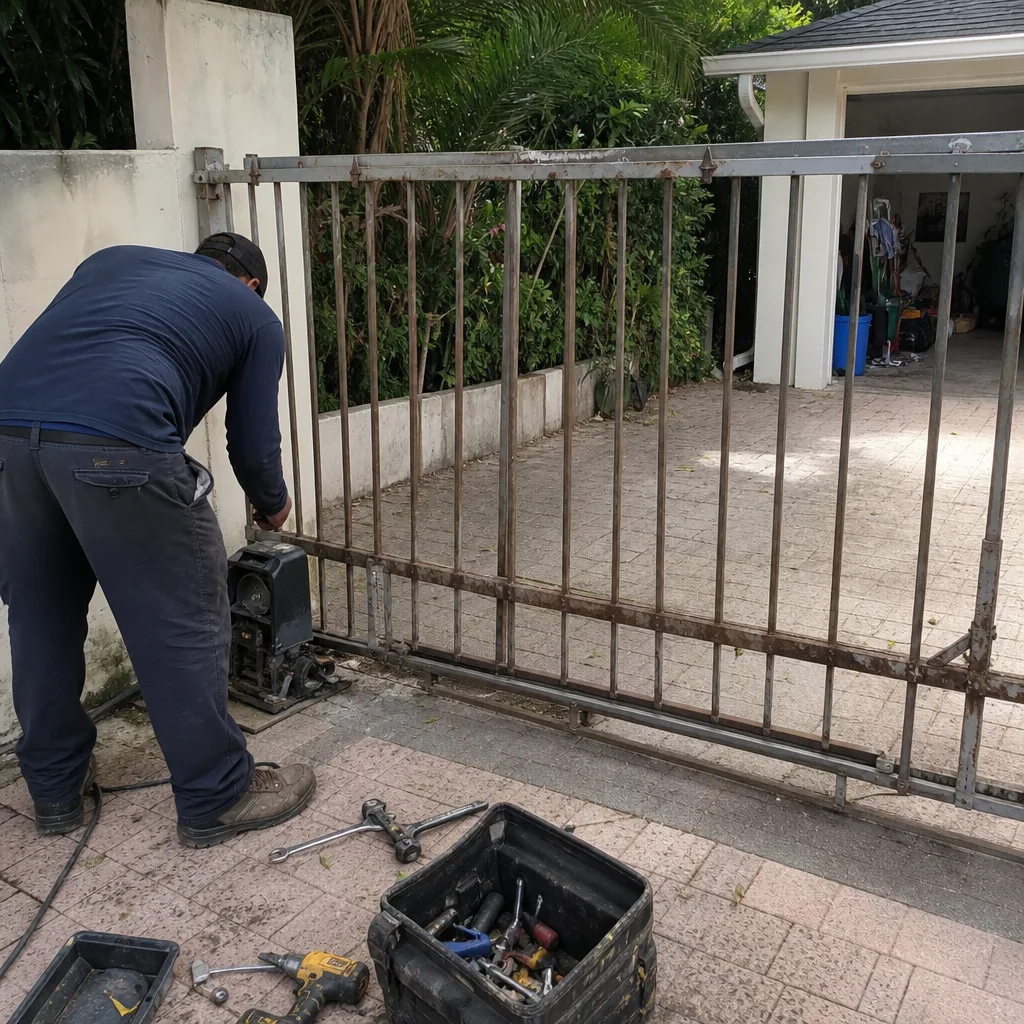 Before
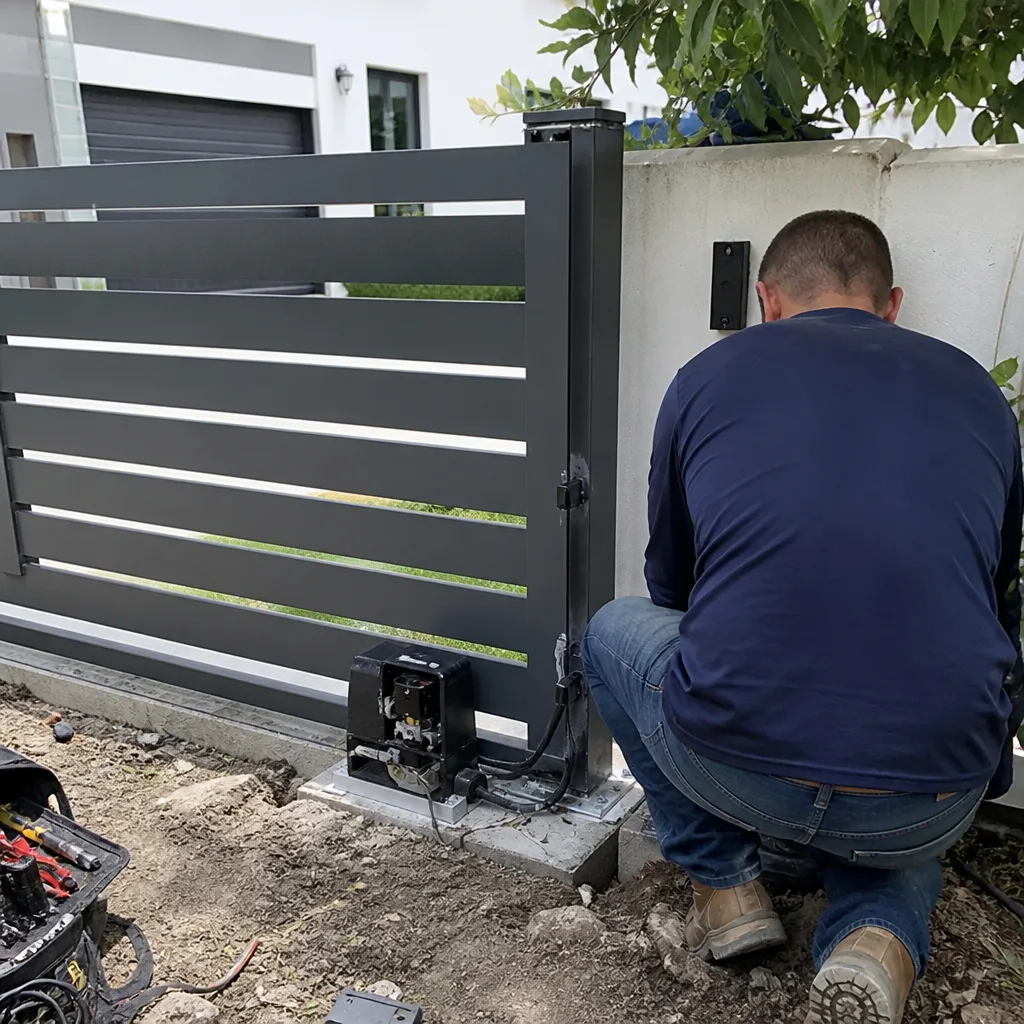 After