

Last updated October 30, 2026
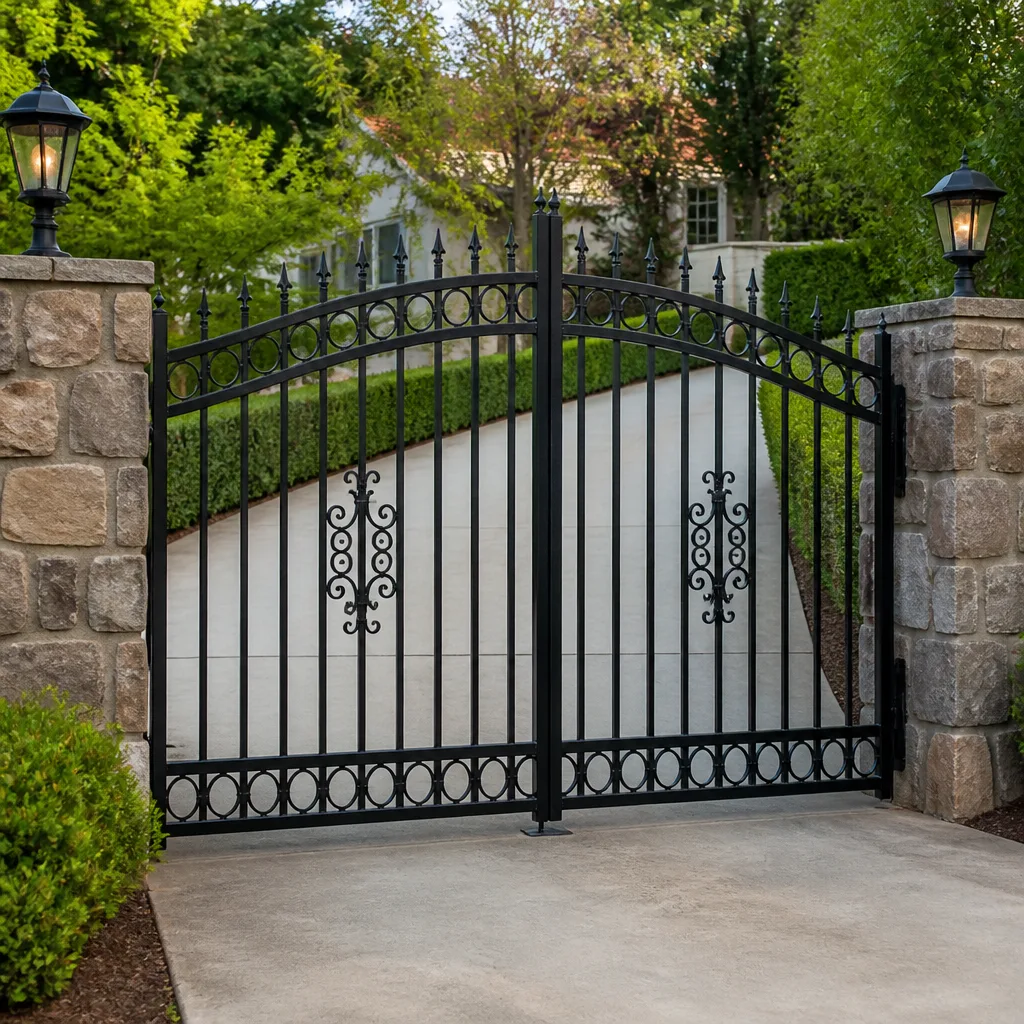 Wrought iron
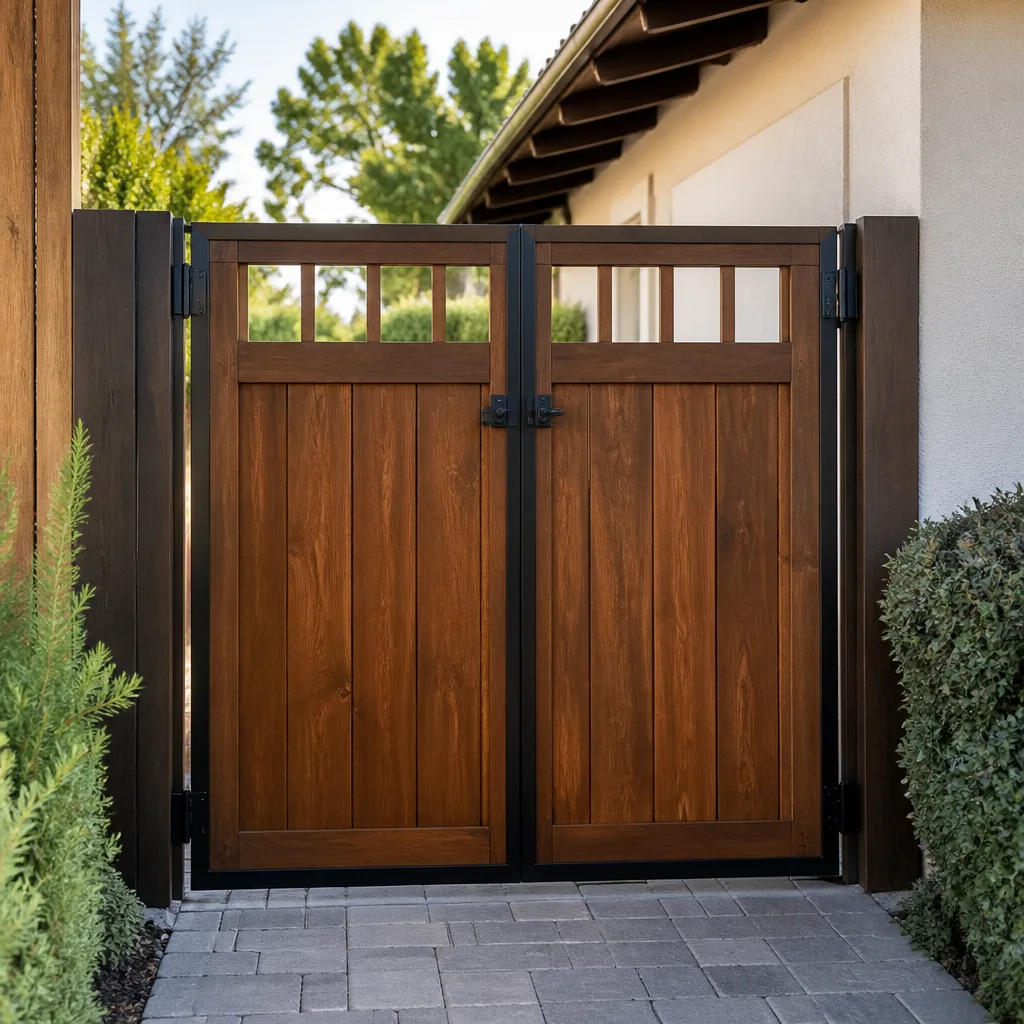 Wood & steel frame
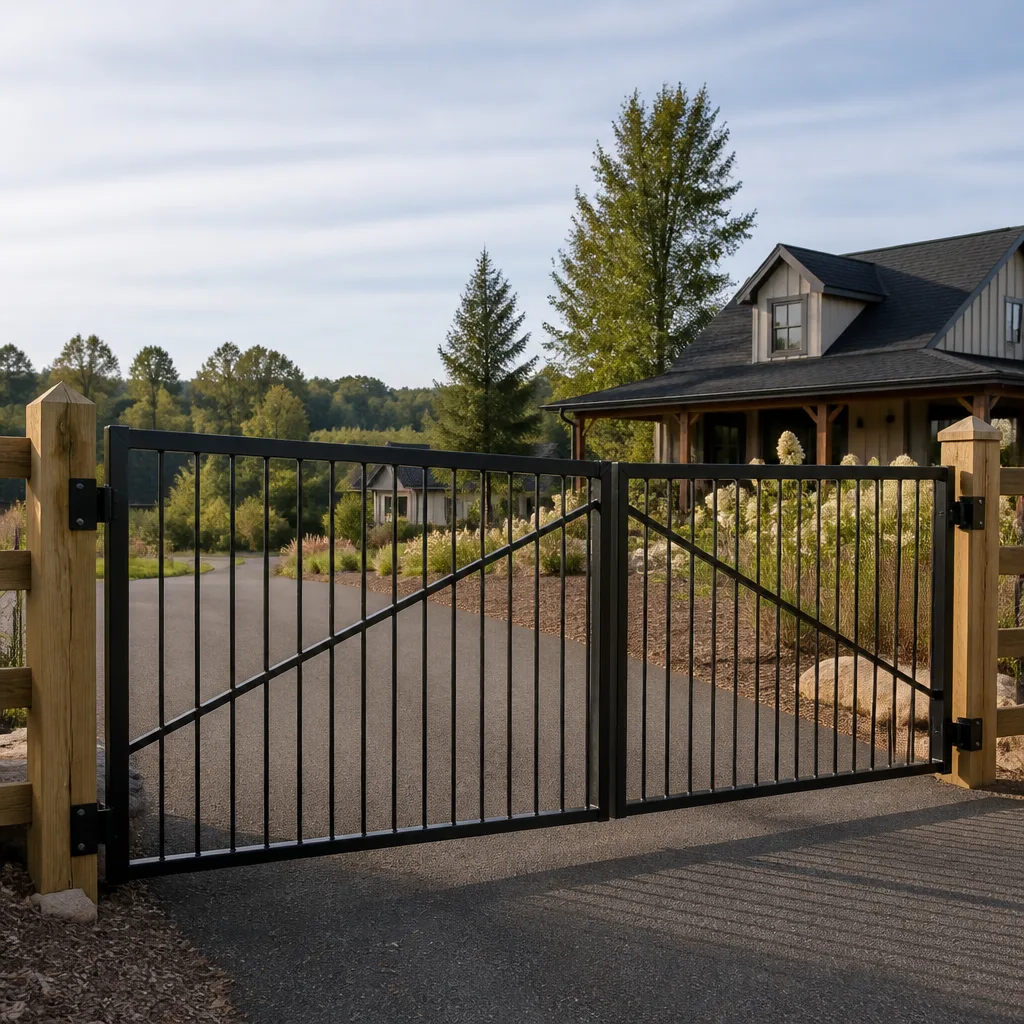 Farm & ranch
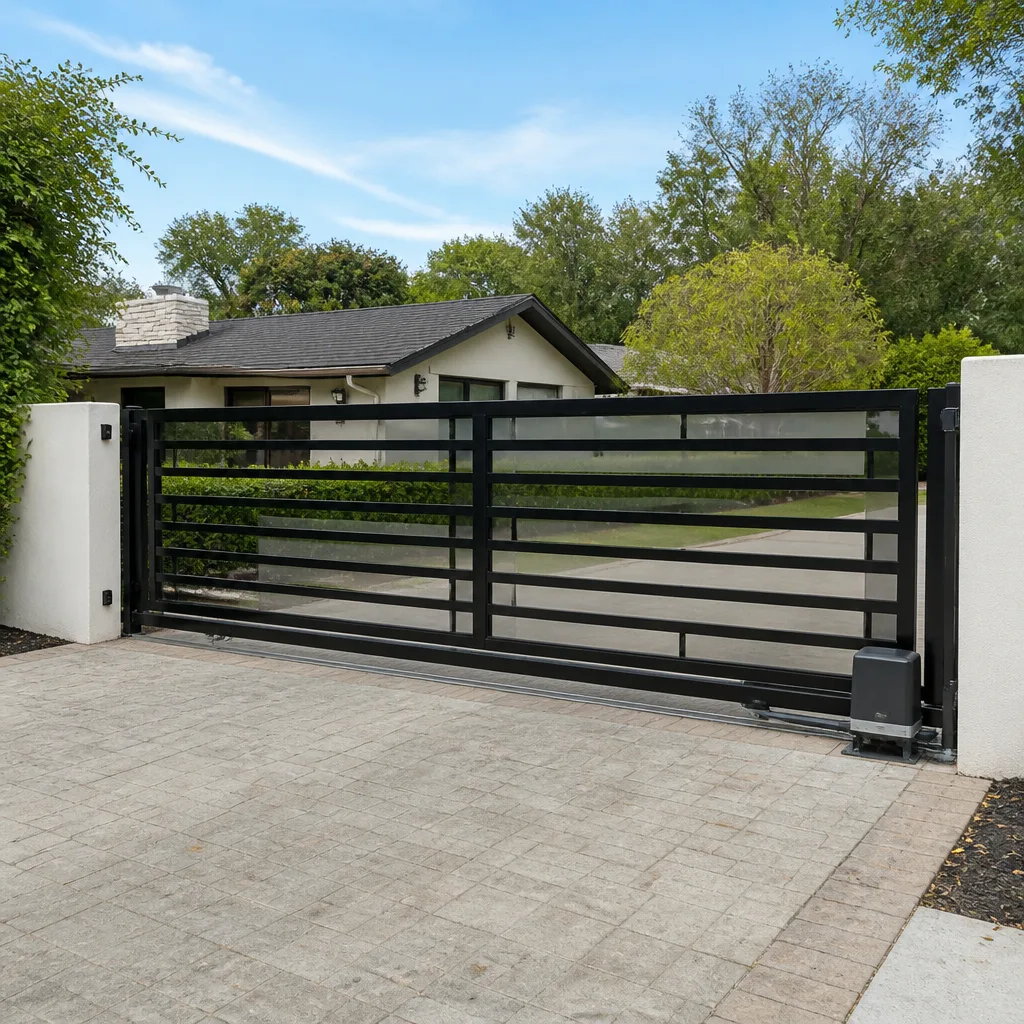 Sliding driveway gates
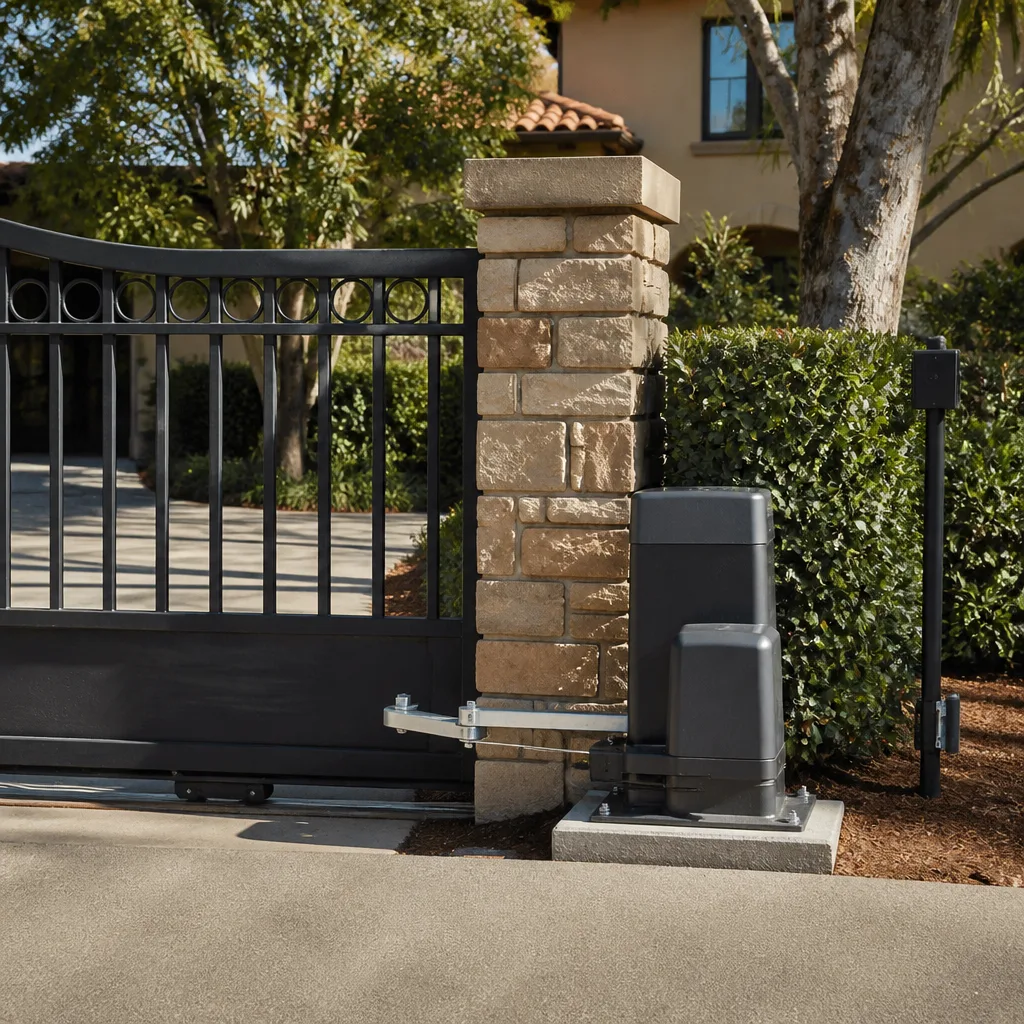 LiftMaster operators
Free on-site gate assessment - hinges, posts, and your LiftMaster or Nice gate operator checked before anything is quoted
The assessment is free and the quote is the invoice.
Get your free estimateGate Repair Emergency Preparedness Guide for Miami Homes
After a major storm rolls through Miami, the average homeowner waits roughly 72 hours for a gate technician. Not because technicians are scarce, but because an overwhelming majority of those calls come from people who don’t know where their gate’s manual release is, what kind of operator they own, or whether the problem is electrical, mechanical, or electronic. This guide is built to move you out of that majority. You’ll learn the bypass procedures for the gate systems most common in Miami homes, how to triage a post-storm failure so you know exactly what you’re dealing with, how to secure a gate that won’t close without wrecking it further, and how to build a contact protocol that gets you faster help when every neighbor on your street is calling for Gate Repair services.
Quick Answer
Gate emergencies in Miami fall into two clusters: the post-hurricane lockout and the after-hours security failure. The fastest way through either one is knowing your gate’s manual release location, having a battery backup sized for South Florida storm load, and keeping your operator’s model number and last known behavior written down before you ever need to call a technician. Miami Gate Company handles electric gate repair at the component level across almost any brand a Miami homeowner is likely to own. For Gate Repair Maintenance Checklist for Miami Homeowners, see our dedicated guide.
Styles & brands we work with
Table of Contents
- Miami’s Gate Emergency Landscape: What We Actually See
- Manual Release Locations for Miami’s Most Common Gate Systems
- Post-Storm Triage: Power, Mechanical, or Control Board?
- Battery Backup Systems for Miami Gate Operators
- How to Temporarily Secure a Gate That Won’t Close
- Building a Gate Emergency Contact Protocol
- Commercial and HOA Gate Emergency Considerations
Before we go further, know that the Miami Gate Company home page has direct contact details and a full picture of what we service. The rest of this guide assumes you’re standing in front of a gate that won’t move, or preparing so you aren’t caught standing there next time.
Miami’s Gate Emergency Landscape: What We Actually See
Miami gate failures do not distribute evenly across the year. They spike after named storms, after sustained heat waves that cook control boards inside aluminum housings, and during the rainy season when water finds its way into junction boxes that stayed dry for a decade. The failure modes we see most often are also the ones homeowners are least prepared for: a dead control board after a power surge, a bent track or misaligned wheel from wind-driven debris, a photo eye shifted by a branch, and a motor that tripped its thermal overload and simply needs a cooldown and reset.
What most homeowners don’t realize is that the first 30 minutes after a failure determine whether the repair is simple or catastrophic. Continuing to press the remote or keypad against a gate that is not moving can burn out a board that would have recovered on its own. Forcing a gate open against a locked operator can strip gears that were perfectly fine. The difference between a $200 service call and a $1,800 operator replacement is often decided by what the homeowner does before making the call, and understanding Gate Repair Permits, Codes & Inspections in FL: What You Need to Know can help avoid costly missteps.
In our experience across Miami, from Coral Gables to Kendall to Pinecrest, homeowners who keep a 3×5 card inside their electrical panel with the operator brand, model number, and manual release location get back to functioning access faster than everyone else on their block. Those who don’t wait in the same queue as the other 80 percent. If you’re reading this as preparation rather than response, you’re already ahead.
Manual Release Locations for Miami’s Most Common Gate Systems
Every automatic gate has a manual release mechanism. Its job is to disconnect the gate leaf from the motor so you can move the gate by hand during a power failure, a board failure, or a mechanical bind. The problem is that manufacturers put these releases in different places depending on the operator type, and nobody shows you where yours is during installation. Here is what we find on the gate systems most common in Miami neighborhoods.
Swing Gate Operators
Swing gate operators typically sit on a post or a pad at the hinge side of the gate. The manual release is almost always a keyed lock or a lever on the operator housing itself. On Linear swing operators, look for a small access door on the side of the housing; behind it you’ll find a pull knob or a keyed cylinder. On Viking operators, the release is usually a T-handle or a keyed bypass directly under the housing cover. On DoorKing swing operators, the release is a keyed cylinder on the operator lid labeled “Manual Release” or shown in the manual as a padlock icon.
The physical step that trips people up is the key. For keyed releases, most Miami homeowners never received the key at installation because the installer kept it on a ring in his truck. If you don’t have the release key, your options are a locksmith, a technician, or in some cases ordering a replacement key from the manufacturer. This is why we tell every customer: when your gate is installed or serviced, ask the technician to hand you the manual release key and demonstrate the bypass. If they can’t do both, call someone who can.
Sliding Gate Operators
Sliding gates use a chain, belt, or direct gear drive. The manual release is almost always a lever on the operator that disengages the drive sprocket from the chain. On Ghost Controls sliding operators, the release is a lever or pull chain near the motor that lifts the drive gear off the chain path. On Viking and DoorKing slide operators, look for a red or yellow handle on the side of the motor housing; pulling it rotates the sprocket out of engagement.
After you disengage a sliding gate, the gate should move freely along its track if the wheels and track are undamaged. If it doesn’t, you’re dealing with a mechanical problem, not an electrical one, and that changes your entire response. More on that in the triage section below.
Articulating and Barrier Arm Gates
Barrier arms are the exception to the manual release rule. Most barrier arms do not have a user-serviceable manual release. They have a balance spring and a counterweight, and if the arm is down and won’t lift, the proper response is almost always to call a technician rather than attempt to lift the arm by hand. Lifting a barrier arm against a locked motor can strip the gearbox. If you’re locked in or out of a property with a failed barrier arm, your fastest path is to look for a second access point or call a gate professional. This is also a common HOA scenario; property managers at Gate Installation in Boca Pointe tell us the same story about barrier arms in their communities.
What the Manual Release Doesn’t Do
The manual release disconnects the motor, but it does not disconnect the lock mechanism if your gate has an electric strike or magnetic lock. If the gate has a mag lock, disengaging the operator release will not release the lock. You’ll need the mag lock’s own manual override, which is usually a keyed switch on the gate frame or a key box near the gate. In a power failure, some mag locks remain locked and release only when power returns or when the lock’s manual overrider is used. This is a common point of confusion during post-storm lockouts. Knowing which of these two systems you have, and where both releases are located, is part of the core preparation we recommend for every Miami homeowner.
Post-Storm Triage: Power, Mechanical, or Control Board?
After a storm, gate failure almost always falls into one of three categories. Each has a different response path, and confusing them costs time and money. Here is how we distinguish them.
Category 1: Power Issue
If your gate is completely unresponsive, no hum, no click, no LED on the keypad, and the manual release allows smooth movement, the problem is upstream of the operator. The operator isn’t getting power. Check the breaker first, then any GFCI outlet on the circuit, then the power switch on the operator itself if the model has one. In Miami after a storm, FPL may have restored your house but not the dedicated circuit to the gate if it’s on a separate panel or sub-panel. Some homes have the gate on a dedicated breaker in the main panel; others have a sub-panel near the gate itself. If you don’t know which, this is the moment to find out by tracing the conduit from the operator back to the panel. A surge can also trip the GFCI, not the breaker, which is far less obvious to the untrained eye.
The number to know before calling: is there power at the nearest outlet or light on that circuit? That single fact eliminates half the diagnostic time for your technician and puts you in the faster queue.
Category 2: Mechanical Impact
If your gate moves but binds, drags, scrapes, or won’t open fully, the problem is most likely mechanical. Storm debris bent a track, shifted a wheel, knocked a photo eye bracket, or jammed a tree limb between gate and frame. These failures often have a visible component: look at the track, the wheels, the hinges, and the path of the gate. A bent track on a sliding gate is usually obvious. A misaligned photo eye on a swing gate is often just a sensor head pointing somewhere other than its receiver.
If the gate is mechanically damaged, do not force it. Forcing a gate against a bent track or a jammed wheel will convert a mechanical repair into a mechanical and electrical one. Instead, disengage the manual release if possible and move the gate only if it moves freely by hand. If it does not move freely by hand, leave it where it is. Secure it if it’s open, and call for service.
Category 3: Control Board Failure
When the gate has power and moves freely by hand, but the operator will not respond to remote, keypad, or button, the problem is almost always the control board, a relay, or an input sensor. In our experience with Miami’s electrical environment, control board failures are frequently the result of a power surge before or after the storm. Boards can be rebuilt or replaced, but the diagnosis requires checking input power, output signal, and the component-level behavior of the board. This is not a handyman job. A brand-agnostic gate technician can typically identify the board type on sight because we work on all the major platforms; a generalist cannot. If you need Electric Gate Repair in Boca Pointe, the diagnostic logic is identical: power first, mechanical second, board third.
The key point for homeowners: identify which category you’re in before you make the call. It changes the urgency. A power issue is often fixed by waiting for the utility or resetting a GFCI. A control board issue is urgent because a failing board can damage other components. A mechanical issue is a safety issue, especially if the gate is stuck open.
Battery Backup Systems for Miami Gate Operators
Battery backup for a gate operator is not a convenience feature in Miami; it’s a storm-response tool. But not all battery backups are created equal, and some installations we see are undersized for the actual load South Florida storms place on them.
A properly sized battery backup keeps your gate operating through a power outage that lasts days, not hours. Most residential gate operators in Miami draw between 3 and 7 amps during active operation on a DC swing operator, with substantial inrush on AC operators. A battery backup that supports 12 to 25 open-close cycles per day is adequate for normal use. But after a hurricane, when power is out for three days, the gate may cycle far more often: every delivery, every outage-response vehicle, every family member returning from wherever they sheltered. We recommend sizing the backup for roughly double your normal daily cycle count in a storm scenario.
Which systems are worth installing? For the operators most common in Miami, we generally favor deep-cycle AGM battery systems with a dedicated charge controller that mounts inside the operator housing or in a weatherproof enclosure beside it. The charger should be sized to the battery bank, and the enclosure should be rated for direct South Florida sun exposure. An enclosure that meets NEMA 3R or better is the floor, not the ceiling, because Miami’s rainy season combination of heat, humidity, and wind-driven rain kills ordinary enclosures in three to five years.
Systems to avoid: small UPS units marketed for garage door openers. They are undersized for the cycle count of a community gate or a large residential swing gate, and they do not handle the environmental load of a gate post installation. Also avoid any charger that doesn’t have a temperature compensation feature; Miami heat shortens battery life dramatically when the charger doesn’t adjust its float voltage for temperature.
How to Temporarily Secure a Gate That Won’t Close
A gate stuck open after a storm is a security problem and an emergency in its own right. But the wrong temporary fix creates a new damage point and can void the repair that follows. Here’s how to do it properly.
- Disengage the operator. Before you do anything else, use the manual release to disconnect the motor. You never want a functioning operator fighting your temporary security measure when power returns or when a family member presses the remote out of habit.
- Move the gate leaf to your preferred position by hand. If it moves freely, move it to closed or mostly closed. If it’s damaged and won’t move, leave it and work around it.
- Secure with a chain and padlock around the gate frame and fixed post. Avoid running anything through the operator arm or the gate’s decorative elements. The chain should wrap around the structural rail of the gate and the structural post, not around the operator piston, not around a picket, not around a wheel bracket. A heavy chain through the operator’s mounting point is how we see operator arms torn off by the next wind gust.
- Do not drill into the gate, the post, or the driveway. Every temporary hole becomes a permanent rust point in Miami’s humidity and a structural weak point that the next storm will exploit. No gate bolts, no u-bolts through the driveway, no lag screws into decorative columns.
- Mark the temporary security clearly. If the chain is at head height, mark it or lower it. And if the gate is a community gate serving any fire access point, the temporary security must not block emergency access. Fire access requirements in Miami-Dade mean a chain that can’t be cut quickly by the fire department is a liability. Use a padlock the property owner has the key for, and keep it unlocked if required by fire code.
The core principle: secure against casual intrusion without creating a new repair job. A gate that’s chained shut with the operator disengaged is a stable state. A gate that’s drilled into, chained through the operator, or forced against a damaged track is a two-repair job, not a one-repair job.
Building a Gate Emergency Contact Protocol
The homeowners who get through a gate emergency fastest are the ones who already know what information their technician needs. Before you need to call anyone, write down these eight items and put them somewhere you can find during a power outage with a flashlight. This is the single most effective preparedness step we tell every Miami homeowner.
- Operator brand and model number. The model number is on a label inside the operator housing, usually on the underside of the cover or on the side of the control board plate. Do not guess. Open the housing now, in daylight, and photograph the label with your phone. We see too many calls where the homeowner says “it’s a black box on a post,” and the first 10 minutes of the service call are spent identifying the equipment.
- Manual release location and key. Find it on your specific gate. Do it now, not during the next outage.
- Gate type and approximate weight or length. Sliding or swing, single or double, roughly how long or heavy. Single-leaf swing gates under 12 feet are a very different service than double-leaf 20-foot iron gates.
- What the gate was doing before it failed. Not just “it stopped working.” Note slow movement, grinding, intermittent operation, a beep pattern, or a specific error code from the keypad or display. That one detail often identifies the failure before the truck rolls. Write it down the moment you notice it.
- Breaker location and whether it’s tripped. Check before calling. It changes the priority of your call.
- Whether you’ve already attempted the manual release. Tell the technician this. If you forced the gate, we need to know. Not to blame you, but because forced movement changes what we check first.
- Any previous work done on the gate. Recent repairs, parts replaced, or a new keypad installed by a neighbor or a handyman. It matters.
- Property access details. Is there a pedestrian gate that works? A backup driveway? A lock code? The technician needs to get to the equipment, and in an emergency, a gate that’s stuck closed is sometimes the only access point.
This protocol takes 15 minutes to assemble once and saves hours on the other side of an emergency. No technician in Miami can tell you the wait time during a storm, but the homeowner who has the model number, the failure behavior, and the breaker status on a card by the panel gets triaged differently than the homeowner who says “the gate doesn’t work.”
Commercial and HOA Gate Emergency Considerations
Commercial properties and HOAs in Miami deal with gate emergencies at a different scale, but the same preparation logic applies. The difference is that a failed gate at an HOA or a commercial property is almost always someone else’s problem becoming your problem within hours.
HOAs with barrier arms, sliding gates, or swing gates need a documented emergency access plan that answers one question: how does a fire truck get onto the property when the gate is dead and the manual release is broken? The answer cannot be “the fire department cuts the chain.” Fire departments will cut the chain, but the repair that follows is yours, and in the meantime your property has no functioning access control.
Property managers should also know the average power consumption of their gate system, the age of the backup batteries, and the last date the backup system was load-tested. In Miami commercial applications, backup battery banks degrade in as little as 18 to 24 months because heat is the enemy of lead-acid chemistry. If your property hasn’t load-tested the backup in two years, the backup may not exist in any practical sense. The same goes for the photo eyes and safety loops at a commercial property; these are legal safety components, not conveniences, and a gate that reverses on a vehicle because a loop is dead is a lawsuit waiting to happen.
For commercial and HOA gate service, the same diagnostic logic applies as for residential: power first, mechanical second, board third. The difference is documentation. Commercial properties that keep a gate log, with the model, the last service date, the battery age, and the failure history, get faster, more accurate emergency response. If you manage a gate in a Miami HOA, start that log today.
Common Mistakes to Avoid
- Pressing the remote repeatedly against a gate that isn’t moving. This is the number one way homeowners turn a control board reset into a control board replacement. If the gate doesn’t respond on the first or second try, stop pressing and start checking power.
- Forcing the gate open or closed against a locked operator. The manual release exists for exactly this reason. Using your car, a pry bar, or two neighbors to muscle the gate against the motor converts a simple mechanical release into a destroyed gearbox or a bent operator arm. We replace operators every month in Miami because of this single mistake.
- Leaving the gate chained open and walking away without disengaging the operator. When power returns, the operator will try to move the gate against your chain. Something has to give, and it’s usually the operator.
- Using a chain that runs through the operator’s moving parts. See above. Wrap the gate structure, never the operator.
- Calling a generalist contractor for an electric gate problem. A handyman can adjust a hinge or trim a hedge. He cannot diagnose a control board, a loop detector, or a failed safety sensor. Every generalist visit we follow up on in Miami has cost the homeowner more than calling a gate specialist first.
- Not knowing the manual release location until you need it. You need it during a power outage at night, in the rain, with a flashlight. Figure it out now. This single item separates the 80 percent from the 20 percent.
- Installing an undersized battery backup and assuming it’s covered. A backup that powers the gate for 12 cycles is not a Miami storm backup. Size for double your normal cycle count or don’t bother.
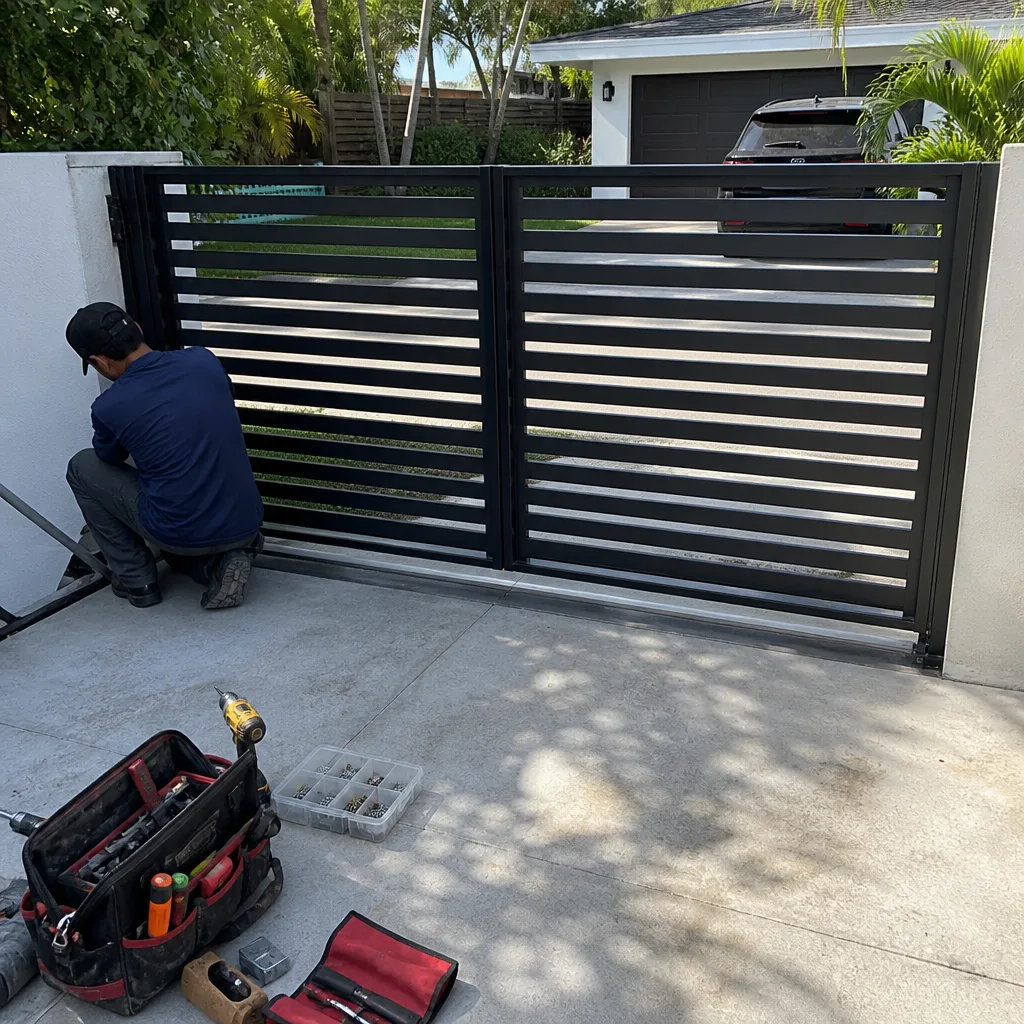
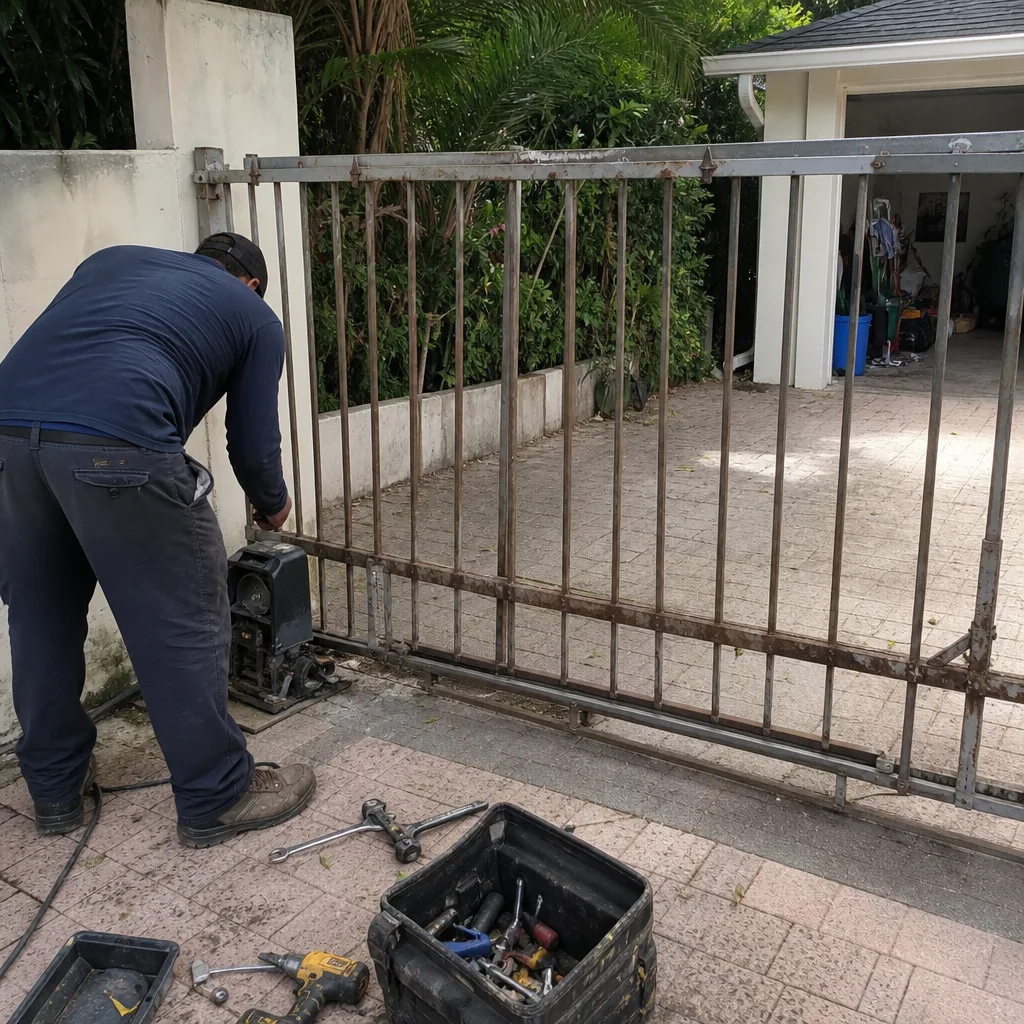
See the difference
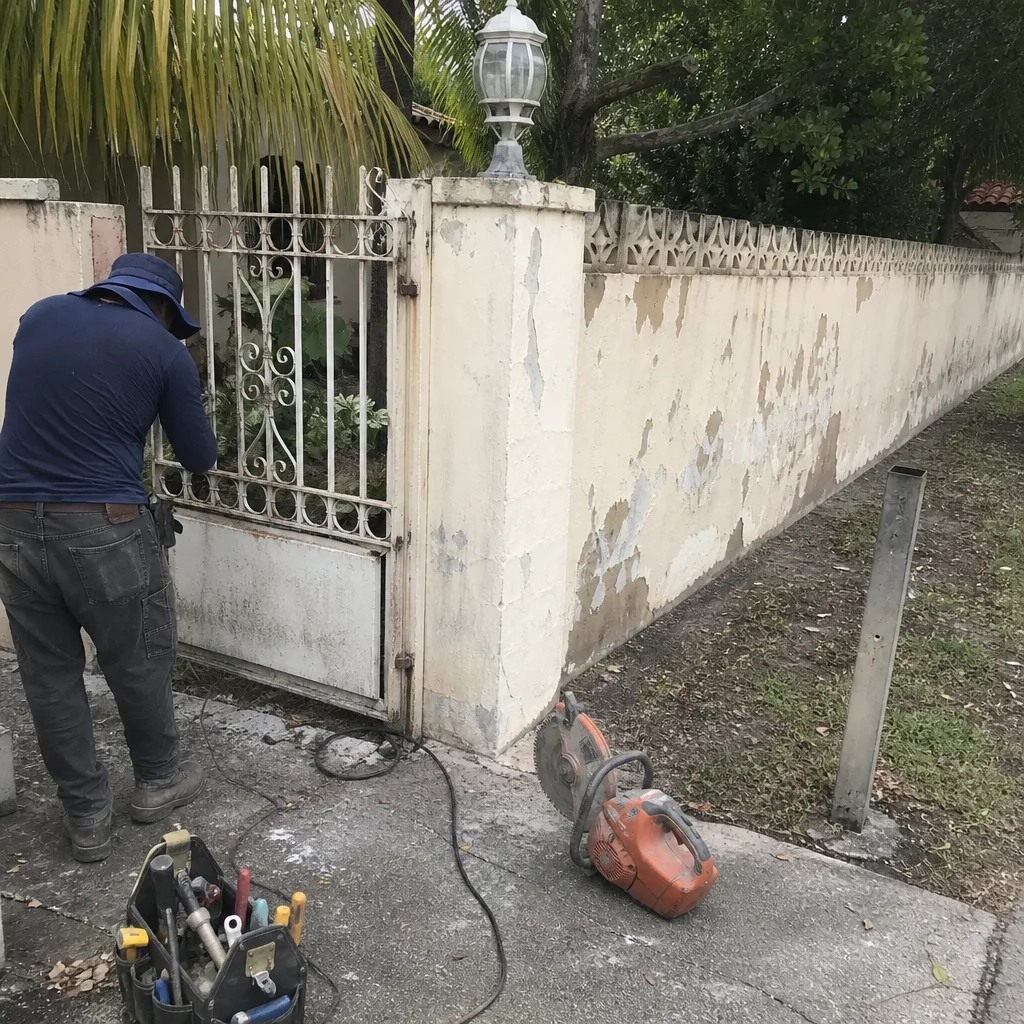 Before
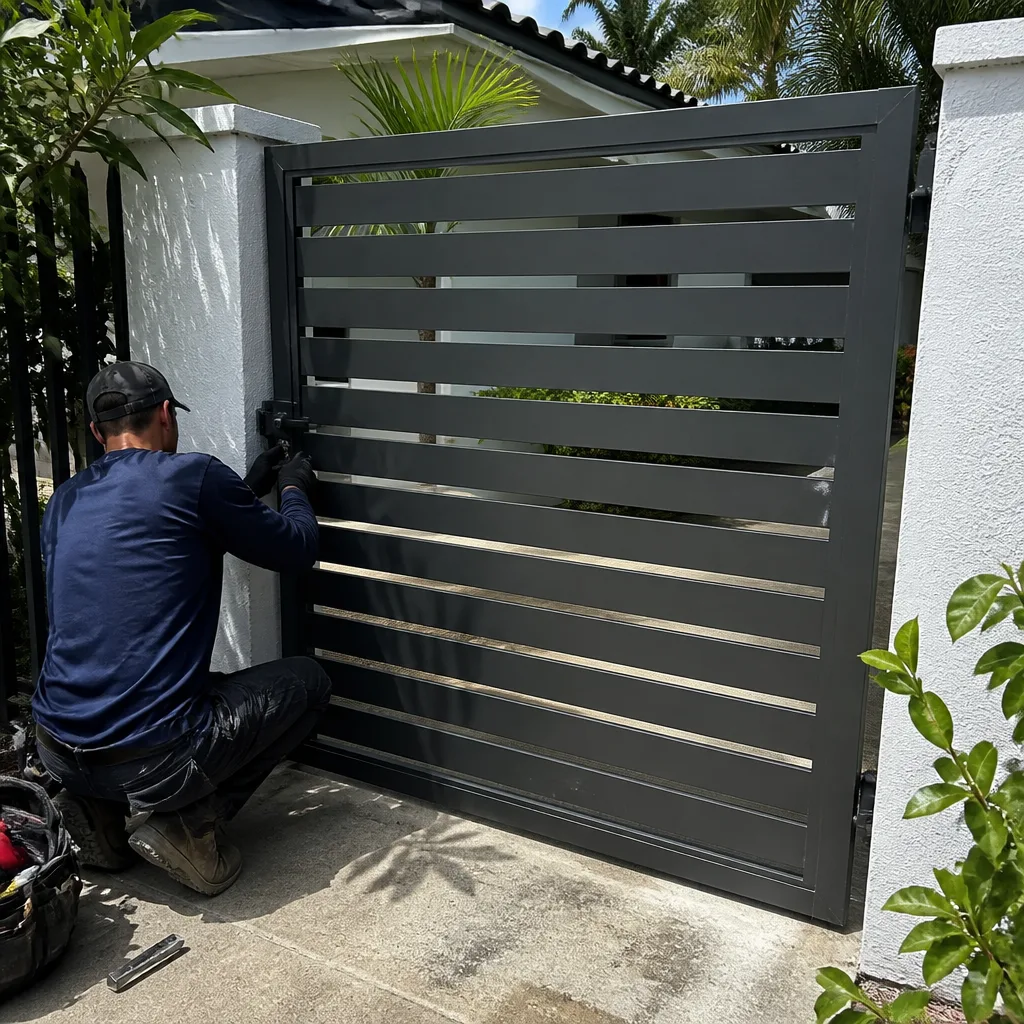 After
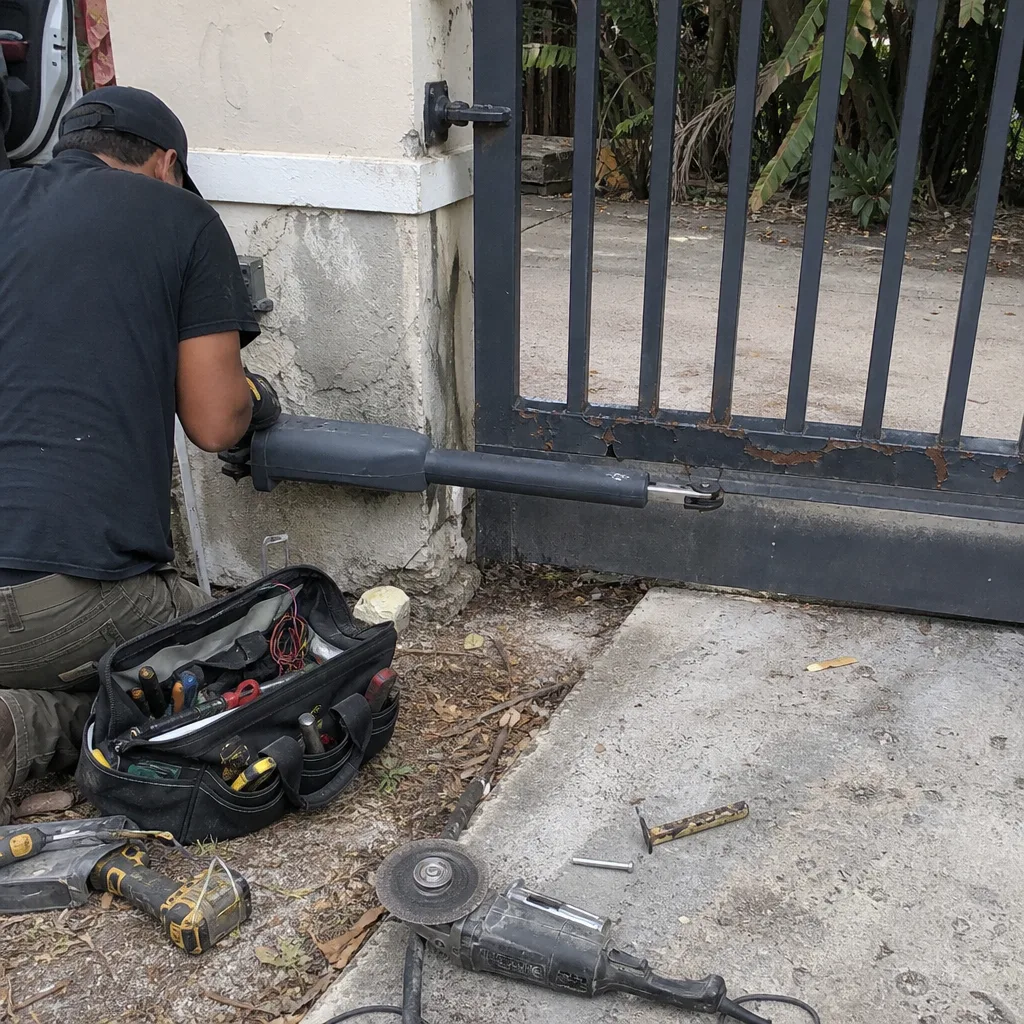 Before
 After
 Before
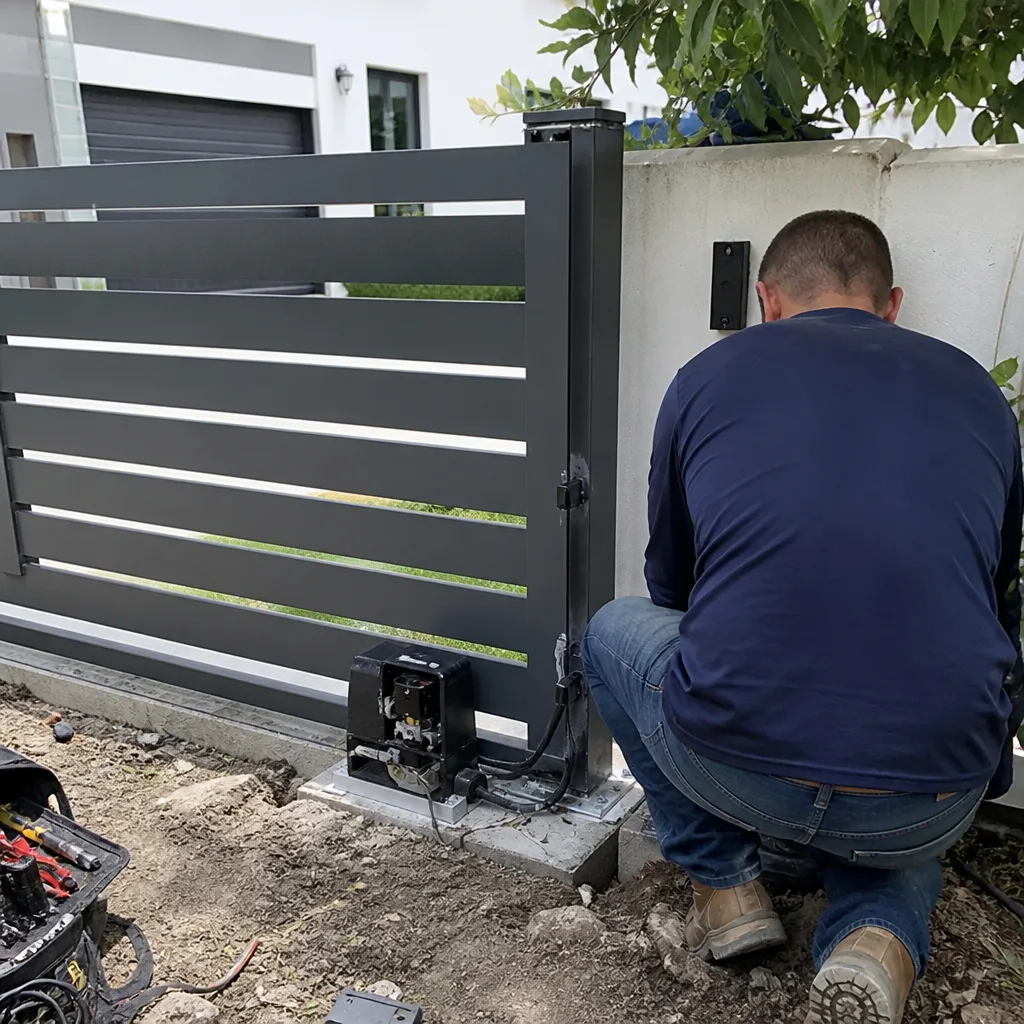 After
When to Call a Professional
Call a professional when the gate will not respond after you’ve checked the breaker and the manual release, when the gate moves only with force or binds in the track, when you hear grinding or a persistent beep from the operator, or when the gate is stuck open and you cannot secure it without drilling or forcing. Also call when the control board shows visible damage: burns, melted relays, a swollen capacitor, or anything that smells like failed electronics. These are not DIY repairs. Gate Repair in Boca Pointe follows the same rule: if the board or the mechanical drive train is compromised, a trained technician is the fastest route back to a working gate. Miami Gate Company offers free estimates in Miami. Call (833) 570-5807 and have your model number and failure details ready from the protocol above.
Frequently Asked Questions
Look inside or on the side of the operator housing for a keyed cylinder, a pull lever, or a labeled release handle. On swing gates the release is usually on the operator housing at the hinge post; on sliding gates it’s a lever near the drive sprocket. If you don’t have the release key, call a gate specialist to get one matched and to demonstrate the bypass.
A tripped breaker, a tripped GFCI, or a surge-damaged control board. Check the breaker and any GFCI on the circuit first. If there’s power but no response from the operator, it’s likely the board or an input sensor, and that warrants a professional diagnosis.
Not unless you’ve disengaged the manual release and the gate moves freely by hand. Forcing a gate against an engaged operator is the fastest way to destroy the gearbox or bend the operator arm. Disengage first, then test by hand.
It depends on whether the failure is power-related, mechanical, or electronic. Power issues are often resolved in a day or two as the utility restores service. Control board failures and mechanical damage require parts, which may add days depending on the operator brand. The homeowners who get back online fastest are the ones who can tell their technician the model number, the breaker status, and the exact failure behavior.
Yes, if it’s sized correctly. A gate without battery backup is an inaccessible property during a prolonged outage. A backup sized for your normal daily cycles plus storm surge in activity is a practical storm-readiness investment. Undersized units are a false security; size for roughly double your normal cycle count.
Operator brand and model number, manual release location and whether you’ve used it, breaker status, what the gate was doing before it failed, any previous repairs, and property access details. Having these ready shortens your diagnostic time and gets you scheduled faster, especially during post-storm call volume.
The Bottom Line
Gate emergencies in Miami are survivable, but they’re survivable faster if you prepare before the storm, not during the outage. Know your operator’s manual release location and have the key. Know whether your failure is a power issue, a mechanical bind, or a control board problem before you call. Build a one-page contact protocol with your model number, failure behavior, and breaker status. Size your battery backup for Miami’s actual storm cycle load. And when the gate is beyond your ability to secure or diagnose, call a specialist who works on almost every brand you could own, not a generalist who’ll learn on your gate. Miami Gate Company handles gate repair, electric gate repair, and gate installation across Miami and surrounding areas. For more guides & resources, visit our blog. Call (833) 570-5807 for a free estimate when you’re ready to get your gate back to doing what it’s supposed to do.
Written by the team at Miami Gate Company, serving Miami since 2012.