

Last updated October 30, 2026
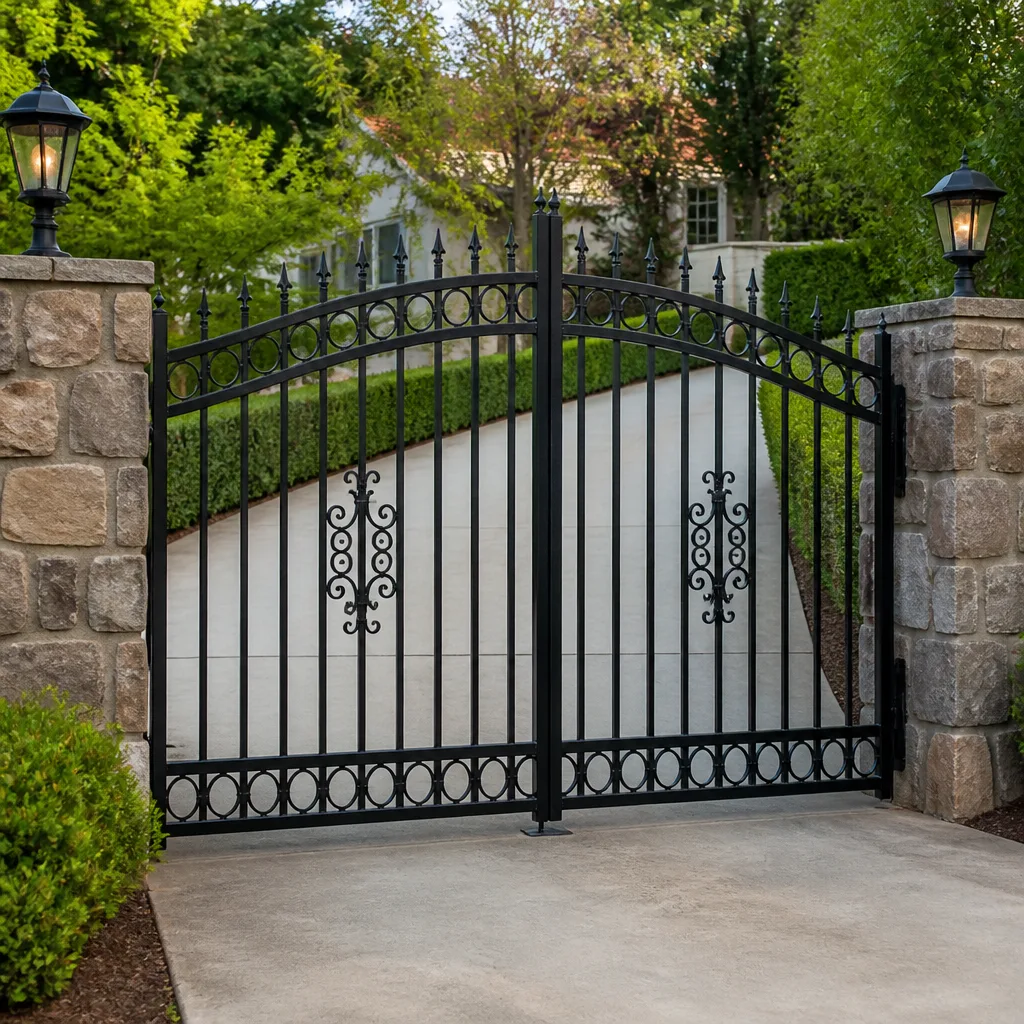 Wrought iron
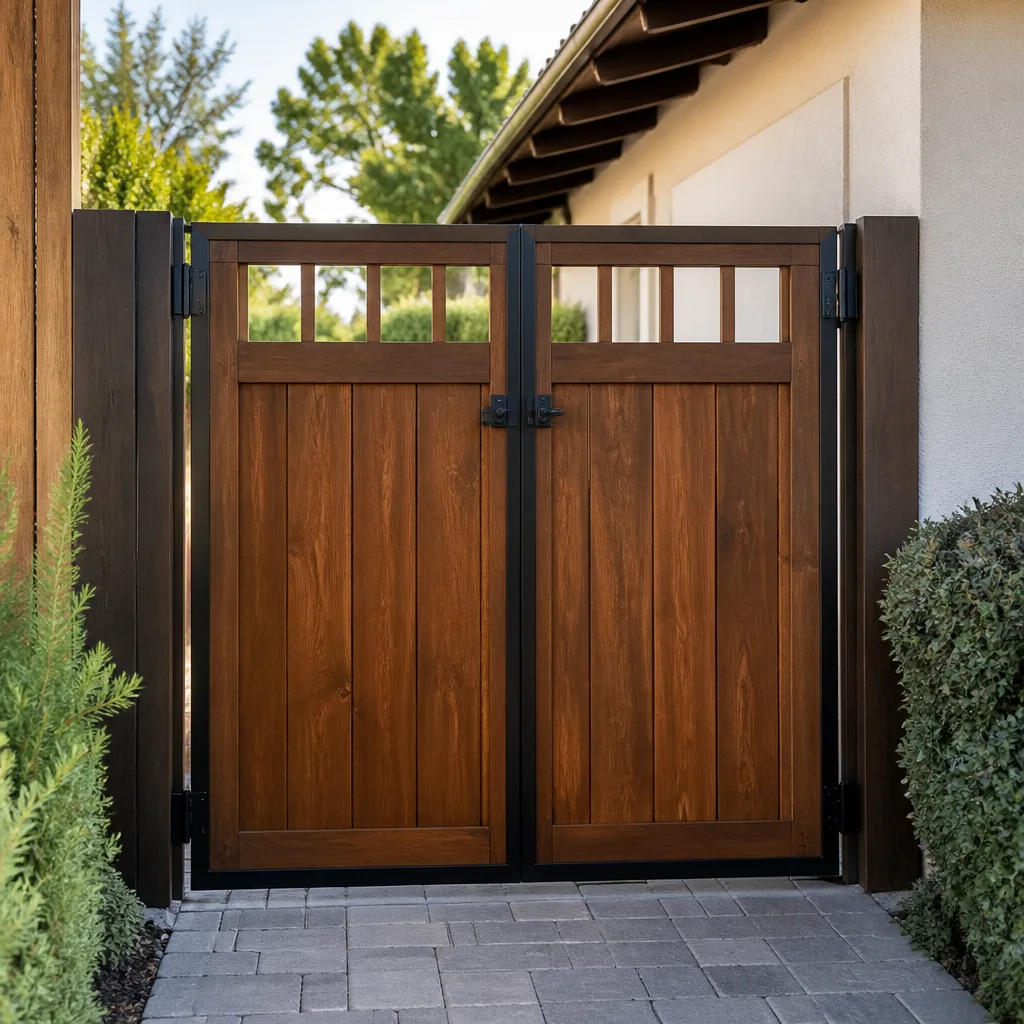 Wood & steel frame
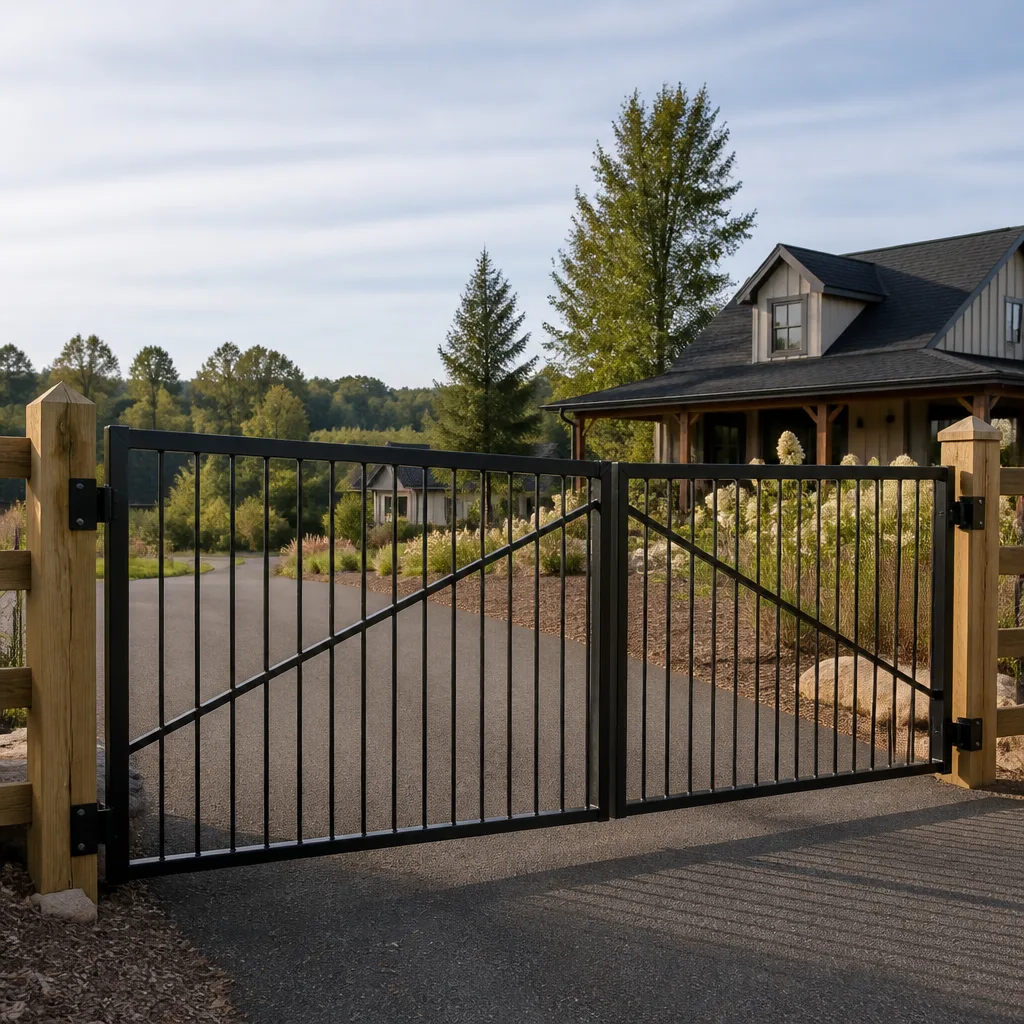 Farm & ranch
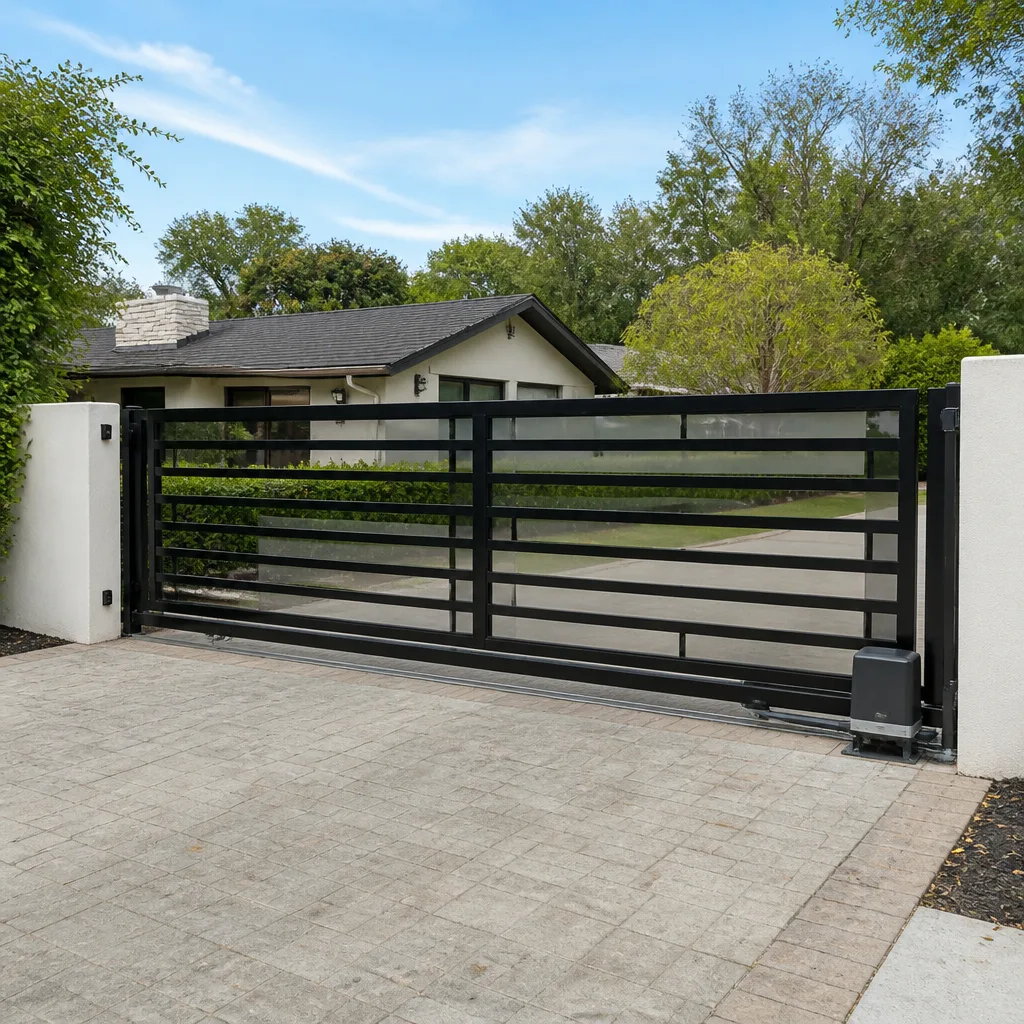 Sliding driveway gates
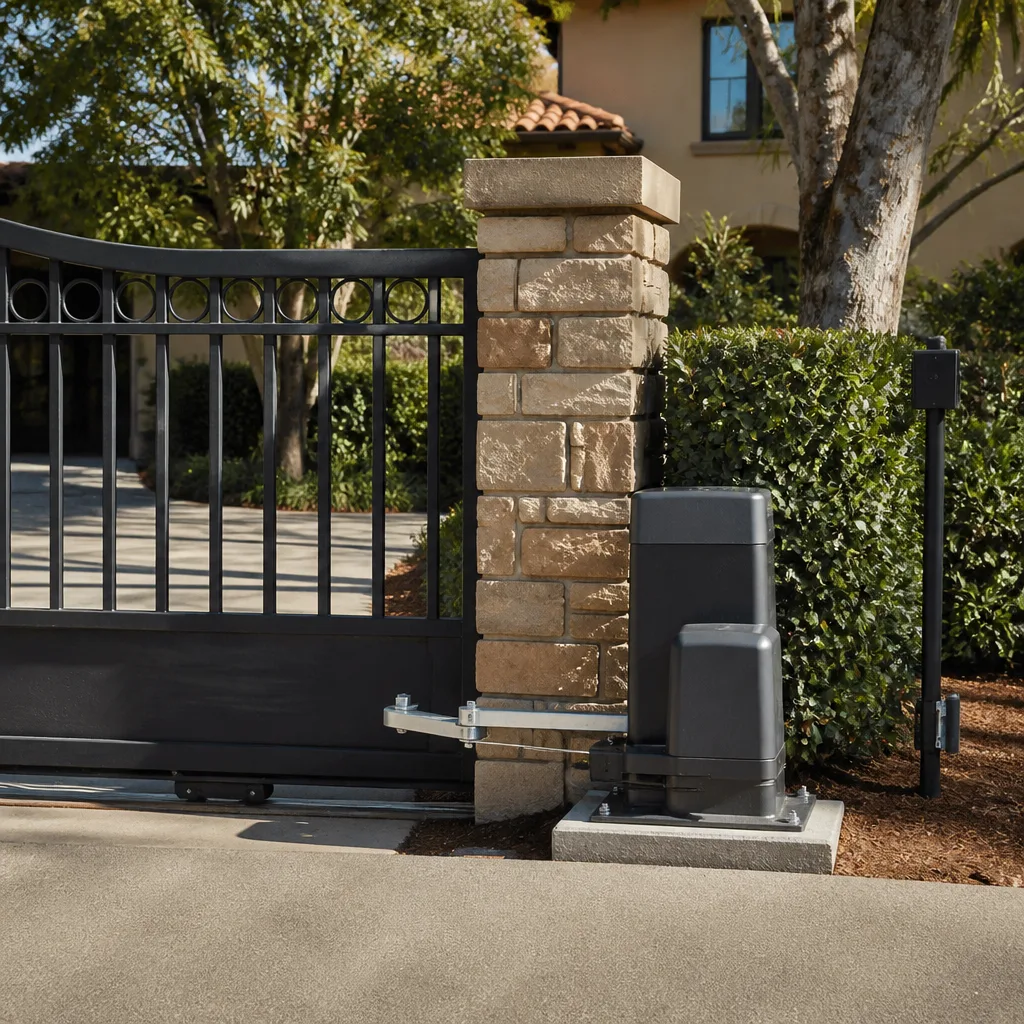 LiftMaster operators
Free on-site gate assessment - hinges, posts, and your LiftMaster or Nice gate operator checked before anything is quoted
The assessment is free and the quote is the invoice.
Get your free estimateThe Complete Guide to Gate Repair in Miami
Most gate repair guides are written for Phoenix or Atlanta climates and then republished with a Miami header, which is why they never mention that aluminum oxide corrosion on worm gears accelerates to near-annual replacement cycles within a mile of the Intracoastal. That omission is not a footnote. It is the difference between a gate that operates for a decade and one that seizes up 14 months after installation. Miami’s salt air, tropical humidity, and hurricane wind-load requirements create failure modes that mainland repair manuals simply do not address. This guide fixes that gap. You will learn how Miami’s climate attacks each component class differently, which failures are urgent versus monitorable, and what makes a repair code-legal in Miami-Dade County, where wind-load standards are the strictest in the continental U.S.
Quick Answer
Our Gate Repair services in Miami are a climate-specific discipline. Salt air corrodes motors, hinges, and control boards at rates that vary by your distance from Biscayne Bay and the Intracoastal, while Miami-Dade’s hurricane wind-load code determines which repairs are legal and which create liability. The short version: diagnose by failure location first, then component, and always verify that any structural repair meets Miami-Dade County’s wind-load requirements before a technician touches the gate.
Styles & brands we work with
Table of Contents
- How Salt Air Corrodes Each Gate Component Class at Different Rates
- Why Miami’s Rainy and Dry Seasons Fail Gates in Opposite Directions
- Failure Patterns in Miami’s Most-Installed Gate Brands
- Miami-Dade Wind-Load Code and What It Means for Gate Repair
- A Triage Decision Tree for Miami Gate Failures
- Electric Gate Repair: Component-Level Diagnosis
- When Repair Is Not the Right Call: Considering Replacement
- Common Mistakes to Avoid
- When to Call a Professional
- Frequently Asked Questions
How Salt Air Corrodes Each Gate Component Class at Different Rates
Salt air does not corrode a gate uniformly. It attacks each component class at a rate determined by the metal composition, the exposure surface, and whether the part is protected from direct aerosol contact. In Miami, the corrosion gradient is measurable: a property on the bay side of Barrier Island faces fundamentally different failure timelines than a property in Kendall or Doral, even though both are technically “Miami.”
Here is what we see component by component:
Motors and Gearboxes
Aluminum worm gears inside gate operators are the first casualty. Salt aerosol settles on the gear housing, works its way past seals, and initiates aluminum oxide buildup on the worm surface. That oxide acts as an abrasive, and each additional revolution grinds the mating surfaces. In coastal Miami neighborhoods like Coconut Grove, Key Biscayne, and Brickell, we regularly see gearboxes with accelerated wear at 12 to 18 months that would take 5 to 7 years to develop in Orlando. The fix is not just replacing the gear; the seal surface must be cleaned and re-lubricated with a marine-grade grease that resists salt displacement.
Hinges and Pivot Points
Gate hinges on Miami’s coast develop a specific failure signature: pitted chrome plating, then red rust streaking downward, then visible play at the pivot. Stainless steel hinges fare better, but even 304 stainless will show tea staining within 2 to 3 years of salt exposure if it is not passivated and periodically washed. Commercial gates with heavy traffic, think HOA entry gates in Coral Gables or Pinecrest, wear hinge bushings at a rate proportional to both salt load and cycle count.
Control Boards and Wiring Terminals
This is the least intuitive corrosion point for most property owners. Control boards sit inside a housing, so the assumption is that they are protected. They are not. Salt air infiltrates through conduit openings, control box seams, and even the weep holes meant to drain condensation. Once inside, it deposits on PCB traces and screw terminals. The result: intermittent sensor faults that do not reproduce when a technician tests the board, because the corrosion is temperature and humidity dependent. In Miami’s summer, when humidity stays above 75% for months, these intermittent faults become permanent.
Fasteners and Brackets
Zinc-plated hardware is the weakest link on any Miami gate. We replace zinc fasteners with 316 stainless whenever we perform a coastal repair, because zinc plating lasts roughly 18 to 24 months within a mile and a half of salt water. The failure mode here is often misdiagnosed as a structural problem when it is actually fastener degradation: the gate sags because the hinge screws have lost their bite into corroded threads, not because the frame failed.
Understanding this corrosion map changes how you prioritize repairs. A motor gear failing at month 14 is not a defective product; it is an exposure problem, and the correct repair includes exposure mitigation, not just part replacement.
Why Miami’s Rainy and Dry Seasons Fail Gates in Opposite Directions
Miami has two seasons: a wet season from May through October and a dry season from November through April. They do not affect all gate materials the same way. Wood gates and wrought iron gates effectively fail in opposite directions depending on which phase they were last subjected to.
Wood Gates: Swelling in the Wet Season, Cracking in the Dry
During Miami’s wet season, humidity averages above 80% and afternoon thunderstorms are near daily. Wood gates absorb moisture, swelling the fibers. Wood gates swell most noticeably at the bottom edge, where standing water splashes back from the driveway. The gate begins to bind against the frame or the latch post. Then, when the dry season arrives and relative humidity drops, the wood shrinks back, and the stresses created by the wet-season swelling release as cracks, typically radiating from hardware mounting holes.
The diagnostic question is not “is the wood damaged” but “which phase caused the damage you are seeing.” If the gate binds now, during wet months, the failure is moisture uptake, and the fix is sealing, not planing. If you plane a swollen gate and seal it improperly, you will have a gapped, rattling gate by February. We see this exact mistake every year in neighborhoods like The Roads, Shenandoah, and Morningside, where wood gates are common on older properties.
Wrought Iron and Steel: Dry Season Stress, Wet Season Corrosion
Wrought iron gates in Miami face a different seasonal sequence. The dry season is not harsh enough to cause thermal fatigue, but it is when salt deposits from the previous wet season’s sea breezes sit on the metal surface and concentrate as moisture evaporates. When the wet season returns, those salt deposits become an electrolyte, and corrosion accelerates. The pattern we observe in coastal Miami: rust blooms appear during the first six weeks of the wet season, not during the dry months that preceded them.
Diagnosing which seasonal phase caused a failure matters because it changes the repair sequence. A wrought iron gate with rust through the lower rails needs the rust treated, the section replaced or welded, and a marine coating system applied, with the understanding that the coating cycle will repeat every 3 to 5 years in a salt environment, regardless of the product used.
Failure Patterns in Miami’s Most-Installed Gate Brands
Miami’s gate market skews toward three operator brands more than any others: LiftMaster, FAAC, and DoorKing. We service all three at the component level, along with BFT, Linear, Viking, and others, and the failure patterns under South Florida conditions are specific enough to be useful in diagnosis.
LiftMaster in Miami: Capacitor and Relay Degradation from Surge Events
LiftMaster operators use board-mounted relays and motor start capacitors that are sensitive to the voltage sags and surges Miami’s grid delivers during summer thunderstorm season. A typical failure sequence: a lightning strike within a mile induces a voltage spike on the gate’s power feed, the surge protector catches the worst of it, but the repeated smaller events degrade the capacitor over a single summer. The operator begins to hum but not start, or starts slowly. This is not a motor failure in most cases; it is a capacitor that has lost capacitance, and the relay is often not far behind.
FAAC in Miami: Hydraulic and Board Issues from Humidity Saturation
FAAC hydraulic operators are popular on Miami’s larger residential and commercial gates because of their duty cycle and quiet operation. Under Miami humidity, two failure points dominate: the control board’s edge connectors corrode in the same way described in the salt-air section, and the hydraulic fluid absorbs ambient moisture, which reduces its incompressible performance. FAAC boards are also particular about moisture ingress at the ribbon cable seat. When a FAAC gate stops responding intermittently, remove the board, inspect the connector lands for green or white corrosion, and check the hydraulic fluid for milky discoloration before replacing anything.
DoorKing in Miami: Loop Detector and Terminal Strip Corrosion
DoorKing operators dominate Miami’s commercial gate market, especially for HOA and condominium entry points. The weak point in coastal Miami installations is the loop detector wiring at the terminal strip. Salt air and humidity corrode the screw terminals, which causes phantom detections, where the gate opens for no vehicle, or fails to detect a vehicle at all. This is frequently misdiagnosed as a loop failure. The loop in the pavement may be fine; the termination point is the problem. Cleaning and re-terminating the conductors, and sealing the enclosure, resolves the issue at a fraction of loop replacement cost.
BFT, Linear, and Viking: What We See in the Field
BFT operators, common on newer Miami condos, show the same terminal corrosion pattern as DoorKing but with a notable frequency of limit-switch misfires caused by salt-laden debris accumulating on the switch actuator. Linear operators, popular on residential slide gates, suffer from gear-position sensor drift in high-humidity environments. Viking operators, built for heavier commercial duty, tend to outlast their control boards; when a Viking gate fails, it is usually a board-level component rather than the mechanical drive. These patterns are what make multi-brand service experience valuable: the right diagnosis often takes 20 minutes for a technician who has seen the brand fail in Miami’s climate before, versus days of trial and error for someone learning the ecosystem for the first time.
Miami-Dade Wind-Load Code and What It Means for Gate Repair
Miami-Dade County enforces the strictest wind-load requirements in the continental United States. For gate repair, this is not a bureaucratic detail; it is a liability boundary. Any repair that affects the structural attachment of a gate, the hinge connection points, the post anchor system, or the gate’s surface area is subject to Miami-Dade’s High Velocity Hurricane Zone requirements.
Practically, this means:
- Post anchors are load-bearing components. If a repair requires resetting a gate post, the new anchor must meet Miami-Dade wind-load calculations, not a generic “deeper is better” approach. The post must resist both direct wind pressure on the gate leaf and cyclic loading from wind-driven debris impact.
- Material substitutions change wind-load capacity. Replacing a wrought iron gate panel with a heavier solid-sheet panel without recalculating the post and hinge capacity creates a projectile risk in a storm event. The gate becomes a wind sail.
- Track removal does not exempt you. A cantilever slide gate that no longer uses a ground track still exerts enormous horizontal force on its truck assemblies during high wind. The truck bearings and their anchor bolts are code-relevant.
- Repair, not replacement, has a lower code threshold. Replacing a motor or a control board is not a wind-load event. Modifying the gate frame, changing its weight, or relocating hinges is.
Any competent Miami gate contractor should be able to explain which repairs are code-neutral and which trigger a wind-load review. If a contractor cannot, that is a signal to find one who works in Miami-Dade specifically, not a contractor applying generic Florida standards. The difference between the Florida Building Code for most of the state and Miami-Dade’s High Velocity Hurricane Zone provisions is significant; Miami is a different legal world for gate work.
A Triage Decision Tree for Miami Gate Failures
Not every gate failure is an emergency. Miami’s climate, however, compresses the timeline for certain failures that would be merely cosmetic elsewhere. Here is the decision tree we use when evaluating gate repairs in Miami, organized by urgency.
- Is the gate stuck in the open or half-open position? If yes, this is a same-week emergency. An open gate is a security breach for the property, and in Miami’s storm season, a half-open gate becomes a wind-catch surface that can tear itself off its own hinges. This applies to both residential driveway gates and commercial entry gates.
- Is the gate operating but making a grinding or straining noise? If yes, you have a 30-day window in most cases, but that window shrinks the closer you are to the coast. Grinding in the motor or gear assembly means active material loss. Each cycle deepens the damage. In Coral Gables, Coconut Grove, or along the Bay, do not push past two weeks.
- Is the gate intermittently failing to open or close, but working most of the time? This is a monitor-safe failure, but only if you document the conditions under which it fails. Time of day, weather, and whether it follows heavy rain are all diagnostic data. Intermittent faults in Miami are most often board corrosion or loop issues, and they worsen with humidity. Monitor for no more than 60 days, then address.
- Is there visible rust on a hinge, bracket, or fastener? This is a 30-day repair window item. Surface rust becomes structural rust in Miami faster than anywhere else in Florida because the wet-dry cycle is more aggressive. One rainy season is enough to turn a surface rust spot into a section replacement.
- Is the gate sagging but still latching? Sagging is a hinge and post issue, not a cosmetic one. In Miami-Dade, a sagging gate under wind load adds torque to the hinge plates. Schedule repair within 30 days. If the sag is new and measurable, do not wait for it to stop latching; the cost curve is steep once the latch begins to fail.
This triage framework changes when a named storm is approaching. Before a hurricane watch or warning, any gate with a known structural issue should be secured in the fully open or fully closed position, depending on the property layout, and physically locked if possible. Do not rely on the operator to hold a damaged gate in place during sustained winds.
Electric Gate Repair: Component-Level Diagnosis
Electric gate repair in Miami is often treated as a mystery by property owners and even by general contractors. It should not be. Electric gates fail at predictable points, and diagnosing them systematically saves time and money. The components, in order of failure frequency in Miami’s climate, are: control boards, loop detectors and safety sensors, motors and gearboxes, limit switches, and power supplies.
Step-by-Step Diagnostic Sequence
- Check power to the operator. Verify the breaker, the disconnect switch, and any GFCI protection. In Miami, outdoor GFCI receptacles are prone to nuisance tripping during humidity spikes. Reset once and observe. If it trips again, there is a ground fault in the circuit, not a breaker problem.
- Test the control board. Look for visible corrosion on terminals, discolored traces, or a board that shows no LED indicators. Many Miami gate failures that are called “motor problems” are actually board-level failures. The board is the brain; if it is not sending voltage to the motor, the motor cannot respond.
- Test the safety sensors and loops. Interrupt the photo-eye beam and verify the board responds. On loop detectors, park a metal object or a vehicle over the loop and check the detect LED. Miami’s sandy, wet soil shifts loop inductance over time, and the detector may need retuning.
- Listen to the motor. A motor that hums but does not turn is a capacitor or start-circuit problem. A motor that grinds is a gear problem. A motor that runs silently but the gate does not move is a coupling or chain problem. Each sound maps to a different repair.
- Inspect limit switches. If the gate opens fully but reverses immediately, or stops short, the limit switch or its actuator is the likely culprit. Salt debris accumulation on limit switch rollers is a distinctly Miami failure mode.
Electric gate acting up? The diagnosis should cover the motor, board, sensors, and wiring, not just the obvious parts. That component-level approach is the difference between a fix that lasts years and a part swap that fails again in months.
When Repair Is Not the Right Call: Considering Replacement
There is a point in every gate’s life when continued repair becomes economically irrational. In Miami, that point arrives sooner than in inland Florida because corrosion is a compounding cost. A gate that costs $500 to repair this year will cost $700 next year and $1,100 the year after, as corrosion spreads from the initial failure point into adjacent components.
The decision framework we use:
- Repair is the right call when the gate frame and posts are structurally sound, the failure is isolated to a replaceable component, and the repair includes corrosion mitigation for the repaired area.
- Replacement is the right call when the gate frame shows rust-through at multiple points, the hinge posts have lost structural integrity, the operator is more than three generations behind current safety standards, or the repair cost exceeds 50% of the installed cost of a new gate meeting current Miami-Dade code.
The economics tilt toward replacement faster in Miami than in most markets because of two factors. First, the labor cost of a proper corrosion treatment and coating can approach the cost of a new gate system. Second, Miami-Dade wind-load code compliance is easier to guarantee on a new installation than on a retrofit. If you are in a property where the gate is 15 years or older and has been repaired multiple times, we recommend a gate installation conversation, not another patch. Miami Gate Company handles both paths, and we will tell you which one we would choose for our own property.
Common Mistakes to Avoid
- Misdiagnosing salt corrosion as a mechanical failure. A gear that wears out in 14 months near the Intracoastal is not a defective part; it is an exposure problem. Replacing the part without mitigating the salt ingress guarantees the same failure on the same timeline.
- Using zinc-plated hardware on a coastal gate. Zinc plating is not a marine-grade fastener. Within 2 years of salt exposure, zinc fasteners fail, and the gate sag that results is often mistaken for a bent hinge or a broken weld. Use 316 stainless or better.
- Planing a swollen wood gate during Miami’s wet season. The wood is swollen because it is saturated. Planing it to fit creates a gap when the dry season arrives. Seal first, wait for the dry season, then adjust only if still necessary.
- Ignoring intermittent sensor faults as “glitches.” In Miami’s humidity, an intermittent photo-eye or loop fault is the leading edge of terminal corrosion. It does not self-heal; it becomes permanent. Each month of ignoring it adds board-level damage.
- Repairing a gate post without confirming Miami-Dade wind-load compliance. A post that held for 20 years under normal conditions has not been tested under hurricane conditions. Once you disturb the anchor, the repair must meet current code, not the code the gate was originally built under.
- Assuming the operator is the problem without checking power first. A significant portion of “dead” electric gates in Miami are dead because the GFCI trip, the breaker, or the disconnect switch, not the operator. Always verify power at the source before calling for motor replacement.
When to Call a Professional
Call a gate professional in Miami when the failure involves the operator’s electrical system, any structural component affected by wind-load code, or a corrosion pattern that has spread beyond surface rust. These are not scenarios where a generalist handyman or a fencing contractor’s crew provides the same diagnostic depth. The correct technician will check for salt-air corrosion patterns specific to your property’s distance from water, verify that any structural work meets Miami-Dade requirements, and give you a repair that does not ignore the climate factors that caused the failure. Miami Gate Company provides gate repair in Miami with free estimates. Call (833) 570-5807 and we will assess the gate on site, explain exactly what failed and why, and tell you the repair cost before any work starts.
Frequently Asked Questions
Gate repair in Miami typically runs from $180 to $450 for minor component replacements such as limit switches, capacitors, or loop detector retuning, and $600 to $2,400 for control board replacements, motor/gearbox rebuilds, or structural hinge and post repairs, as detailed in our Gate Repair Cost Breakdown: The Miami Homeowner’s Reference for 2026. Coastal properties in neighborhoods like Coconut Grove or Key Biscayne often run 15% to 25% higher because corrosion mitigation adds labor to every repair. Every quote should be itemized before work begins. Call (833) 570-5807 for a free estimate on your specific gate.
We diagnose and repair most electric gate failures on the first visit in Miami. Component replacements such as control boards, capacitors, and safety sensors are typically handled in a single visit because the parts are commonly stocked across the major brands we service. Structural repairs that involve concrete anchors or wind-load work are scheduled, since the materials have cure times that cannot be rushed. Call (833) 570-5807 to describe what your gate is doing, and we will tell you whether it is a same-visit fix or a scheduled repair.
We work on LiftMaster, FAAC, BFT, Linear, Viking, Ghost Controls, DoorKing, Elite, and Mighty Mule, plus a range of older and specialty systems. That multi-brand coverage means we diagnose based on what your gate actually needs, not on what a single manufacturer’s incentive program pushes. Whether you have a FAAC hydraulic on a Coral Gables property or a Viking on a commercial entry in Doral, the system is within our service range.
We handle the full gate lifecycle: gate repair, electric gate repair, and complete gate installation, for both residential and commercial properties. When a repair is no longer the right financial call, the same team can design and install the replacement to current Miami-Dade code. One specialist handles the entire process.
Miami-Dade wind-load code applies to any repair that modifies the gate’s structural attachment, post anchors, hinge connections, or surface area. Component replacements, such as motors, boards, and sensors, are code-neutral. If your repair involves resetting a post, replacing a gate frame, or changing the gate’s weight, the work must meet High Velocity Hurricane Zone requirements. We evaluate this on every structural repair quote in Miami.
Salt aerosol from Biscayne Bay and the Atlantic, combined with Miami’s wet-dry seasonal cycle, creates a corrosion environment that is dramatically more aggressive than inland Florida. Salt deposits concentrate during the dry season and become electrochemical corrosion sites when the wet season returns. The corrosion rate depends on your property’s distance from salt water and the gate materials involved. Properties within a mile of the Intracoastal should expect more frequent coating and fastener maintenance than properties further west.
The Bottom Line
Gate repair in Miami is a different discipline from gate repair anywhere else in the country. Salt air corrodes components at rates determined by proximity to water. The rainy and dry seasons fail wood and wrought iron gates in opposite directions. LiftMaster, FAAC, and DoorKing systems develop brand-specific failure patterns under Miami’s surge and humidity conditions. Miami-Dade wind-load code draws a bright line between which repairs are legal and which create liability. And the triage decision between monitor, schedule, and emergency repair changes with Miami’s storm calendar. Gates are all we do, and that focus is visible in the diagnosis and throughout our more guides & resources. If your gate needs attention, call (833) 570-5807 for a free estimate.
Written by the team at Miami Gate Company, serving Miami since 2012.
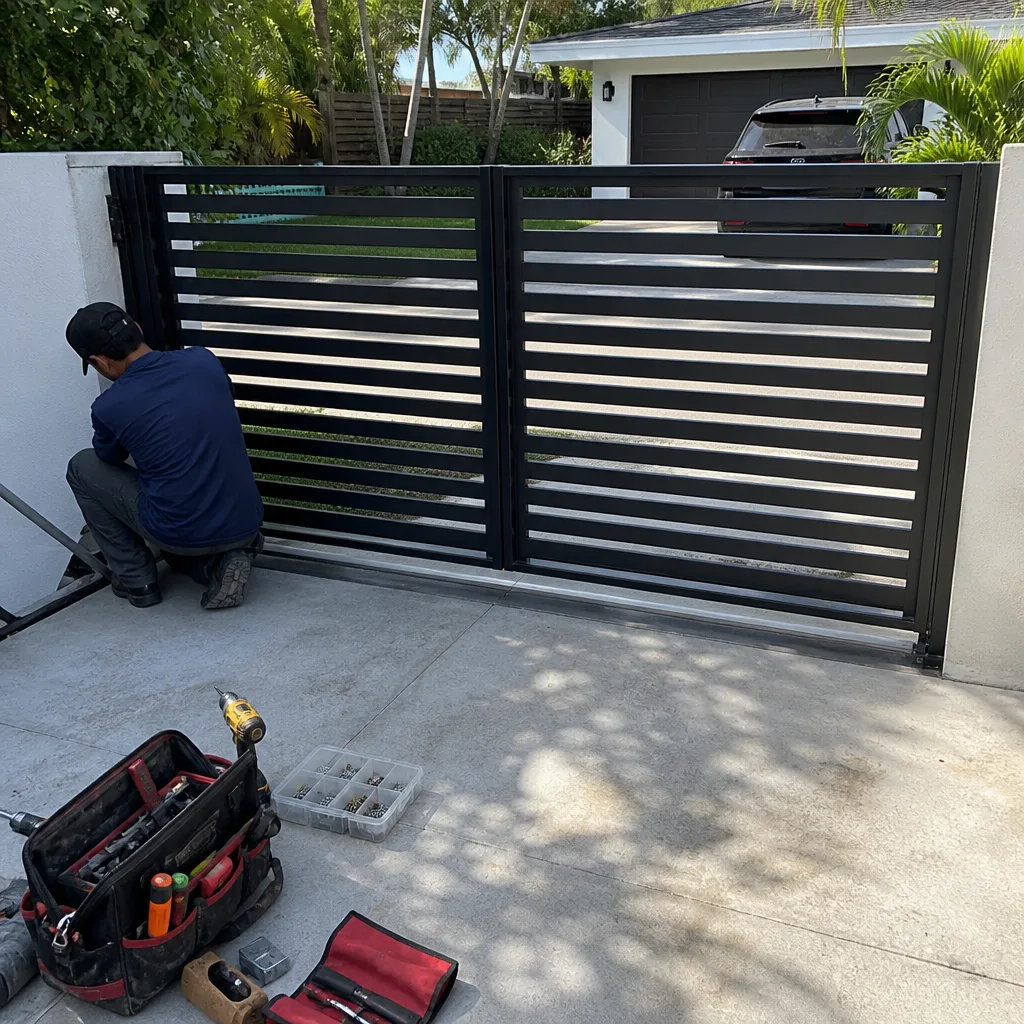
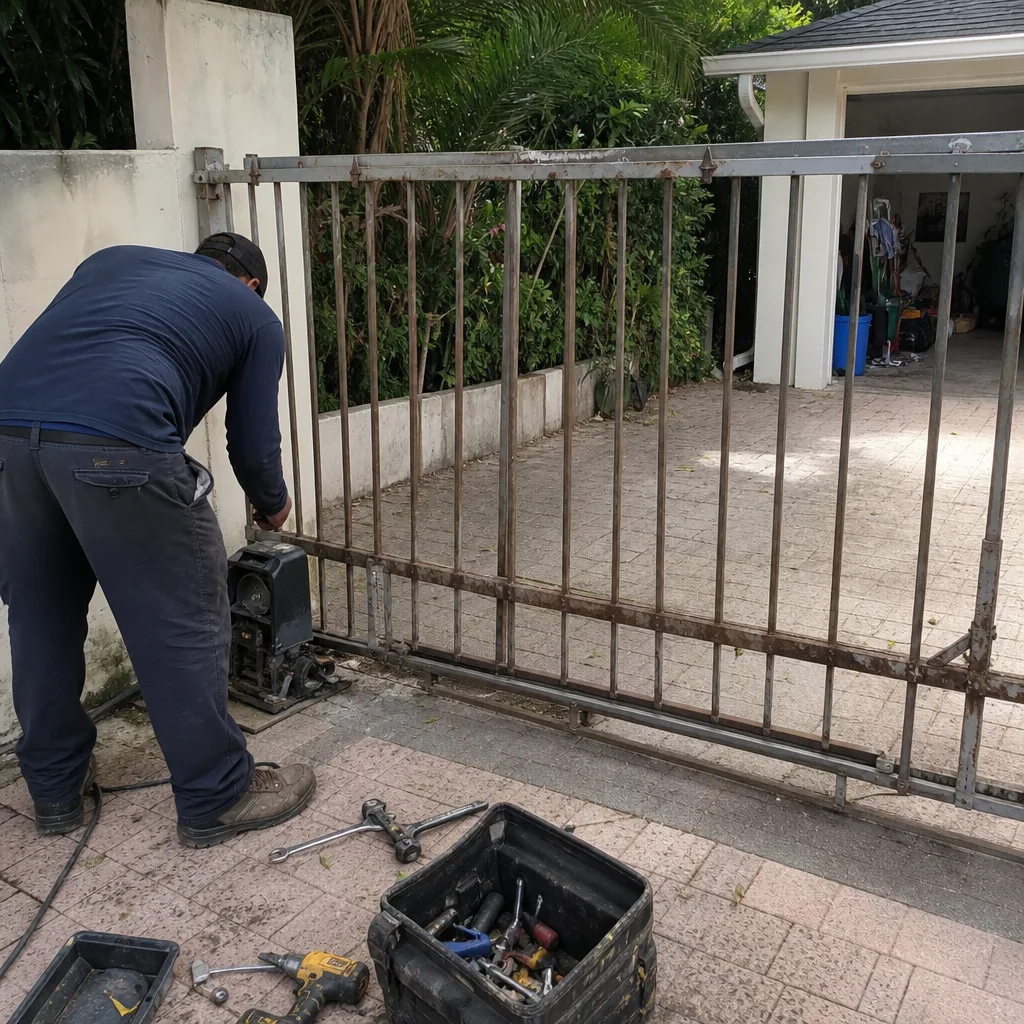
See the difference
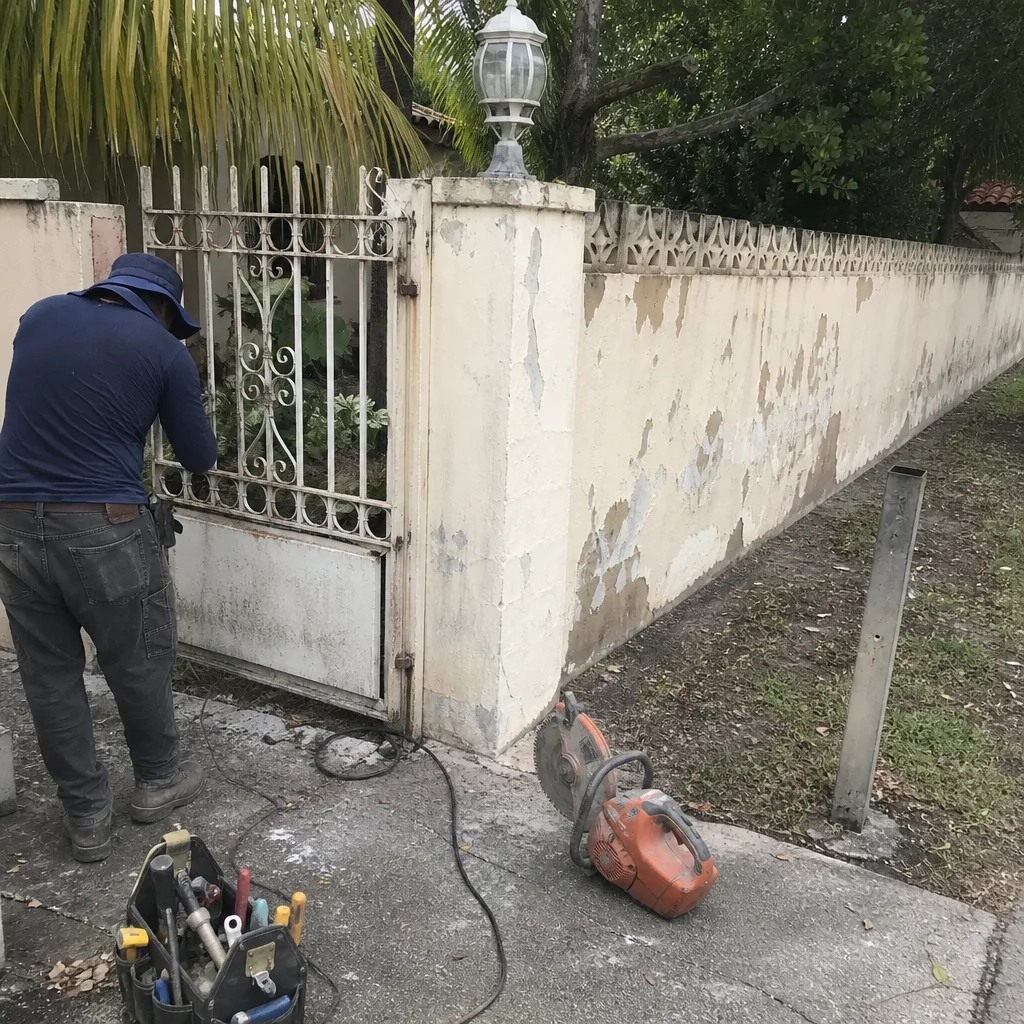 Before
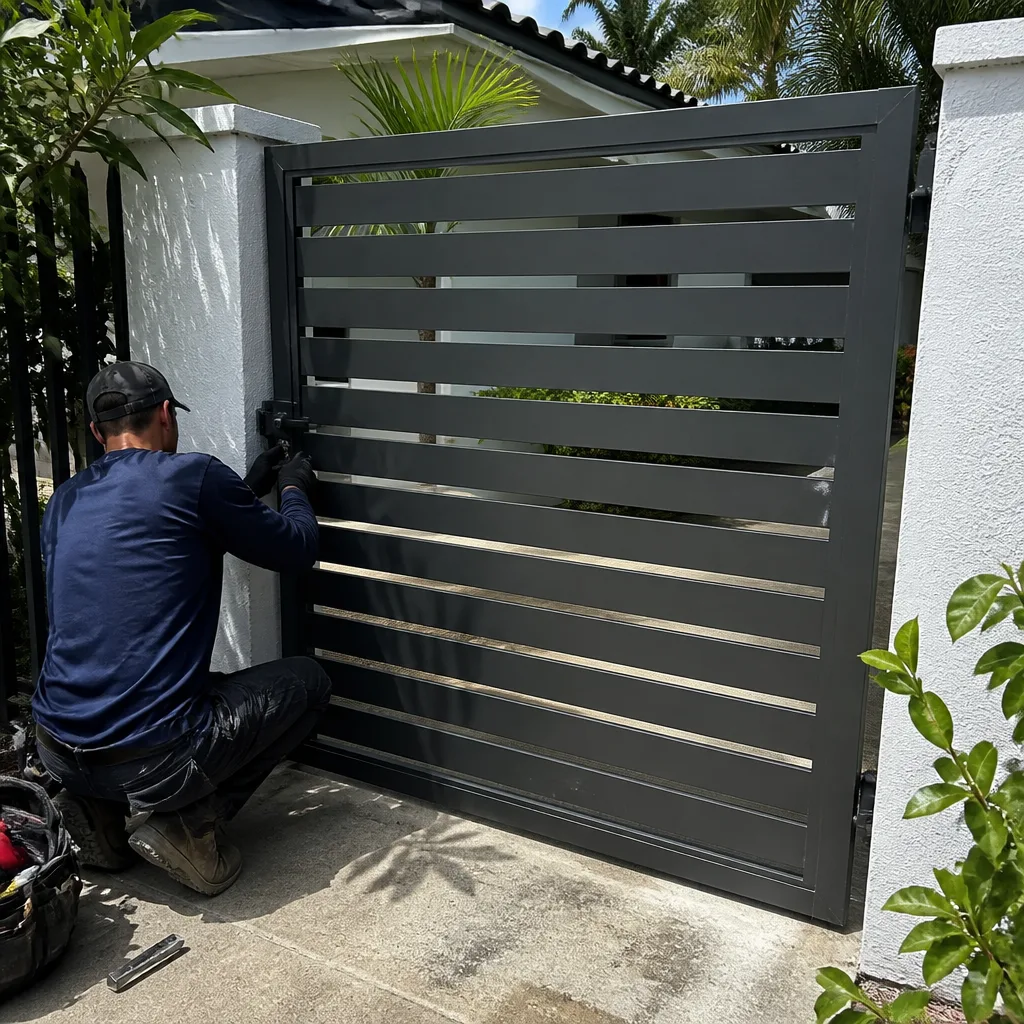 After
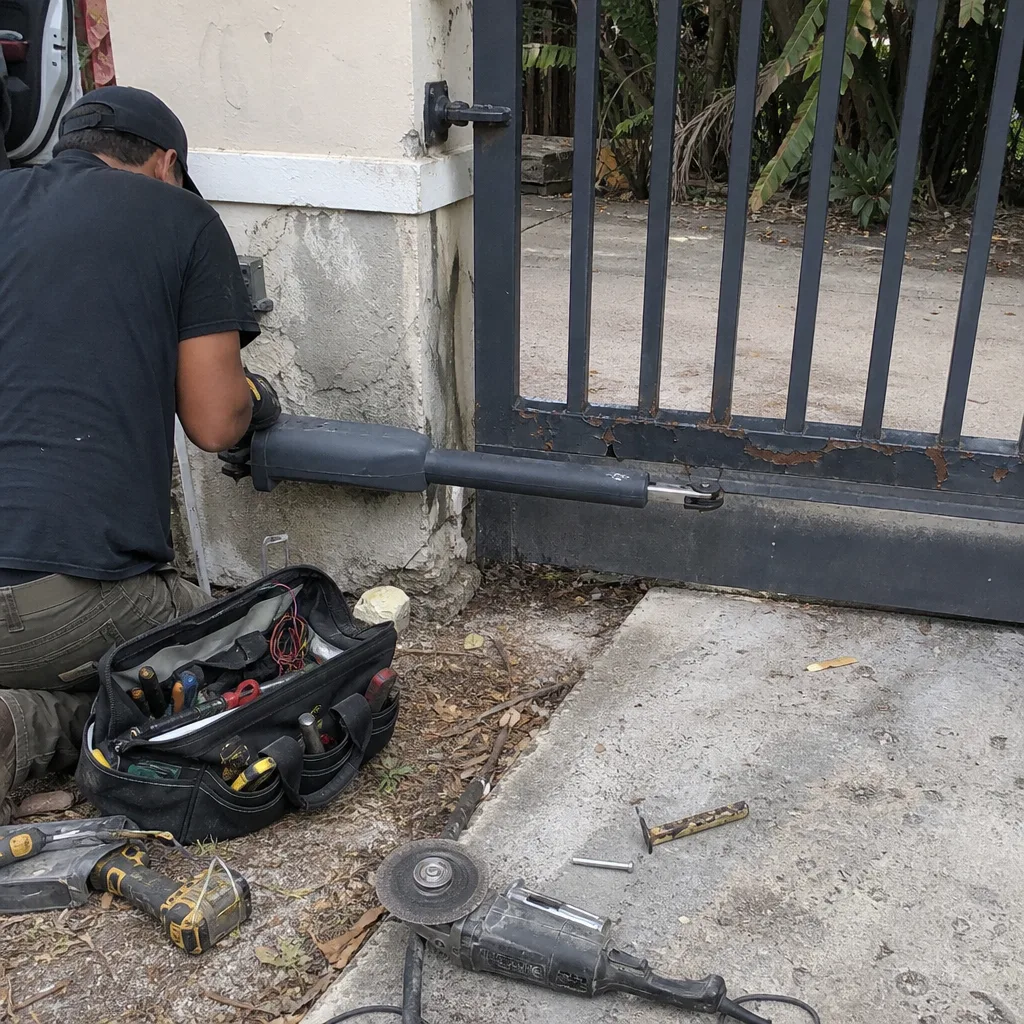 Before
 After
 Before
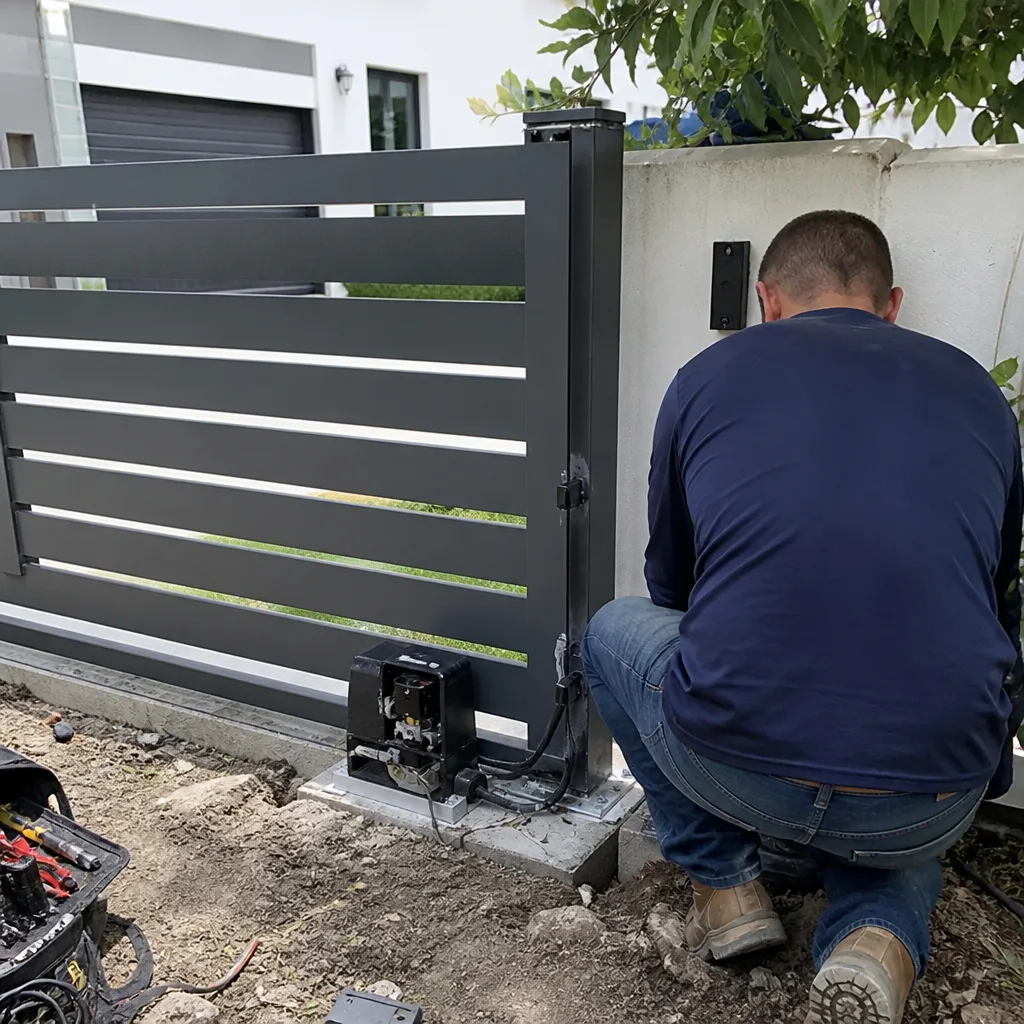 After